Serving Joliet, IL & nearby
(815) 247-0975
Joliet, IL

Garage Door Maintenance for Shorewood Homes

Shorewood homes are mostly newer builds, 6,591 households tucked 3 miles from Joliet. Maintenance here looks different than it does in older stock nearby.

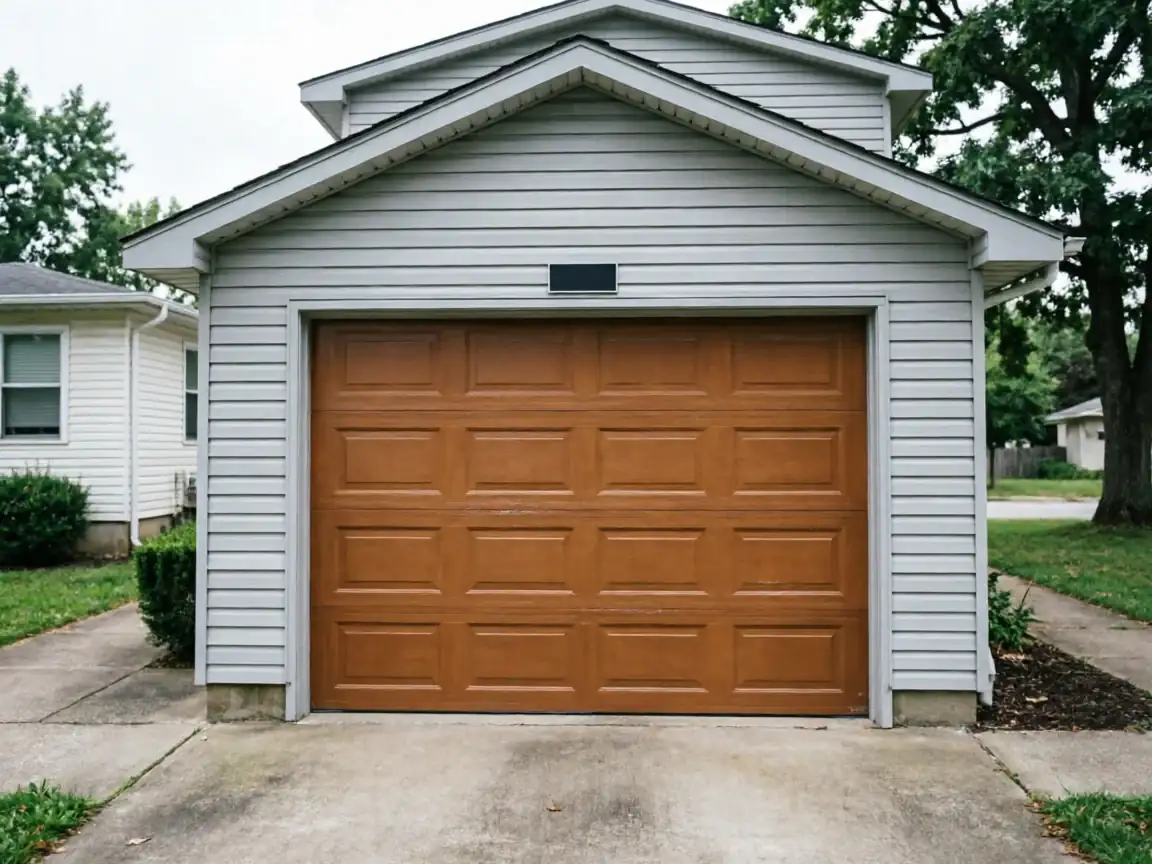
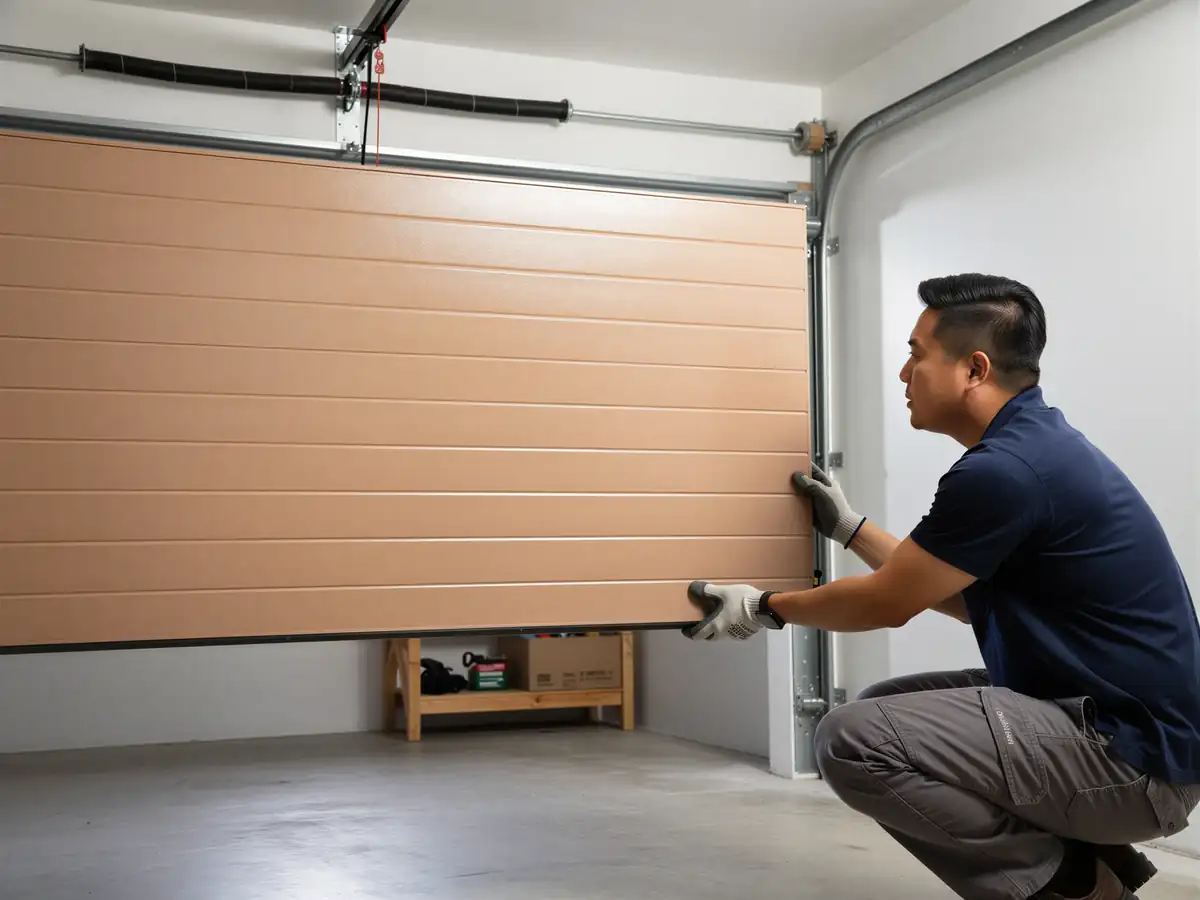
A technician in gloves installs a light brown garage door.
Joliet, IL
8 services
4 service areas
Diagnosis first, then the fix

What You Are Seeing

Shorewood is a small town by household count, about 6,591 of them, which means the maintenance calls we get here cluster around a narrower band of problems than we see across the wider Joliet service area. The housing in Shorewood runs newer too, with a median build year around 2001, a good ten years past the 1991 median for the broader area we cover. That matters for maintenance because newer doors came with better rollers and factory-set spring tension out of the box, but they also came with lighter-gauge hardware that wears differently once it's pushed fifteen or twenty years in. You're less likely to be fighting a door that predates modern torsion setups, and more likely to be dealing with a door that's finally hitting the age where the original rollers and cables start to show their first real wear. We're three miles out from Joliet, so the trip isn't the issue - what's on your door is.

Where This Job Goes Sideways

Most maintenance visits go fine: lube the rollers, check the cable fray, snug the track bolts, test the auto-reverse, done. Where it goes sideways is when a homeowner treats a noisy door as a lubrication problem when it's actually a tension problem. A door built around 2001 that's never had its spring tension checked can drift out of balance slowly enough that you don't notice until the opener starts straining on every cycle. That strain doesn't show up as a loud noise right away - it shows up as a motor gear that wears out early, which gets blamed on the opener when the spring was the real cause. The other way this goes wrong is skipping the track alignment check because the door 'looks fine.' A track that's a quarter-inch off at the bottom can run smooth for months before a roller finally jumps it, usually on a cold morning when the steel has contracted slightly and the tolerances are tighter.

The DIY Question

Lubricating hinges and rollers with the right grease, twice a year, is a reasonable homeowner job and we'd rather you do it than skip it. Visually checking for cable fray, rust on the springs, or a bent bottom bracket - also fine to do yourself. What we don't recommend doing yourself is anything involving the torsion spring itself. These springs hold real stored energy, and adjusting or replacing one without the right bars and clamps has put people in the hospital. If your door feels heavy to lift by hand with the opener disconnected, that's a tension problem, not a lube problem, and it's not a weekend project. The honest limit here: if your door is original to a 2001-era build and nobody's touched the spring tension since, we'd rather check it than have you guess at it.

How We Fix It

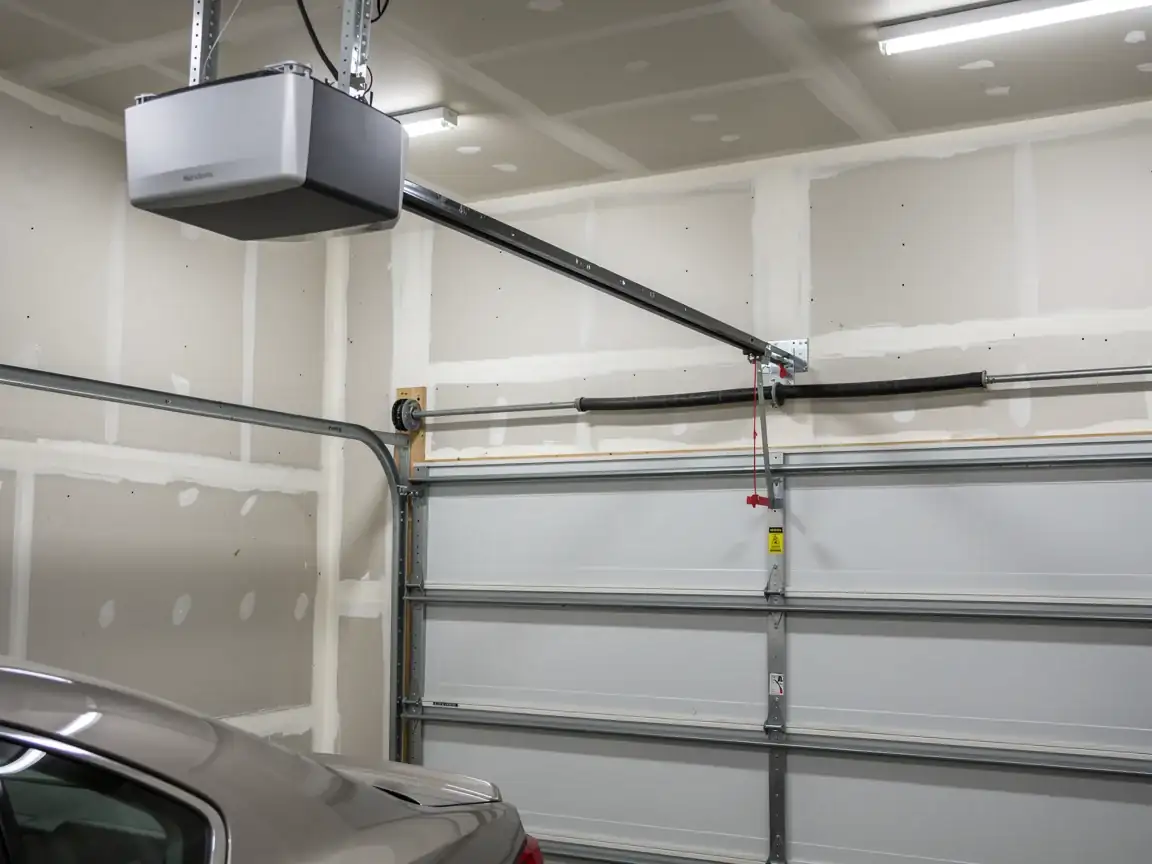
A standard maintenance visit covers the full travel of the door: track alignment, roller condition, hinge wear, cable tension, spring balance test, opener force settings, and the auto-reverse safety check. On the newer stock common in Shorewood, we're usually not replacing parts yet - we're catching the early signs before they turn into a weekend without a working door. That means adjusting spring tension back to spec if it's drifted, tightening track bolts that have worked loose from thousands of open-close cycles, and resetting opener travel limits if the door's started reversing early or late. If we find a roller or cable that's past the point of adjustment, we'll tell you straight and give you the option rather than replacing parts that don't need it yet.

Time on the Job

A standard maintenance visit on a single door runs through the full checklist without needing to pull the door apart, so it's a shorter job than a repair. Where it runs long is if the spring balance test turns up a tension problem - that adds time because we're adjusting under load, carefully, one quarter-turn at a time, checking balance after each turn. Doors built around 2001, which is typical for this town, generally haven't needed a spring replacement yet if they've had any maintenance history at all, so most visits stay on the shorter end.

What Causes It Around Here

This area sits in a cold climate band with real winter swings, and that's the main driver behind most of what we find on maintenance visits regardless of how new the door is. Steel contracts in the cold, grease stiffens, and a door that ran quiet in August can start grinding in January simply because the tolerances tightened up overnight. Household income here runs higher than the area median - $122,648 against $109,064 across the service area - and we mention it because it tracks with what we see: fewer deferred-maintenance doors, more owners who call before something breaks rather than after. That's a good habit to keep, especially heading into the first real cold stretch of the year.
How it works

From “it’s stuck” to “it’s fixed”

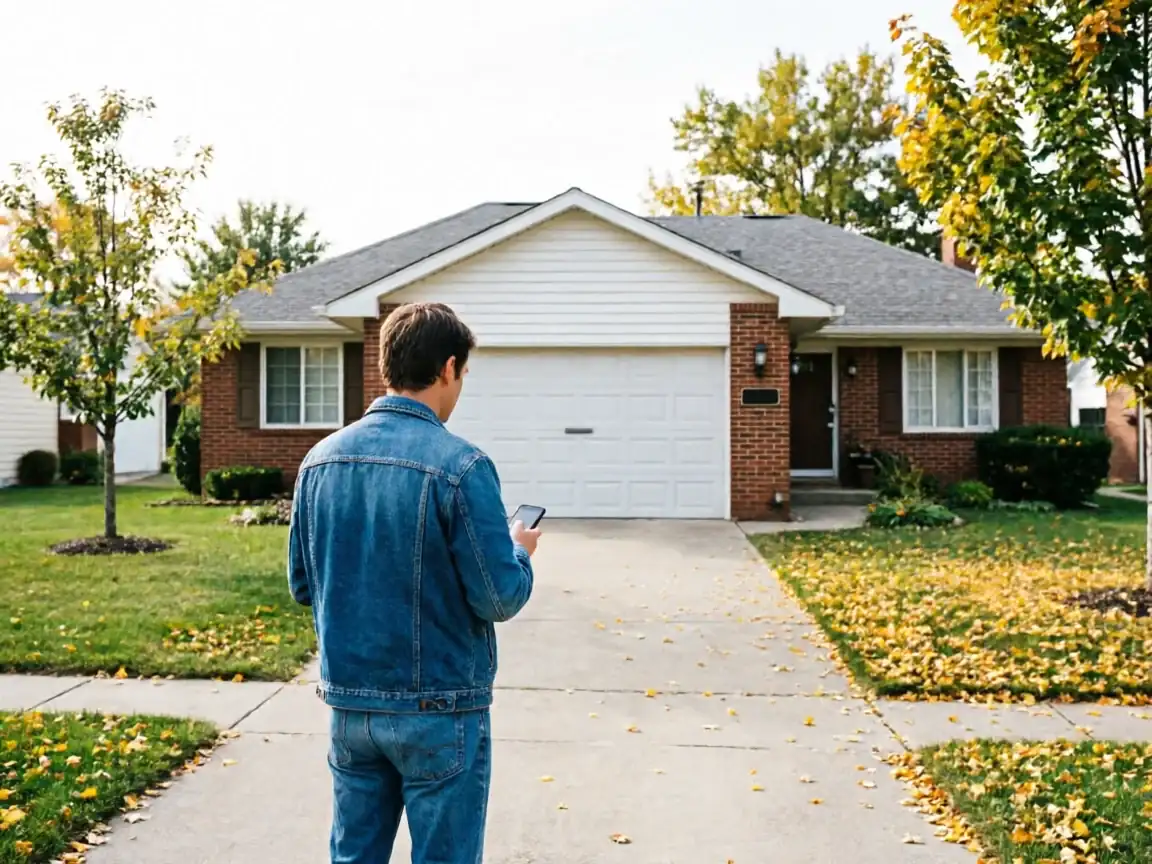
A man in a denim jacket stands in a driveway looking at his phone.

Tell us what’s wrong

Describe the symptom - won’t open, loud bang, opener runs but the door won’t move.

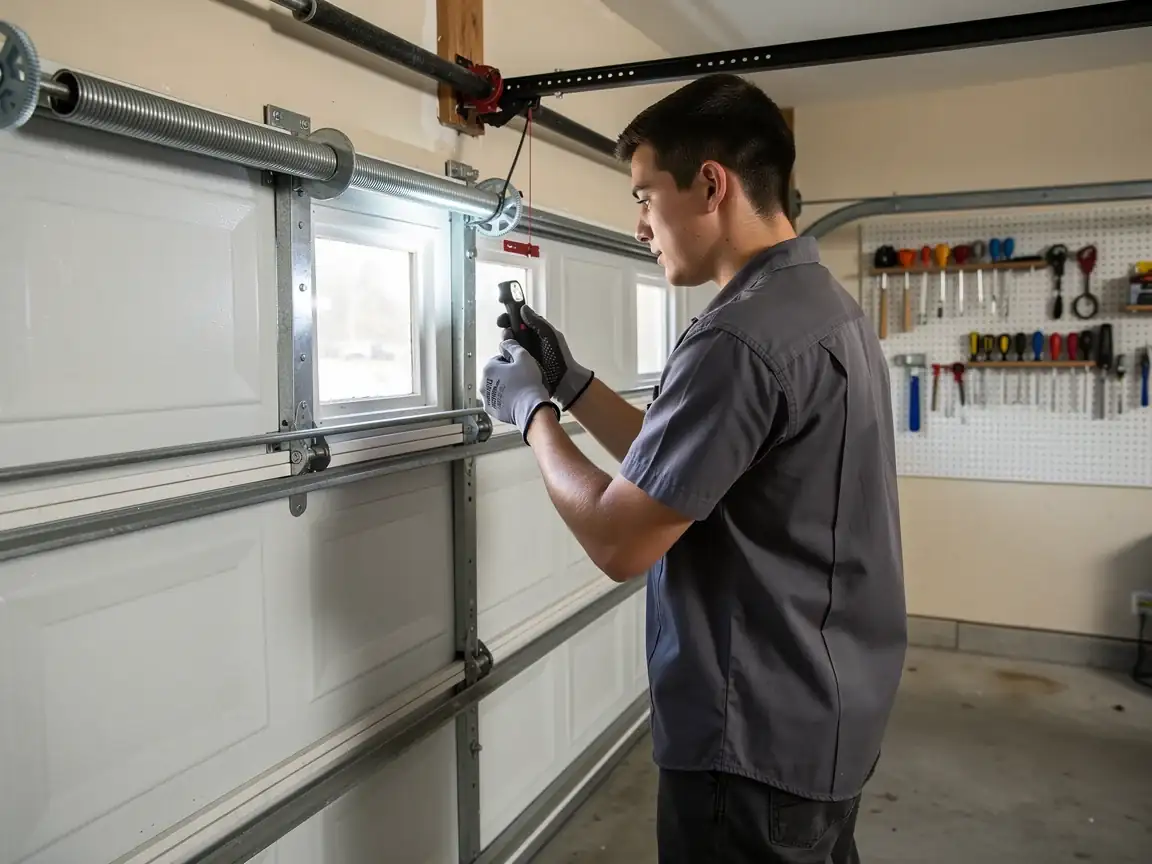
A technician in a gray shirt inspects a white garage door with a flashlight.

On-site diagnosis

A technician tests the door under power and by hand and finds what actually failed.

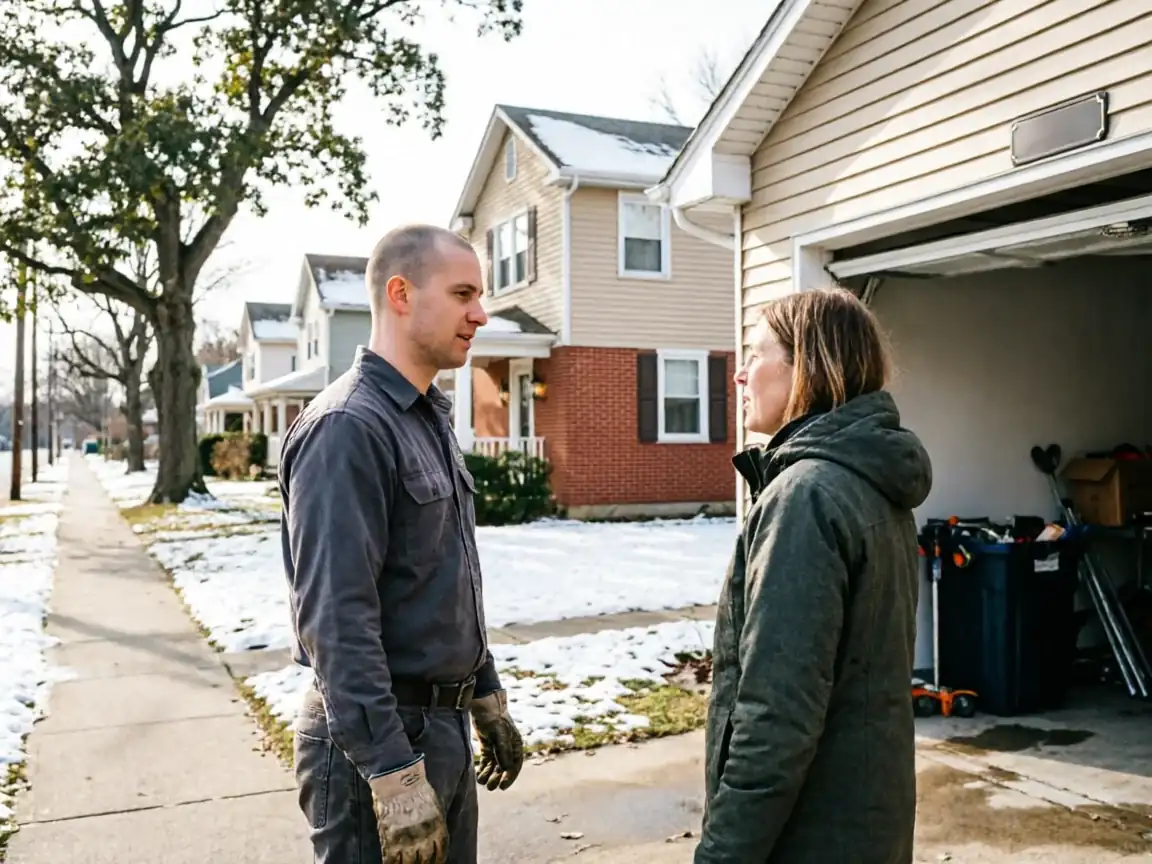
A technician talks to a woman in front of a house with an open garage door.

Clear, up-front plan

You get the fix that’s needed and what drives the cost - before any work starts.

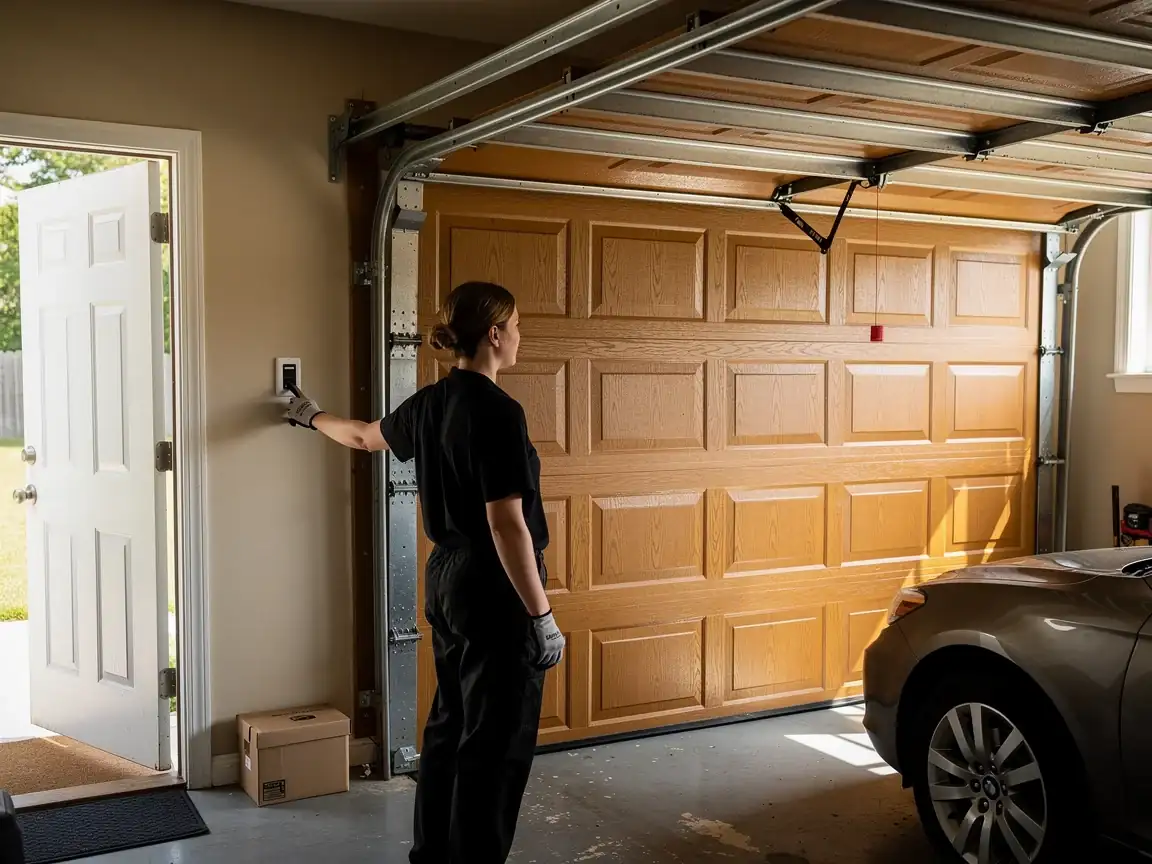
A technician presses a button on the wall next to a closed wooden garage door.

Repaired & tested

The repair is done, the door is set true and tested, and the work area left clean.

Not sure which repair your door needs in Joliet, IL? Describe what it’s doing - every job starts with a diagnosis.

How we work

What to expect

Diagnosis firstEvery visit starts by finding what actually failed - not a pre-written parts list.
The right part for the doorSprings and openers matched to the door’s weight and age, so the fix holds up.
Straight answersWhen a repair makes more sense than a replacement - or the reverse - you hear it plainly.
Clean, careful workTension released safely, hardware set true, the door tested under power before we leave.
147,861Residents in Joliet
8Garage door services
4Neighborhoods & suburbs
ILServing Joliet, IL
Questions

Frequently asked

Straight answers about garage door repair in Joliet. Still unsure? Ask us directly.

How often should a newer garage door in Shorewood get maintenance?

Once a year is the baseline for a door built around 2001 or later, twice a year if you use the garage daily or park a second vehicle in it. The newer hardware holds up well, but rollers and hinges still need lubrication and the spring tension still needs a periodic check, even on a door that looks fine.

Does Joliet Garage Door Pros have a branch in Shorewood?

No. We work out of Joliet and cover Shorewood as part of the service area, about three miles out. There's no local depot here - just a short drive for the crew.

Why does my door act differently in winter?

This area sits in a cold climate band, and steel hardware contracts in low temperatures. A door that runs quiet in summer can start grinding, sticking, or reversing early once the cold sets in, even without any new damage - it's usually tension or lubrication catching up with the season.

Can I just lubricate the door myself and skip a professional visit?

Lubricating rollers and hinges yourself is fine and worth doing twice a year. What a DIY check won't catch reliably is spring balance or opener force settings, both of which take the right tools and carry real risk if done wrong on the spring side.

Ready to get your garage door sorted?

Tell us what it’s doing and where you are in Joliet - we’ll take it from there.

Request a QuoteCall