What Causes It Around Here
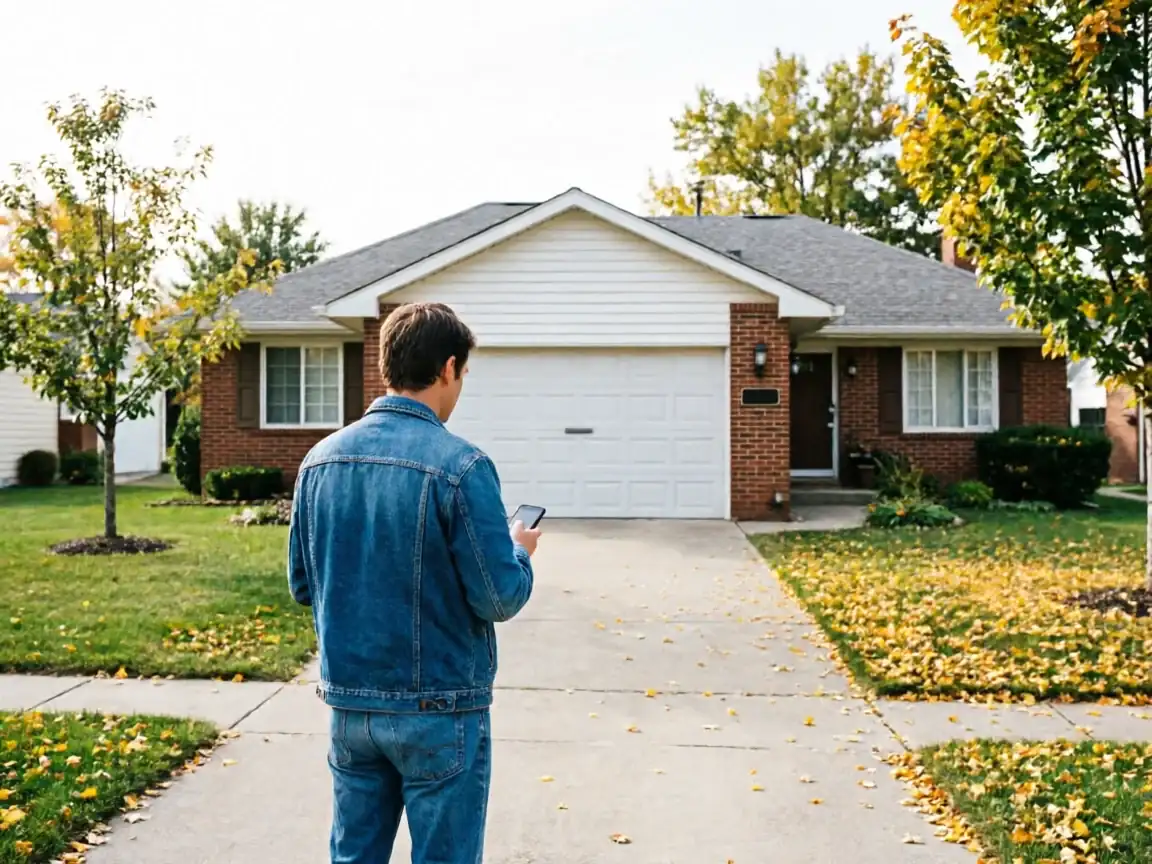
The houses in this service area mostly went up between 1958 and 2004, with the heaviest concentration from the 1980s and 90s. That matters more than people think. A torsion spring is rated for a number of cycles, not a number of years, and a door that's been opening and closing since the Reagan or Clinton era on original hardware is well past the point where the spring should have been swapped out. Rollers wear the same way - nylon gets brittle, ball bearings dry out, and nobody notices until the door starts binding in the track.
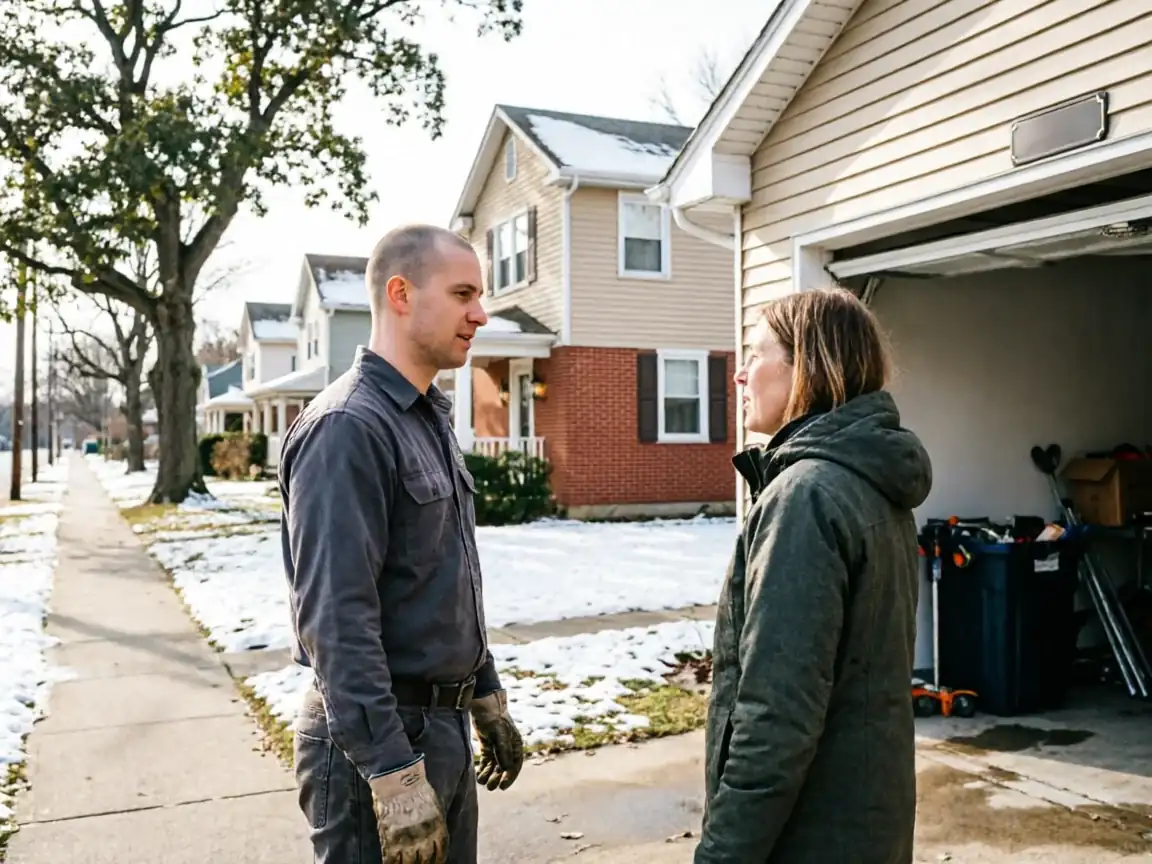
Then there's the climate. This area sits in a cold, moderate band, which means real freeze-thaw cycles every winter. Steel track contracts in the cold and expands when the sun hits it, and that constant movement works lag screws loose at the jamb brackets over a few seasons. Weatherstripping along the bottom panel hardens in low temperatures and stops sealing, which lets cold air and road salt spray into the garage. None of this is dramatic - it's gradual wear that shows up as noise, drift, or a door that struggles on the coldest mornings. Across the roughly 28 communities we cover, the pattern repeats on both older split-levels and newer subdivision builds, because the age range of the housing stock is wide but the climate hitting all of it is the same.
How We Fix It
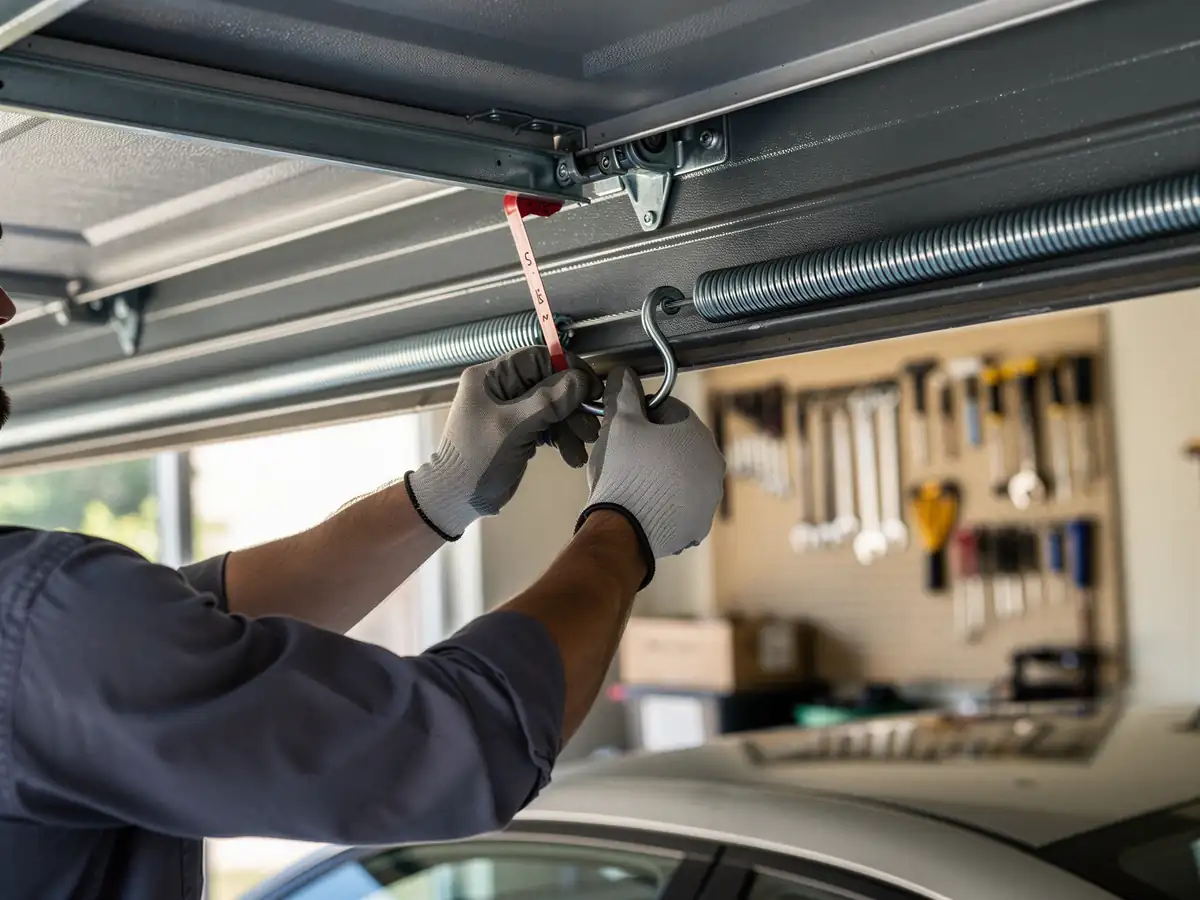
A maintenance visit starts with the spring
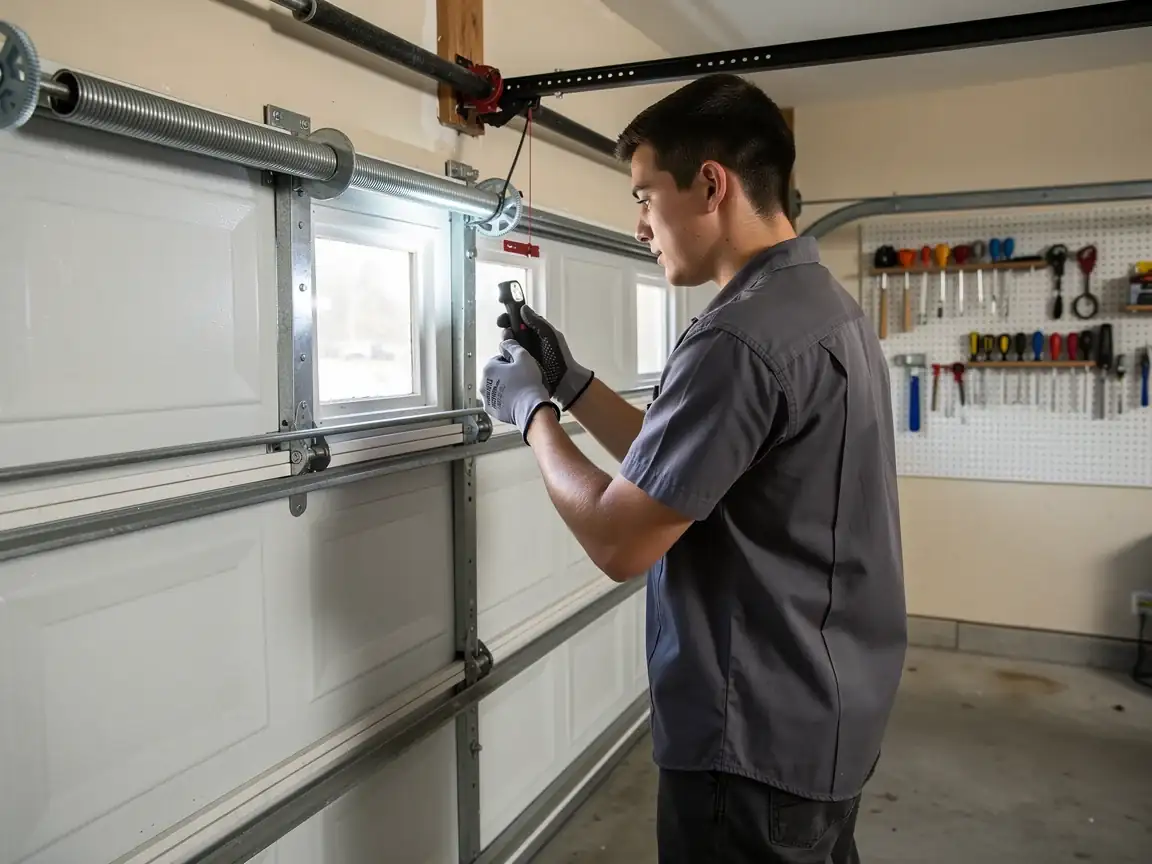
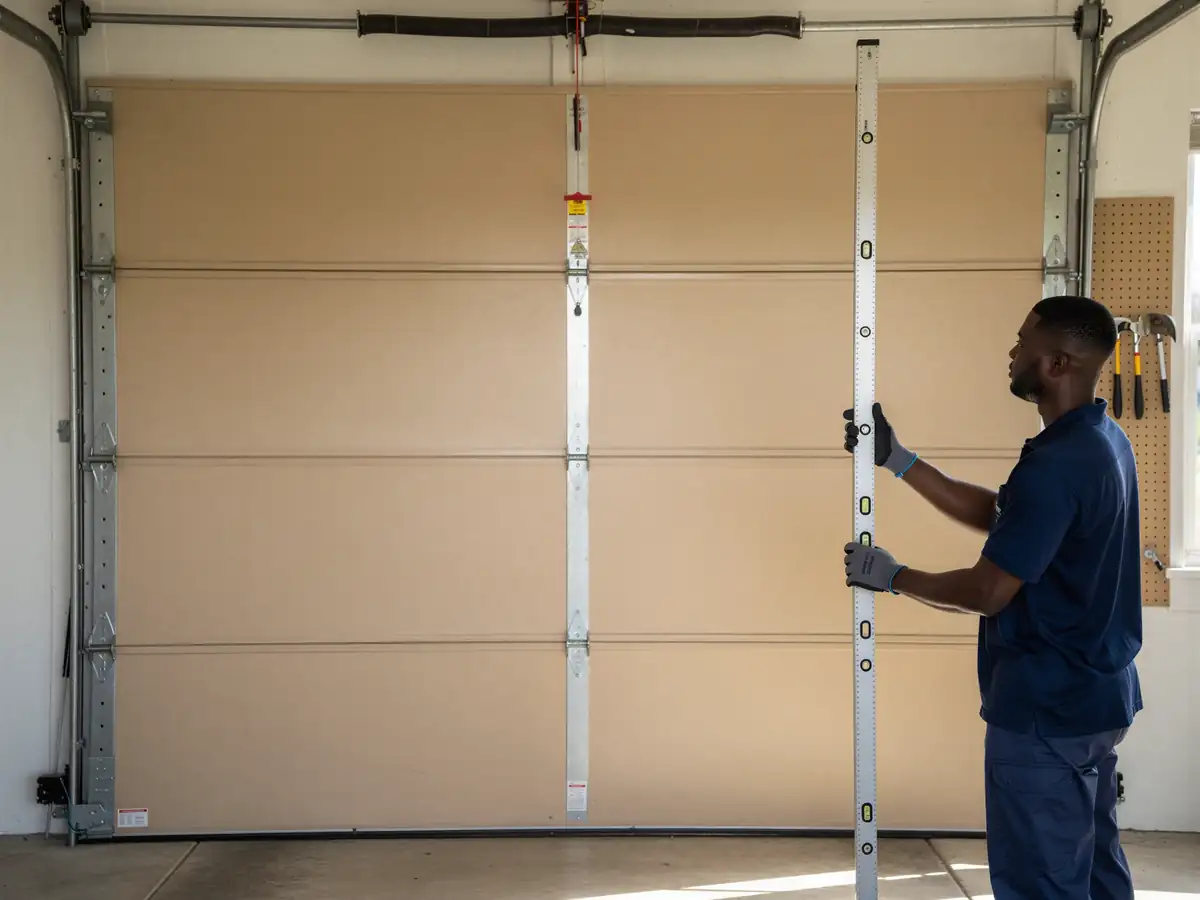
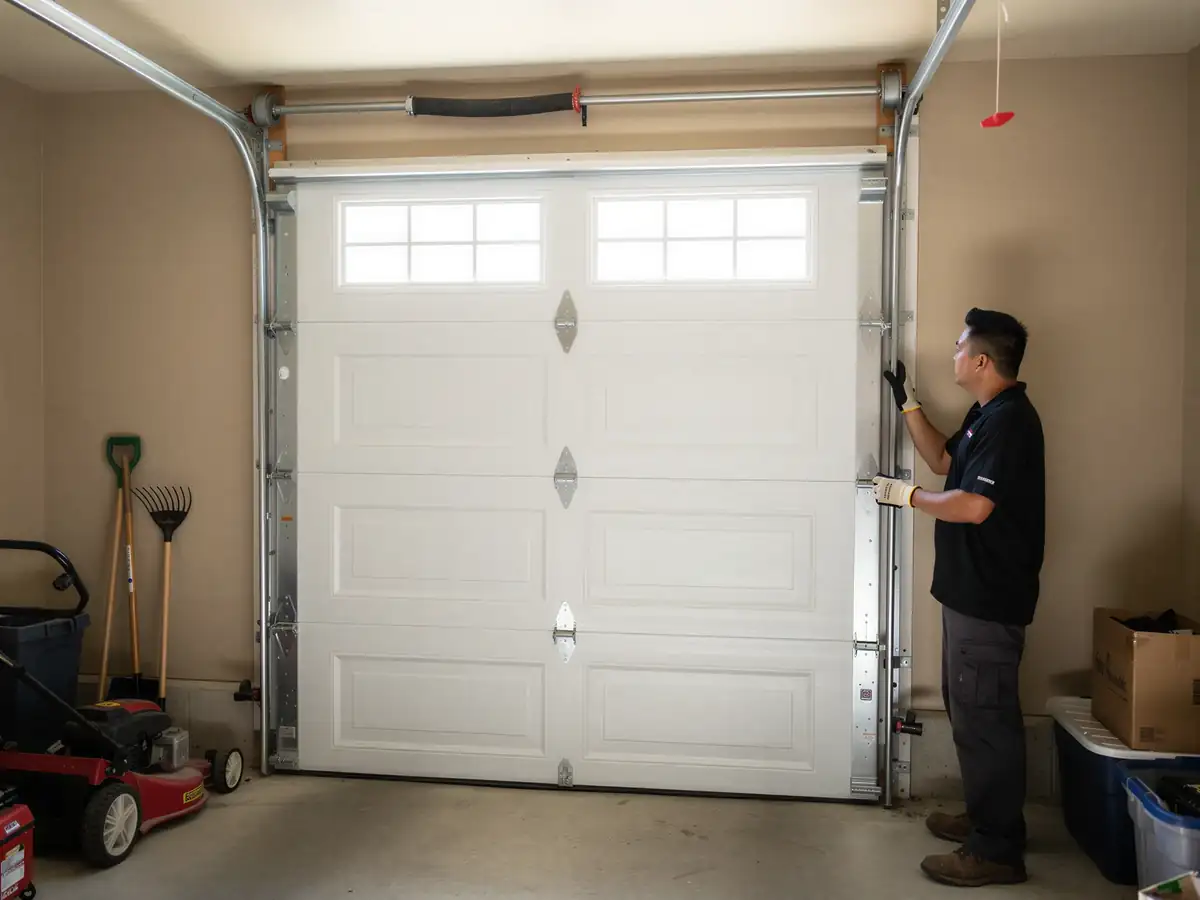
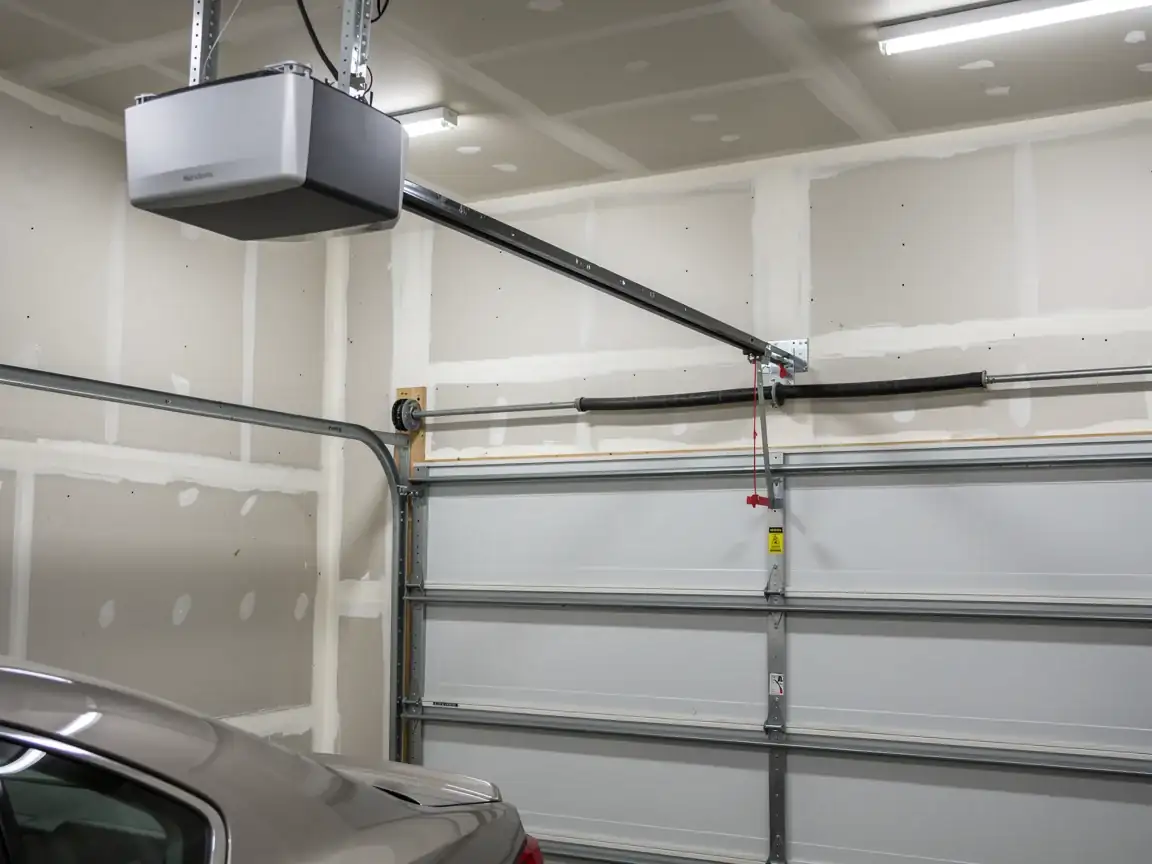
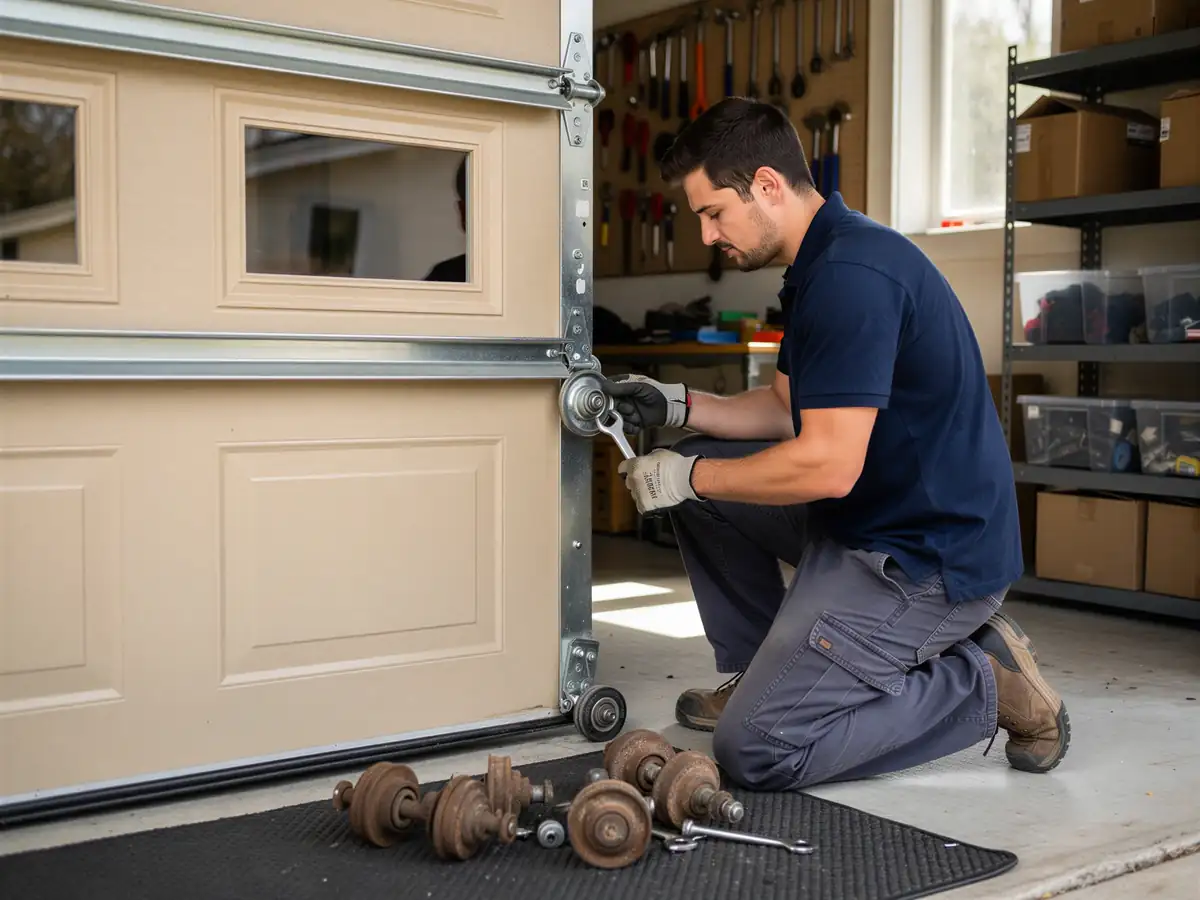
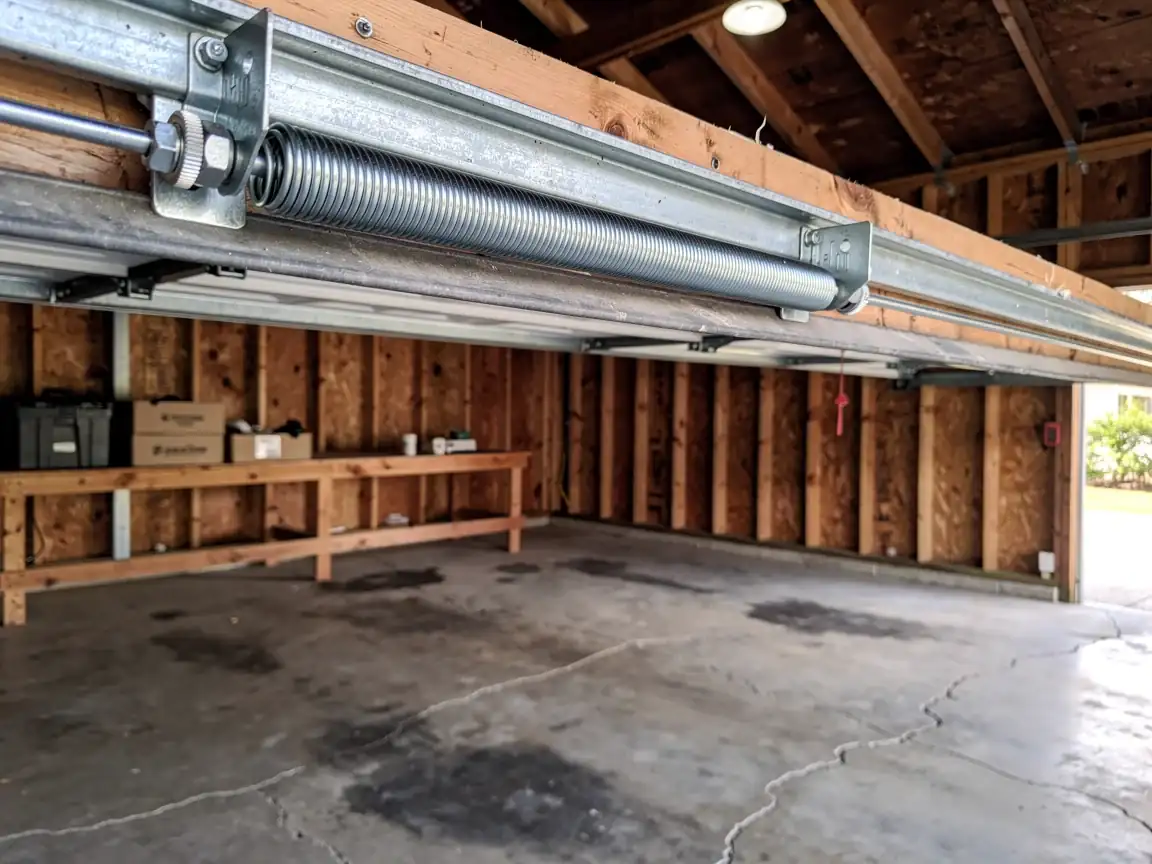
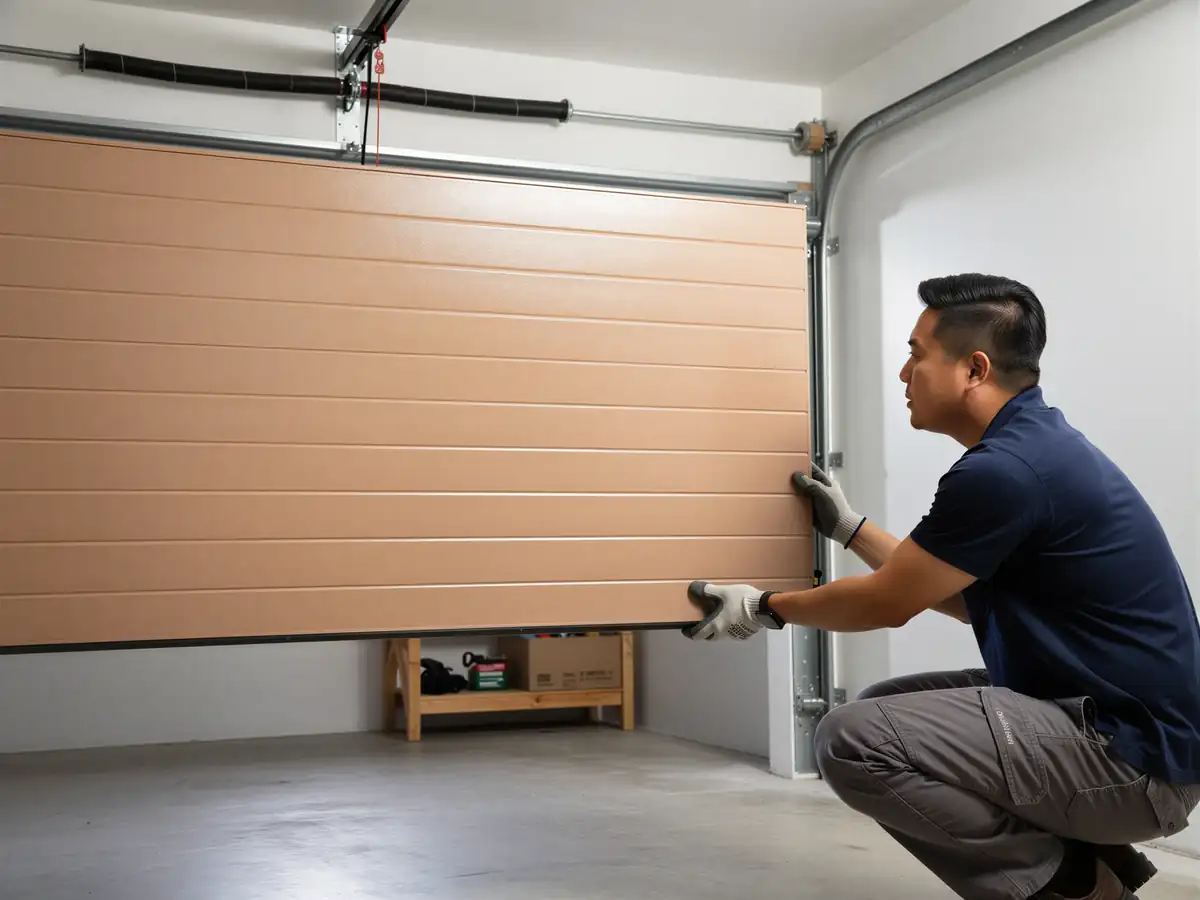
We check torsion or extension spring tension against the door weight and look for stretched coils or rust pitting, since a spring that's out of balance is what makes an opener strain and burn out early. From there we go down the track: rollers get inspected and lubricated or replaced if they're cracked, hinges and brackets get tightened back to the jamb, and we check the cable drums for fraying.
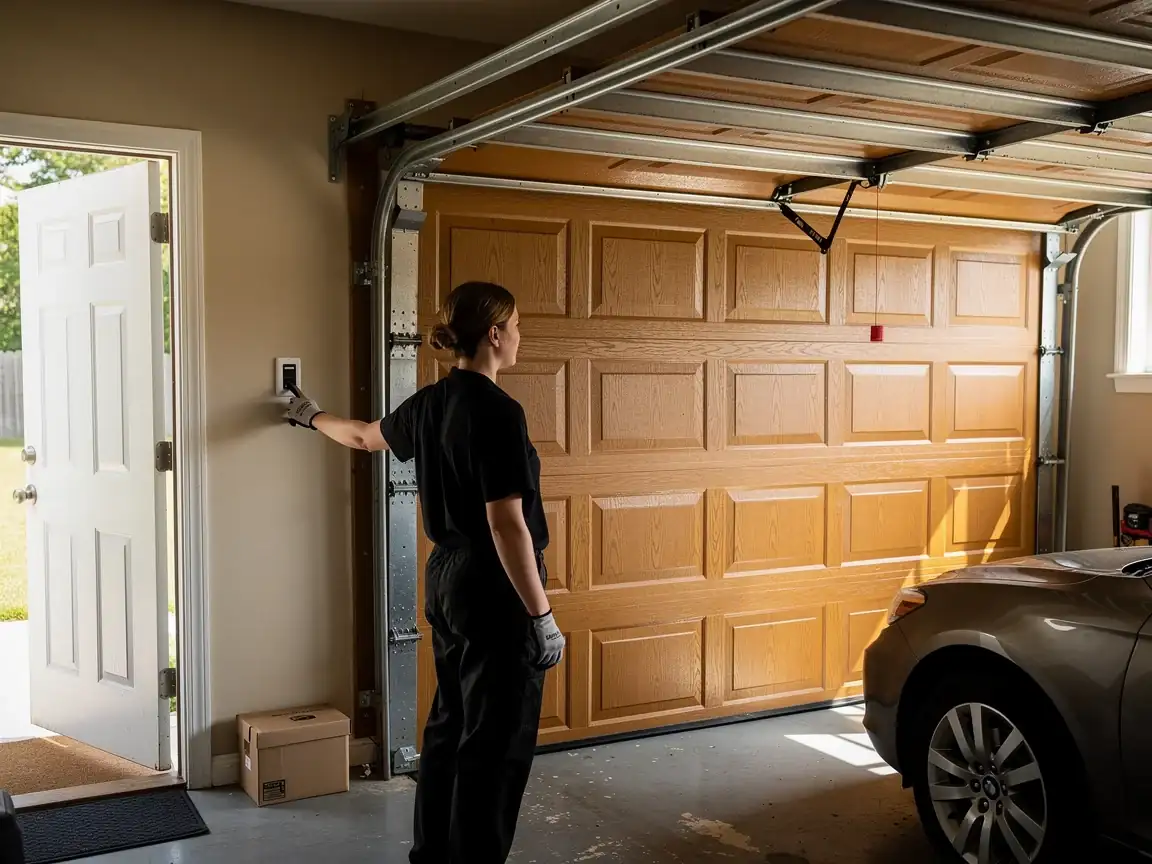
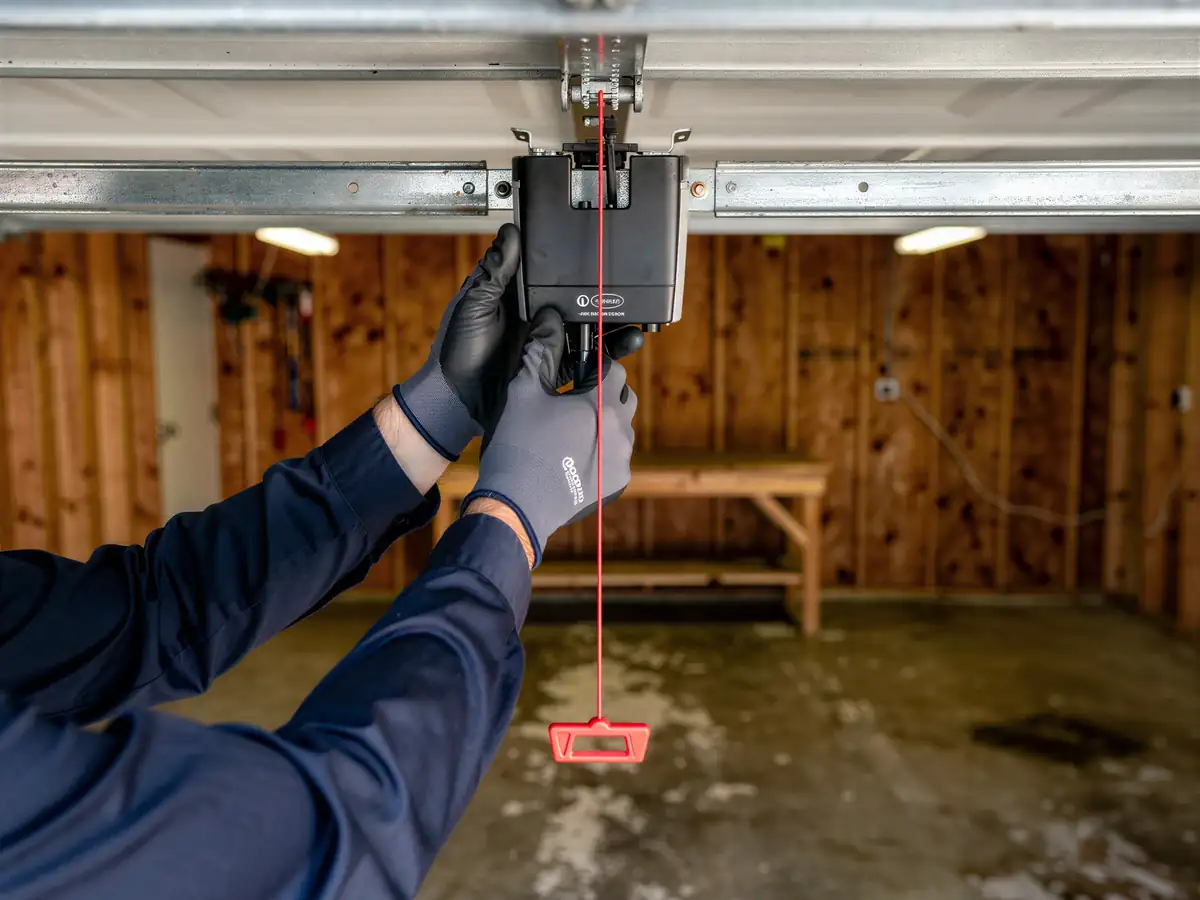
We also test the opener's force and travel limits
Because a door that slams down or reverses on nothing is usually an adjustment problem, not a motor problem. Weatherstripping gets checked for hardening and replaced if it's no longer sealing. We don't do structural carpentry on a rotted jamb or header - if the wood framing the door is failing, that's a repair outside a maintenance call and we'll tell you straight that it needs separate work before the door itself can be properly tuned. A tune-up catches the wear items before they turn into a 6am cable snap; it doesn't fix a frame that's already gone.
How to Book
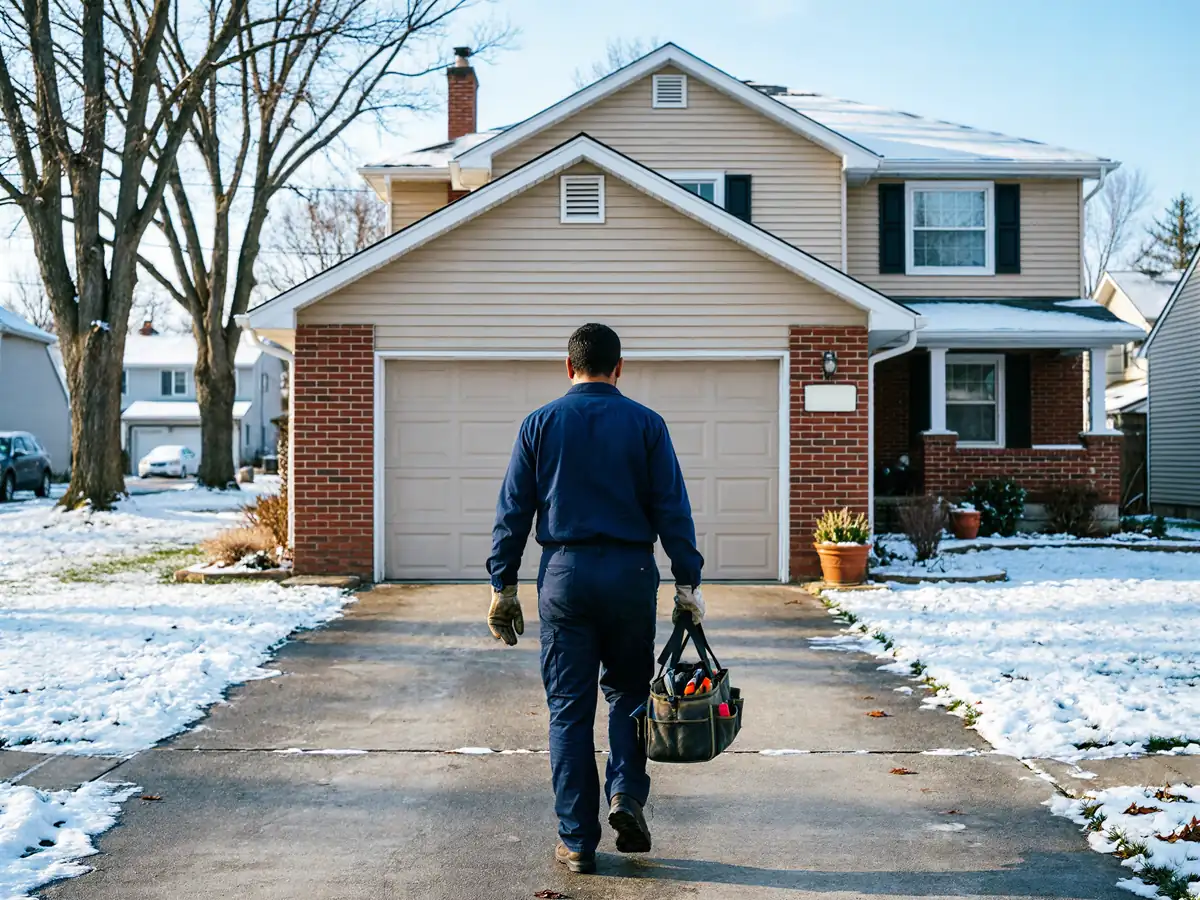
We cover Joliet and the surrounding towns in this service area, roughly out to a 20-mile radius, which puts a lot of 1960s-through-1990s housing stock in reach of one truck route. With 90,342 owner-occupied houses among the 155,329 households here, most of what we see is a variation on the same wear pattern rather than something exotic.
Booking is simple: head to our site and request a maintenance visit, and we'll get a time on the calendar. If you've never had the door serviced since it was installed, say so when you call - it changes what we check first. We don't require a long-term contract to get a tune-up scheduled.
What You Are Seeing
A door that used to glide now hesitates partway up, or the opener grinds louder than it used to - that's usually a spring losing tension or rollers drying out, not the motor failing. If the door looks tilted when it's open, one cable or spring is probably carrying more load than the other, which is a balance problem worth catching before a cable snaps.
In winter, a door that's noticeably slower or stiffer on cold mornings is often just hardware contracting in the cold, but it's also when loose screws and worn weatherstripping get exposed the fastest. Gaps along the bottom panel, drafts in the garage, or a seal that's visibly cracked and stiff are signs the weatherstripping is past its working life. None of these on their own mean the door is about to fail, but together they're the signs a maintenance visit is overdue rather than optional.