What Causes It Around Here
Most of the housing in and around Joliet went up between 1958 and 2004, with the median build year landing right at 1991. That's a long stretch of construction, which means a wide mix of torsion spring setups still in service - some original to the house, some replaced once, a few never touched. Across the broader area, the bulk of that stock dates to the 1980s and 90s, which is the window when builders standardized on torsion springs over the old extension-spring setups, but didn't always size them generously.
The bigger factor is the climate band. Joliet sits in a cold moderate zone, and that means real swings - a door that cycles fine on a 55-degree afternoon gets asked to do the same work at 10 degrees with ice on the tracks. Steel contracts in the cold, torque changes, and a spring that's been slowly fatiguing for a decade picks the coldest morning of the year to finally let go. That's not bad luck. It's physics acting on metal that's already near the end of its cycle count, and it's why we see a spike in calls every time the temperature drops hard and fast rather than a steady trickle all year.
How We Fix It
A broken torsion spring gets replaced, not patched
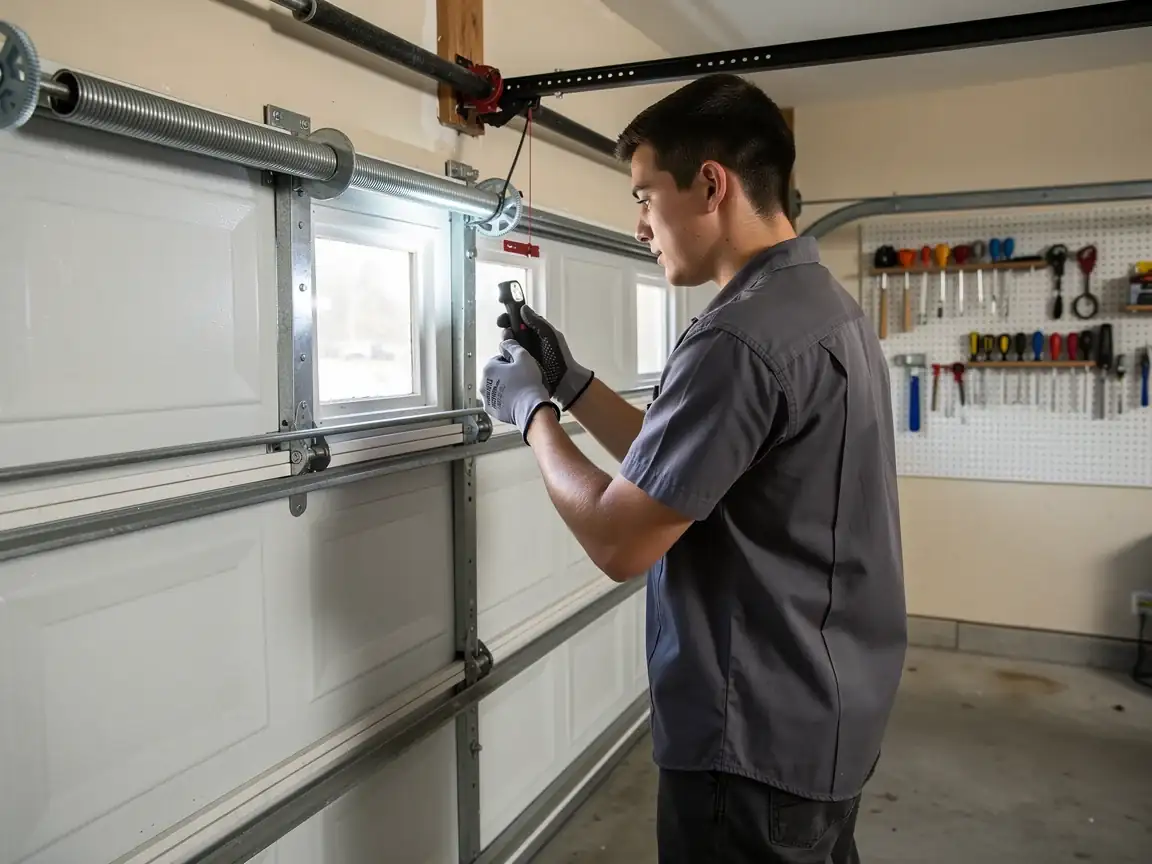
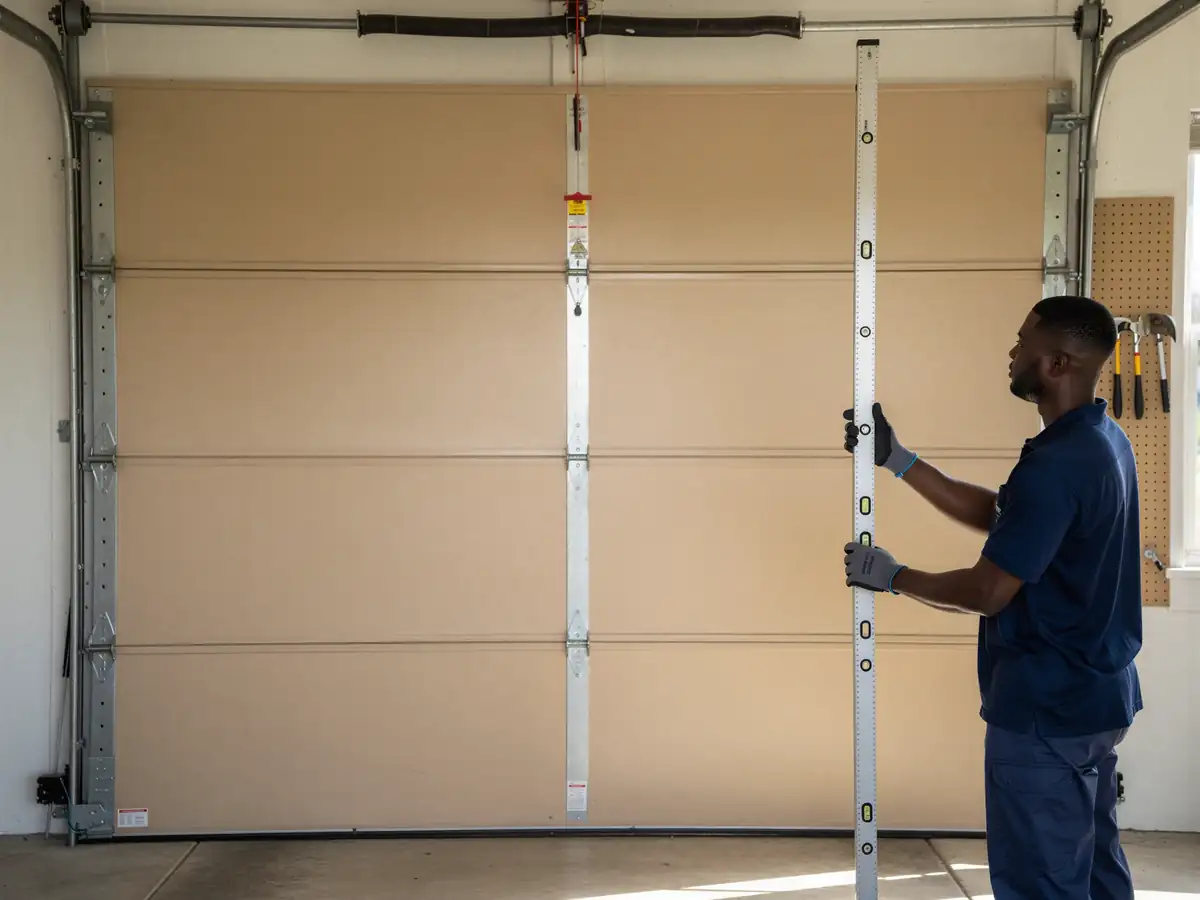
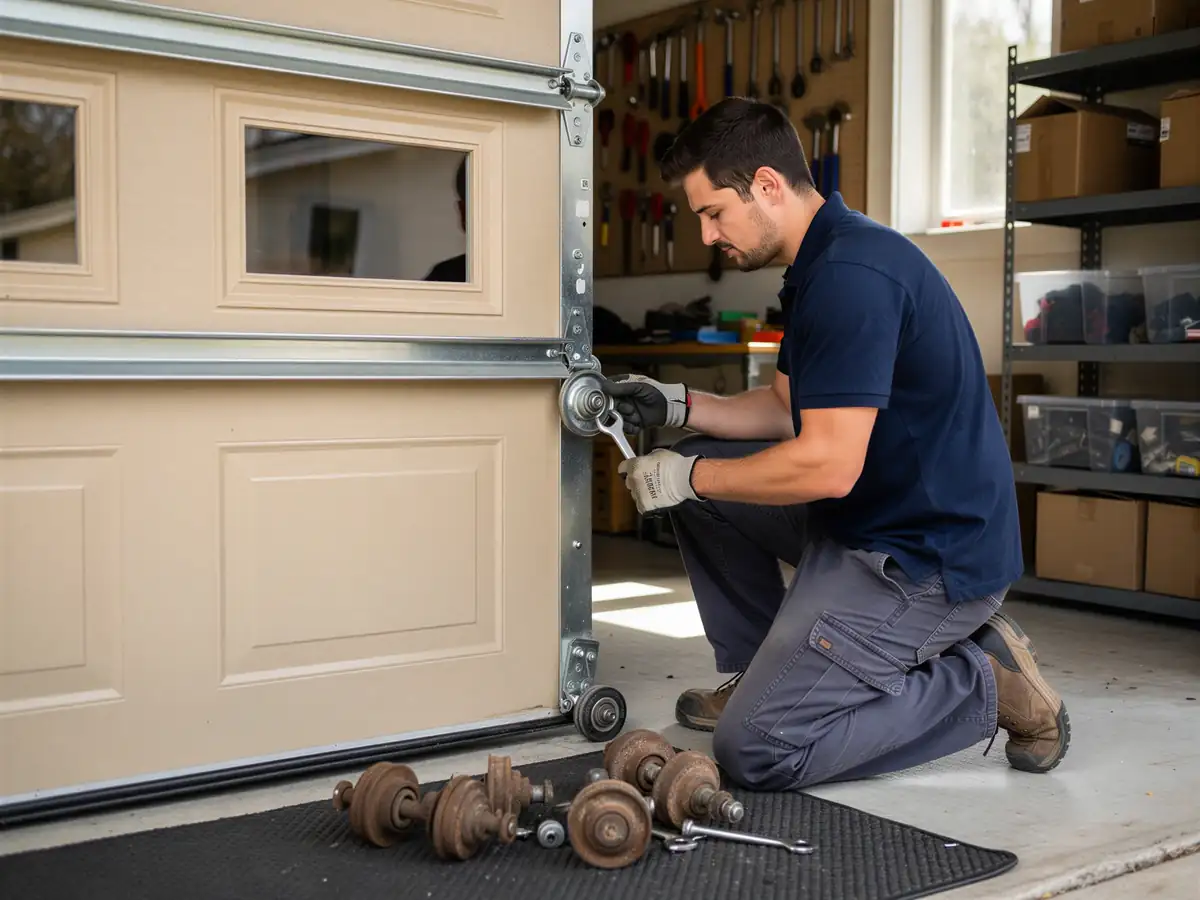
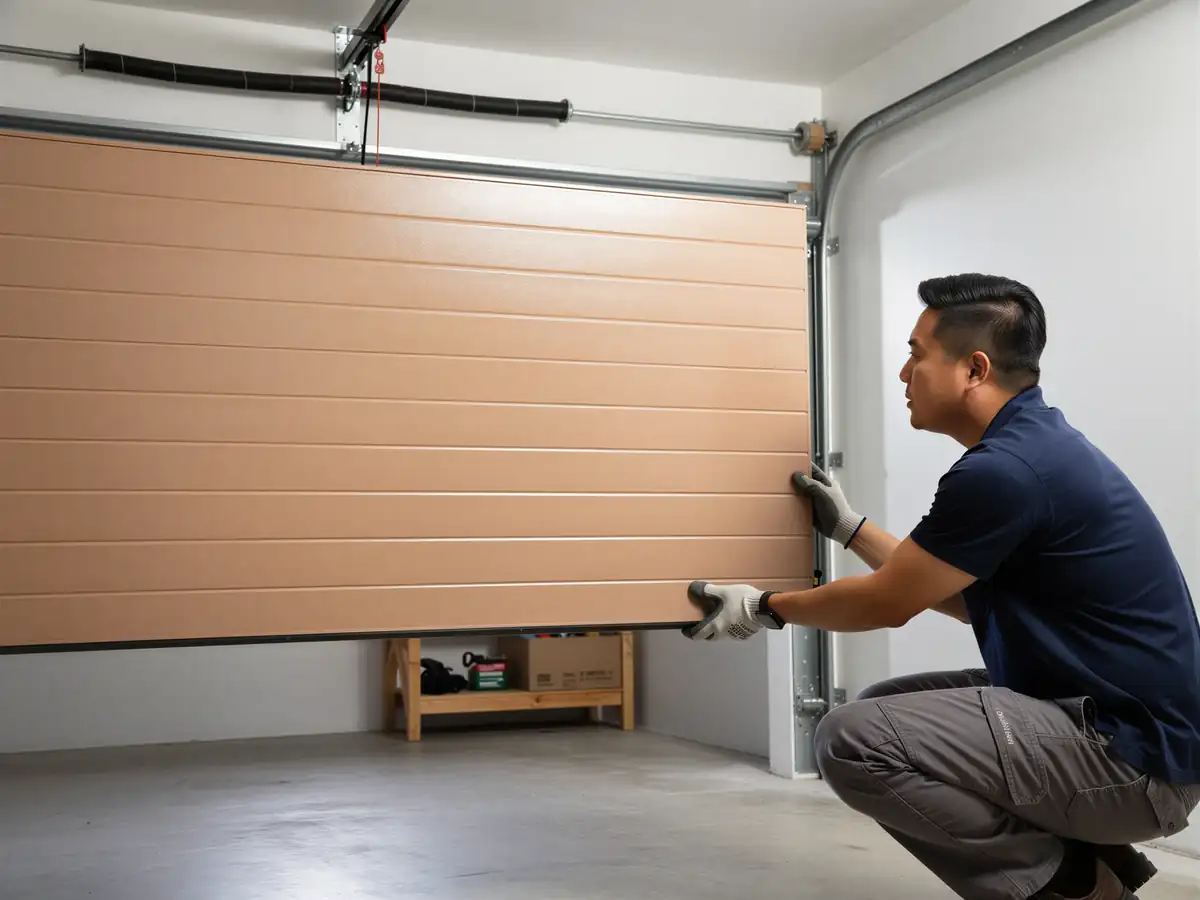
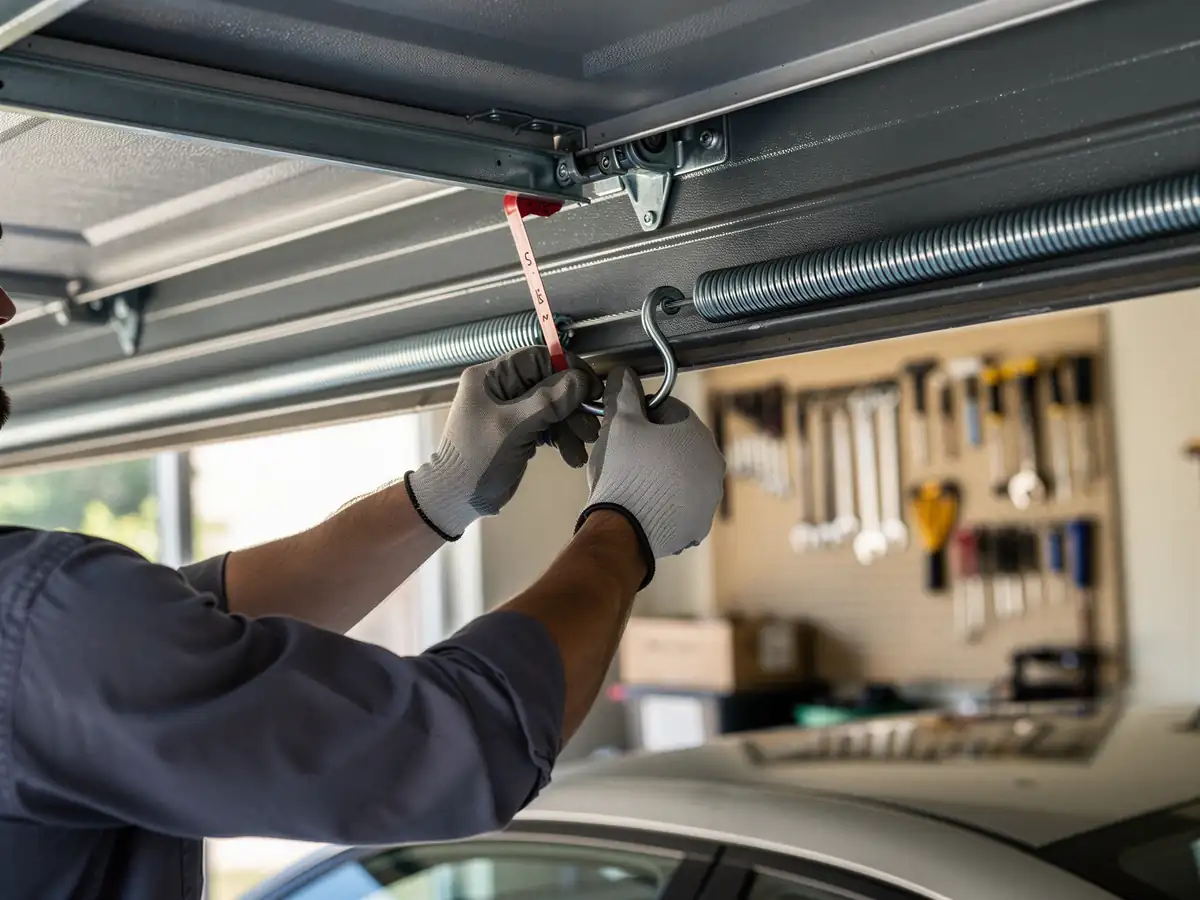
There's no safe way to repair a snapped spring, and springs rated for the weight of your door are sized to the door, not guessed at. We measure the door, check the drum and cable for wear, and replace in pairs on most doors so the two sides age together instead of one failing six months after the other.
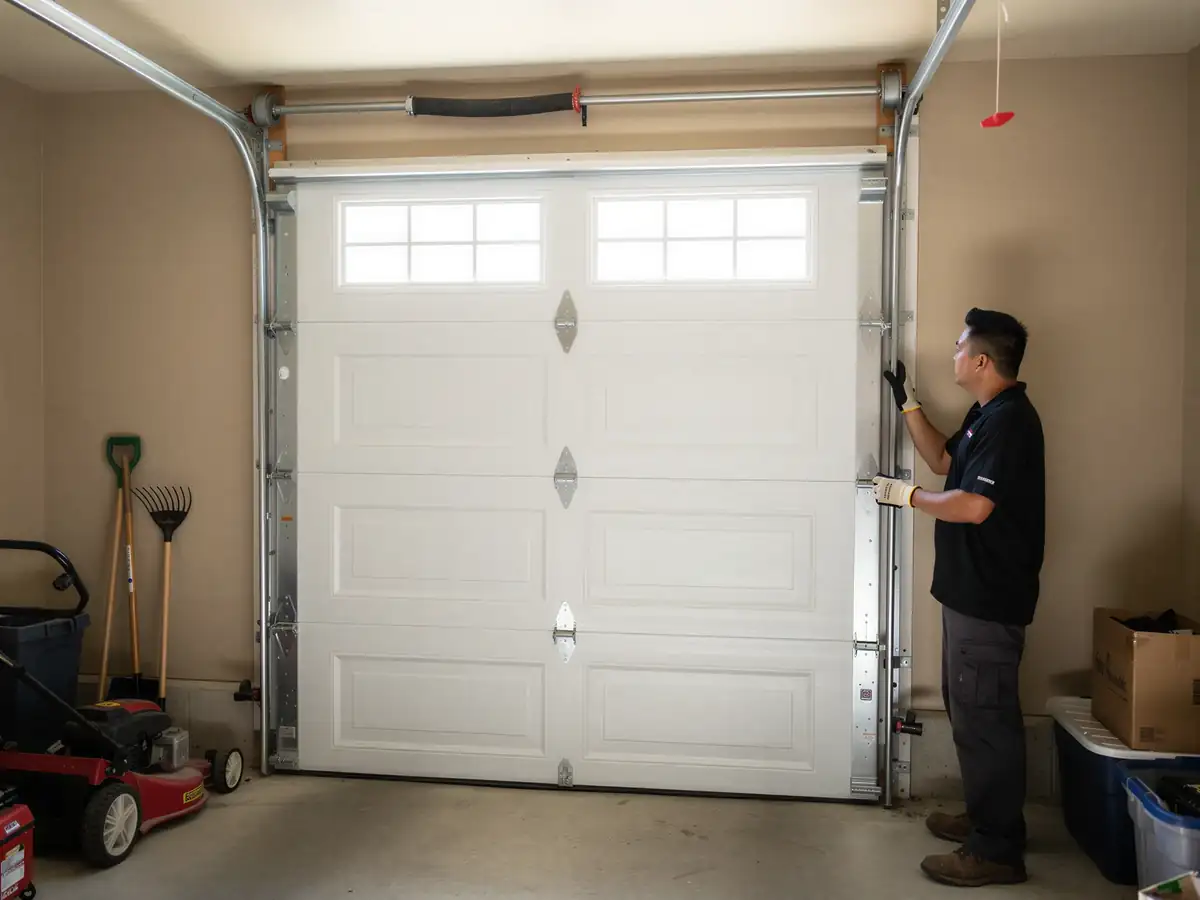
If the spring let go while the door was open, we also check the torsion tube, the end bearings, and the cable drums for damage
A spring under tension that snaps can bend hardware on its way out, and skipping that check is how a "finished" job calls us back in a month.
Here's the honest limit
If your door is older than the spring problem and the track, rollers, and panels are all showing their age too, a spring swap on their own can be throwing good money after a door that's close to needing full replacement anyway. We'll tell you straight if that's what we're looking at instead of just swapping the part and sending you an invoice.
How to Book
Call or book through the site and tell us it's a spring - broken, sagging, or a door that won't stay up on its own. That lets us bring the right spring sizes on the first trip instead of guessing.
We cover the Joliet service area, which runs out to towns like Shorewood (3 miles), Crest Hill (4), Fairmont (6), Elwood (7), Romeoville and Lockport (8 each), and further out to Minooka, Channahon, Manhattan, Homer Glen, Lemont, Wilmington, Mokena, Frankfort, Woodridge, Boulder Hill, Orland Hills, Diamond, Morris, Braidwood, Yorkville, Montgomery, Coal City, Frankfort Square, Darien, Lisle, Palos Park, and Burr Ridge. If your town's on that list, the spring work is the same job - what changes house to house is the door size and the hardware, not the fix.
For the specifics on your own street, check the page for your town if one's listed; this page covers the repair itself across the whole area we run trucks in.
What You Are Seeing
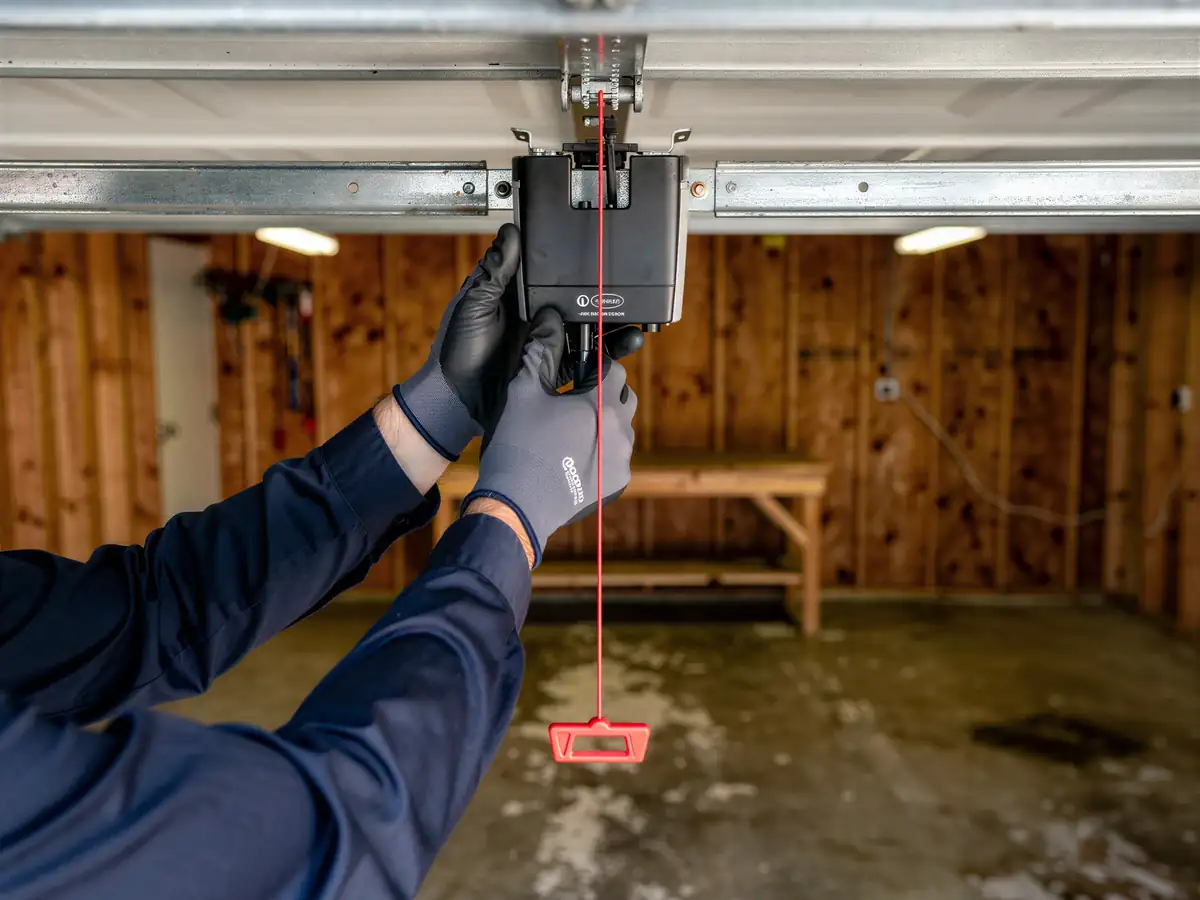
A spring that's actually broken usually announces itself: the door won't lift with the opener, or if you pull the release cord it slams down instead of sliding. You might hear a loud bang from the garage hours or days before - that's the spring snapping under tension, even if the door doesn't fail right away.
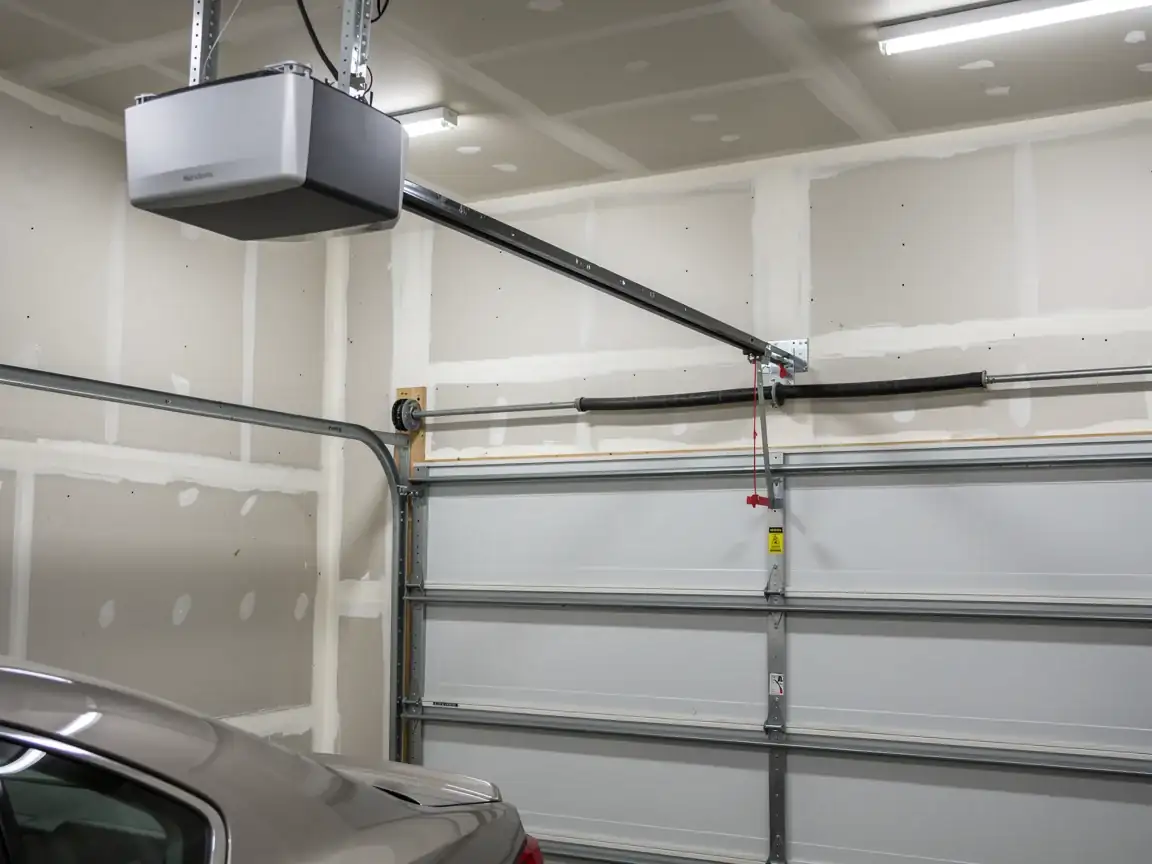
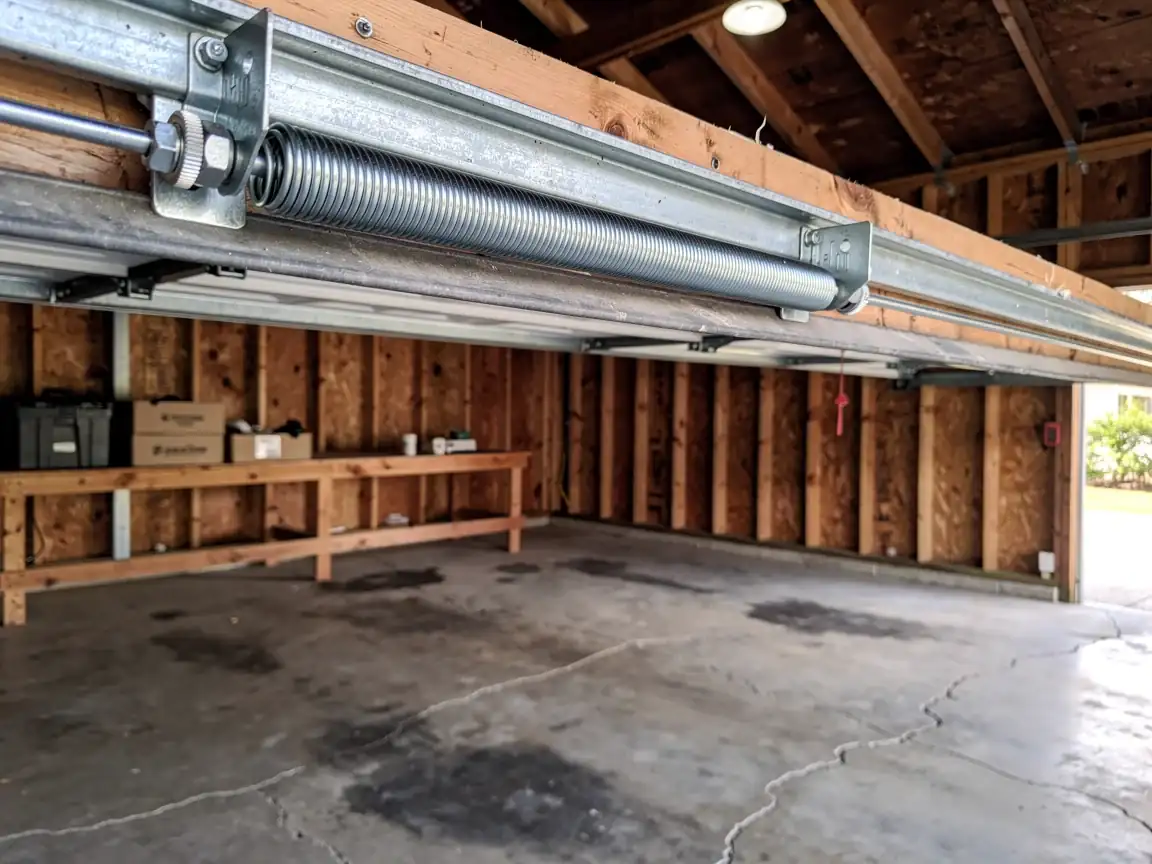
Short of a full break, watch for a door that feels noticeably heavier than it used to, one that the opener strains against, or a gap you can see in the coiled torsion spring above the door when it's closed. A door that won't stay open on its own when you pull the release is also a spring losing tension, not an opener problem.
Don't try to force a stuck door open by hand past the first attempt - a spring under partial tension can still move fast enough to hurt someone, and that's the one piece of this job we tell every caller not to touch themselves.