What Is Going On
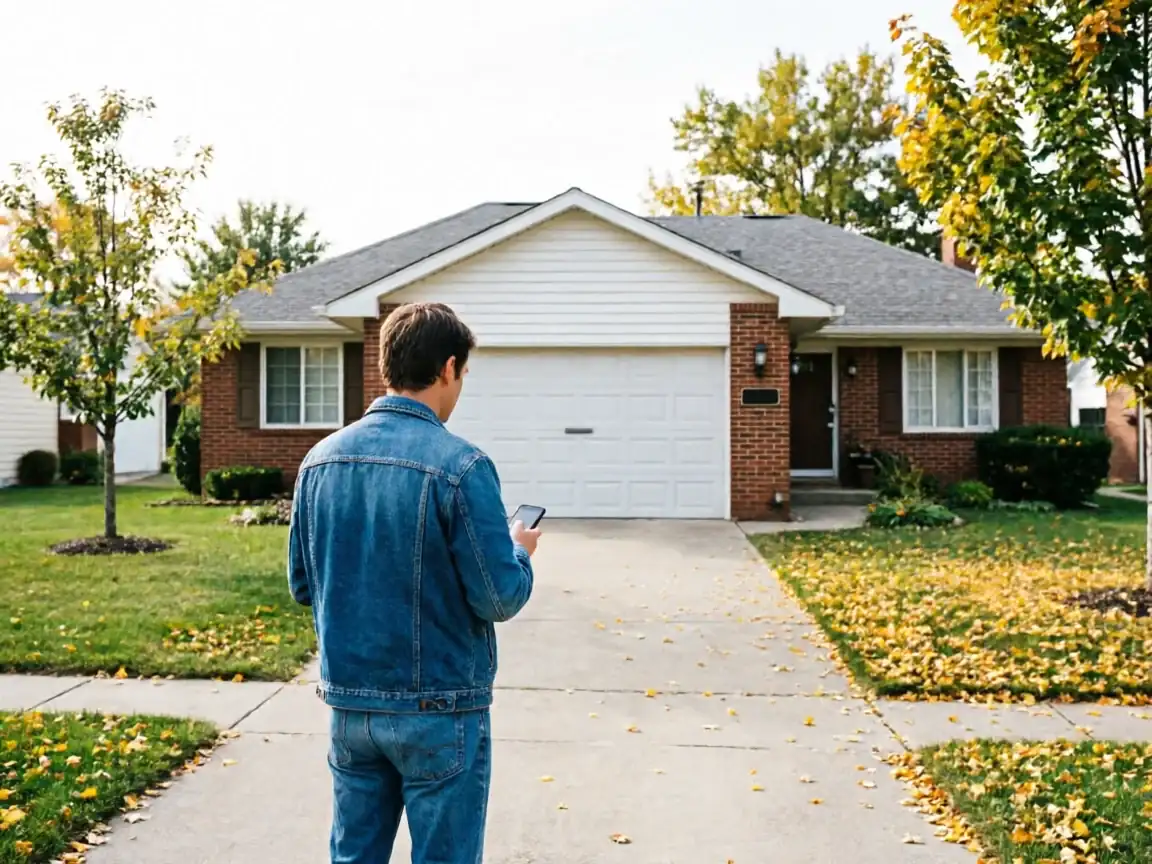
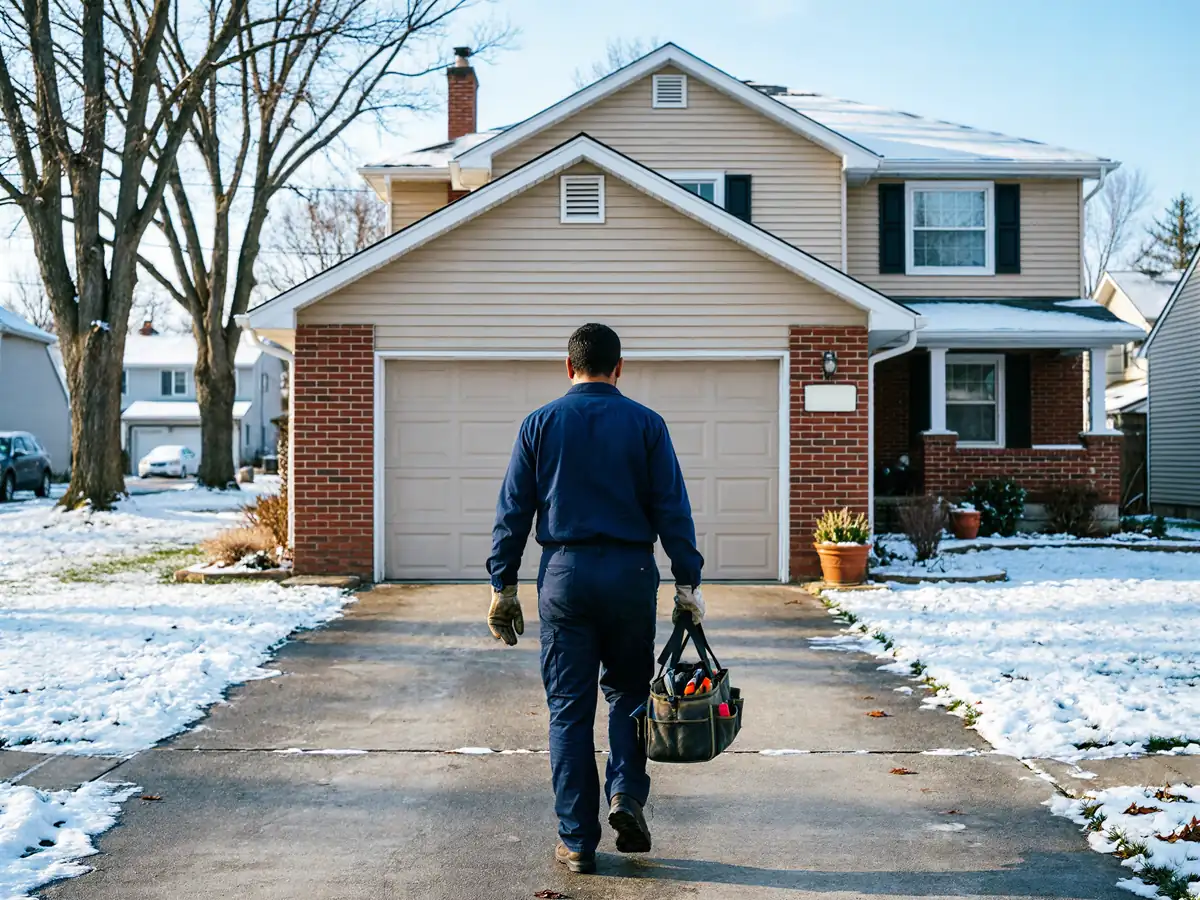
Across Joliet, most garage doors sit on houses built between 1958 and 2004, with the typical home dating to 1991. That matters more than people think. A door from that era usually came with torsion or extension springs sized for the original panel weight, and over thirty-plus years those springs, cables, and rollers wear down at different rates depending on how the house was built and how often the door got used.
The housing stock spans 28 named areas around Joliet, mostly built in the 1980s and 90s, which means the hardware isn't uniform street to street. One subdivision might still run original steel rollers on a track that's never been realigned. Another might have had an opener swap at some point without the track or spring getting touched. A service call starts by figuring out which of those situations you're actually in - not guessing from a phone description.
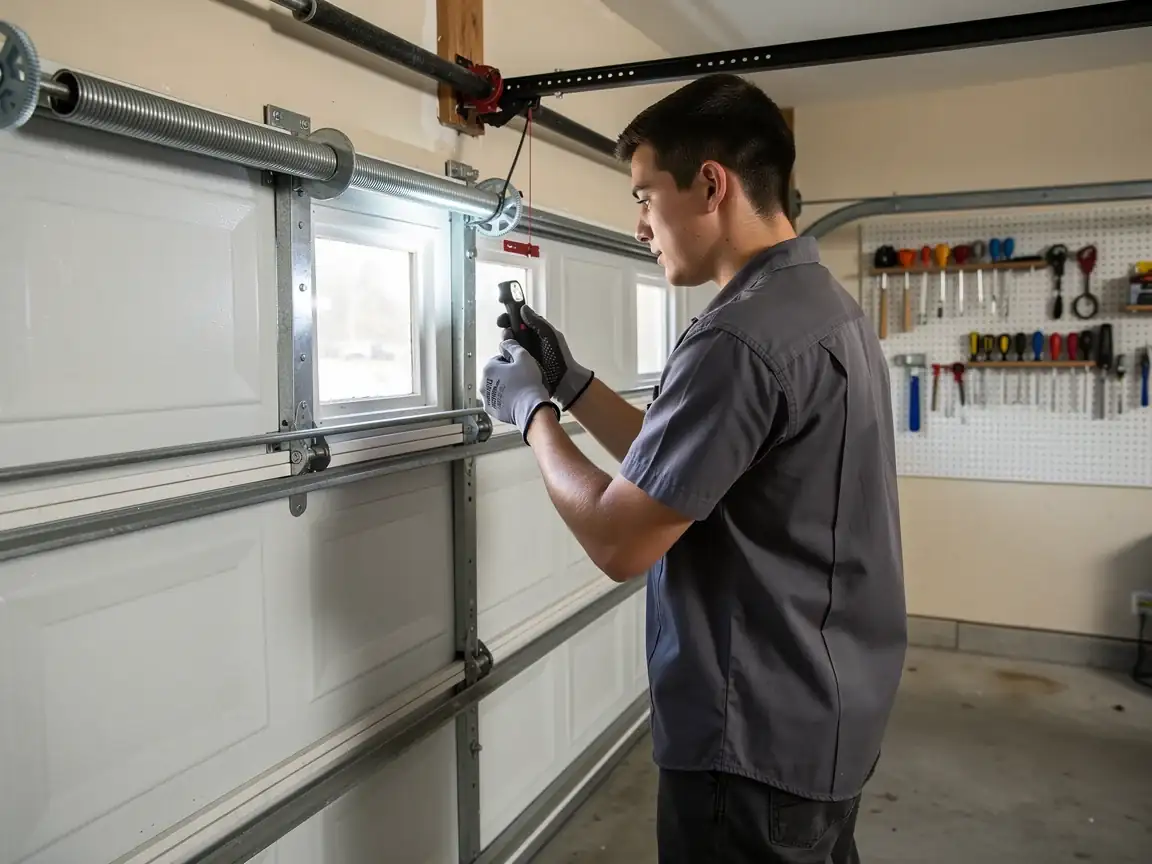
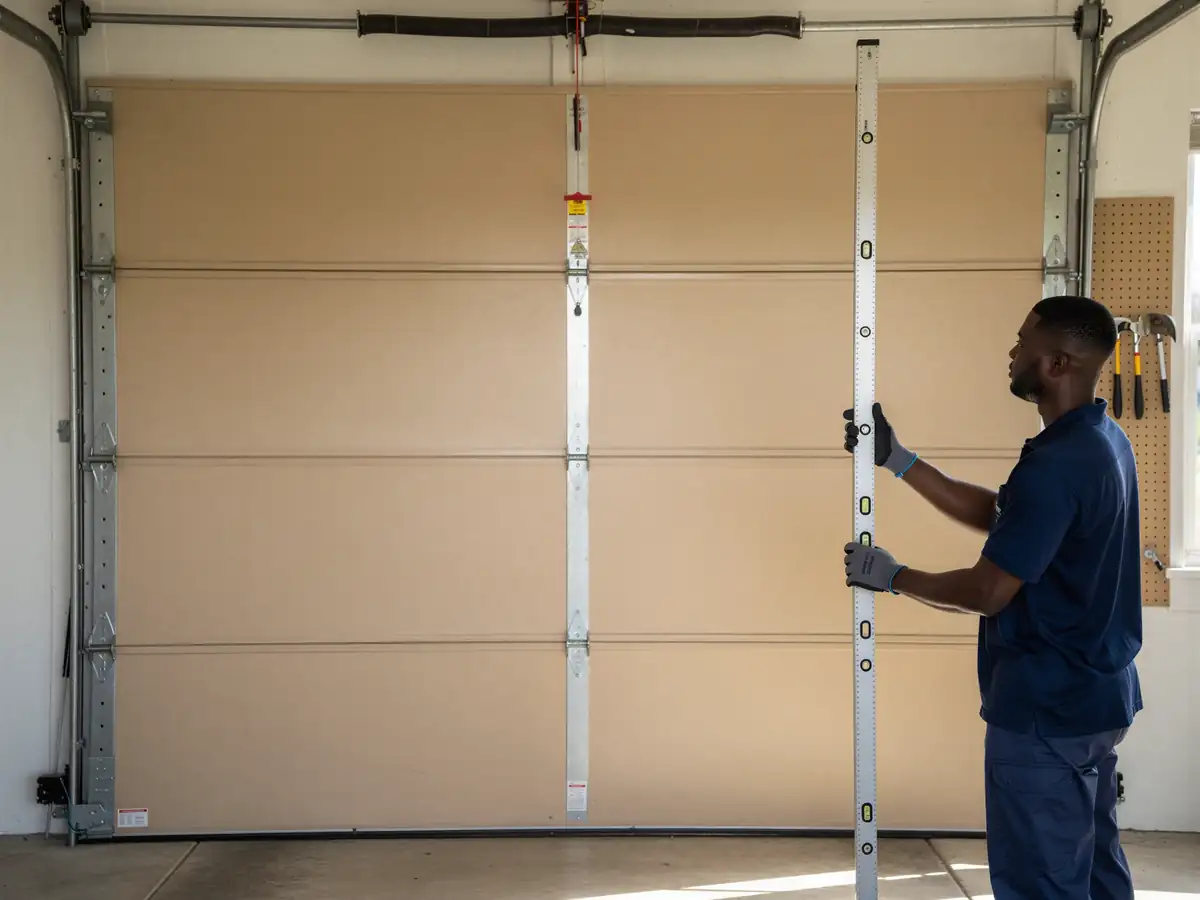
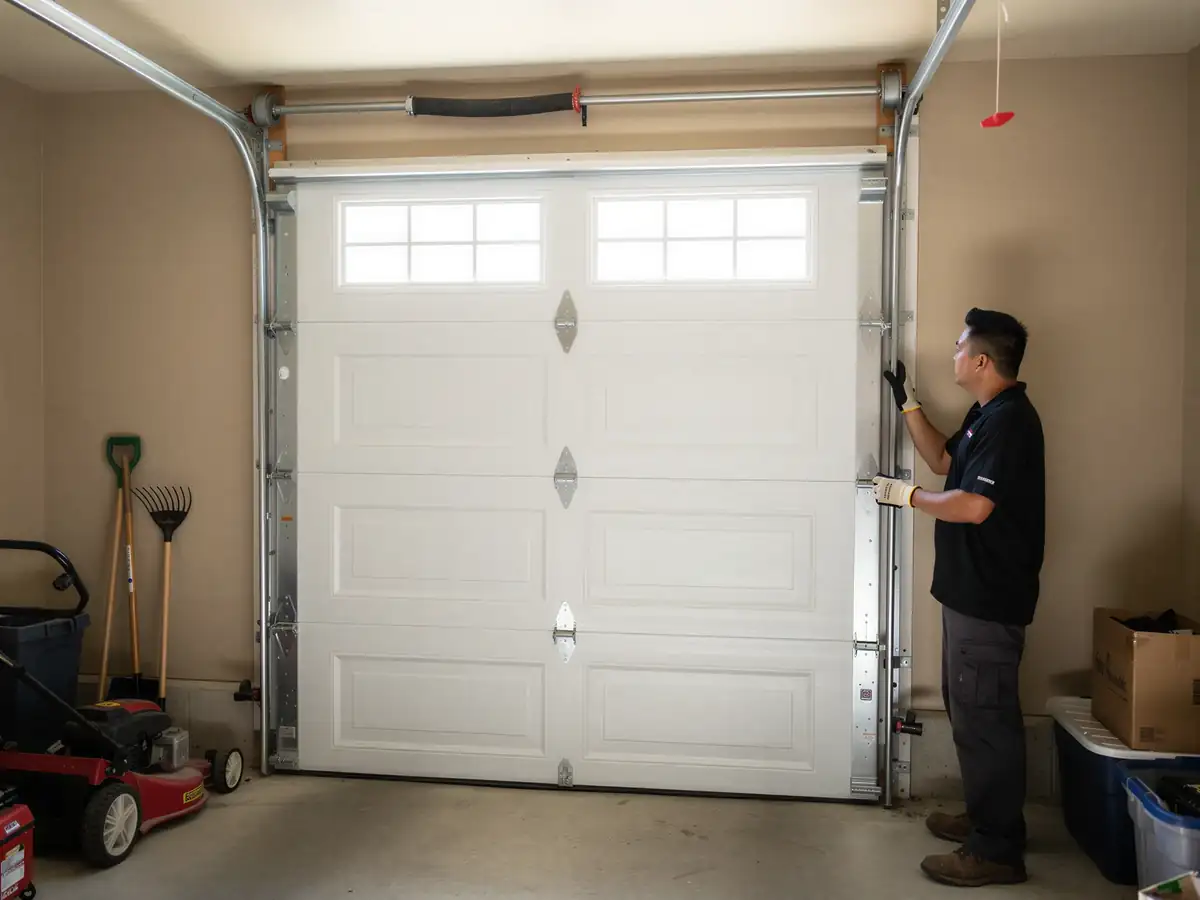
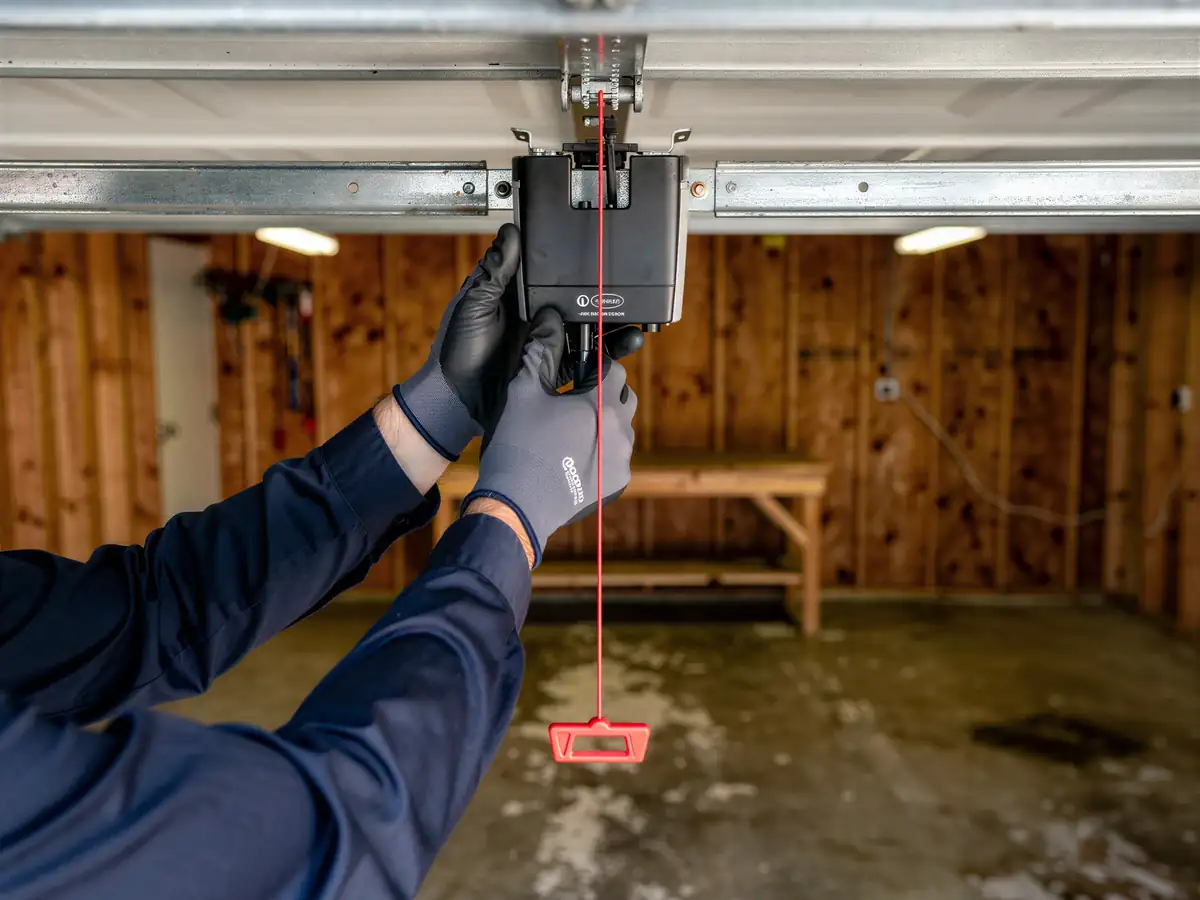
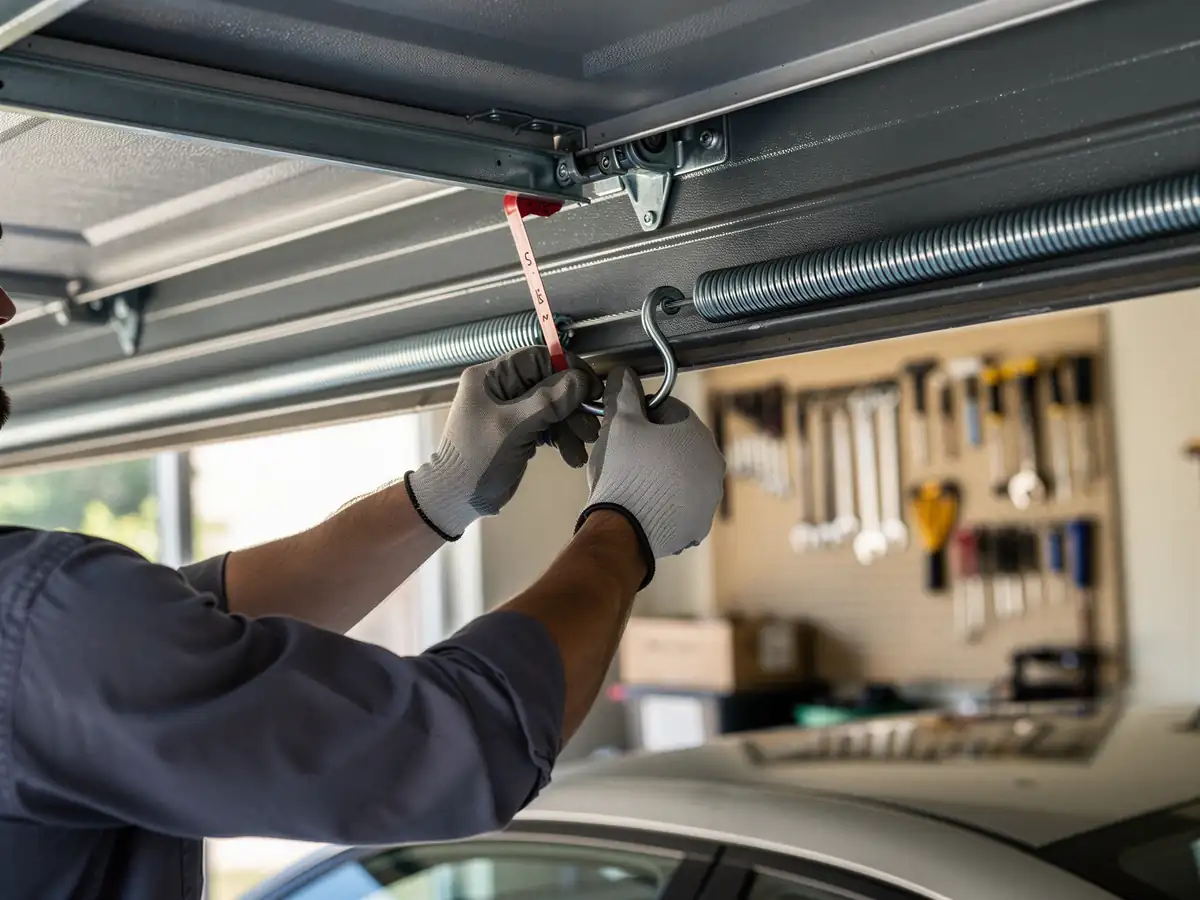
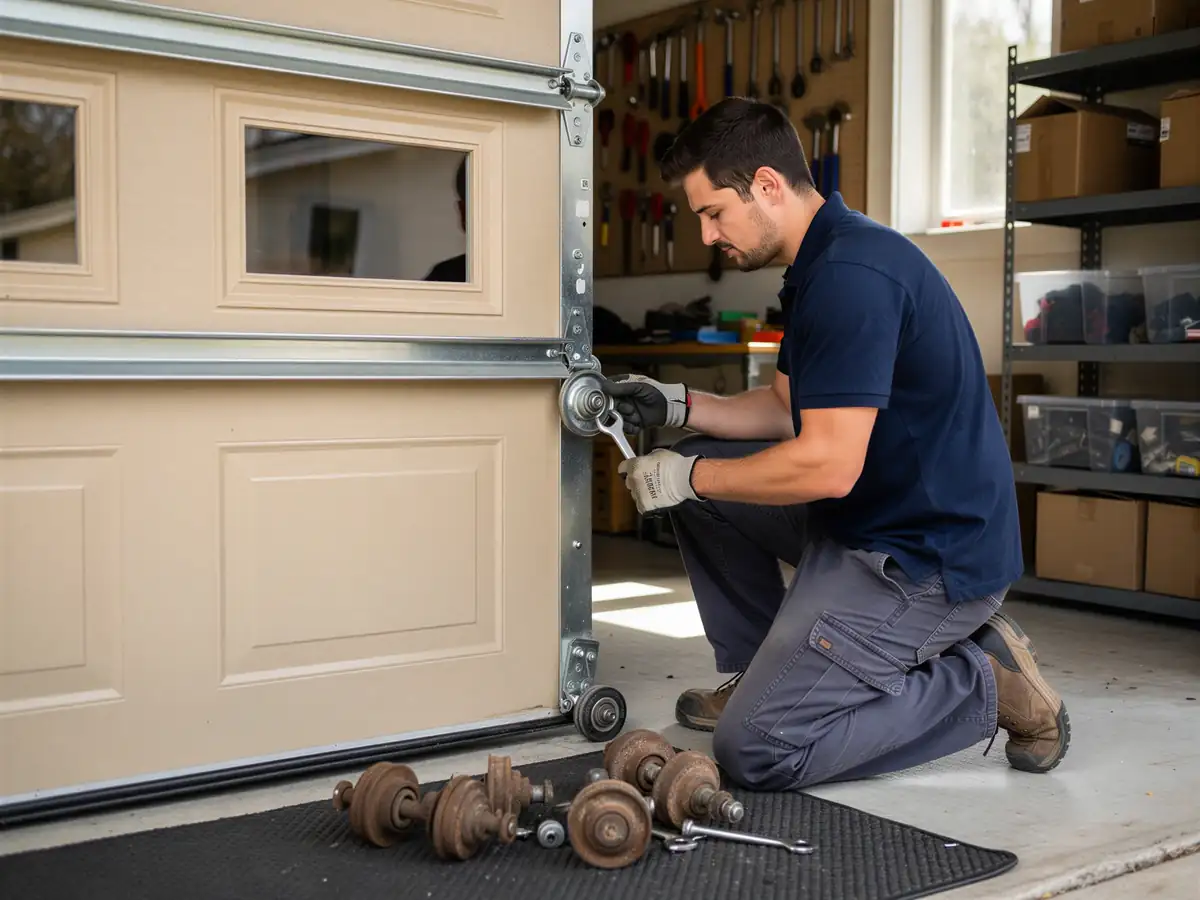
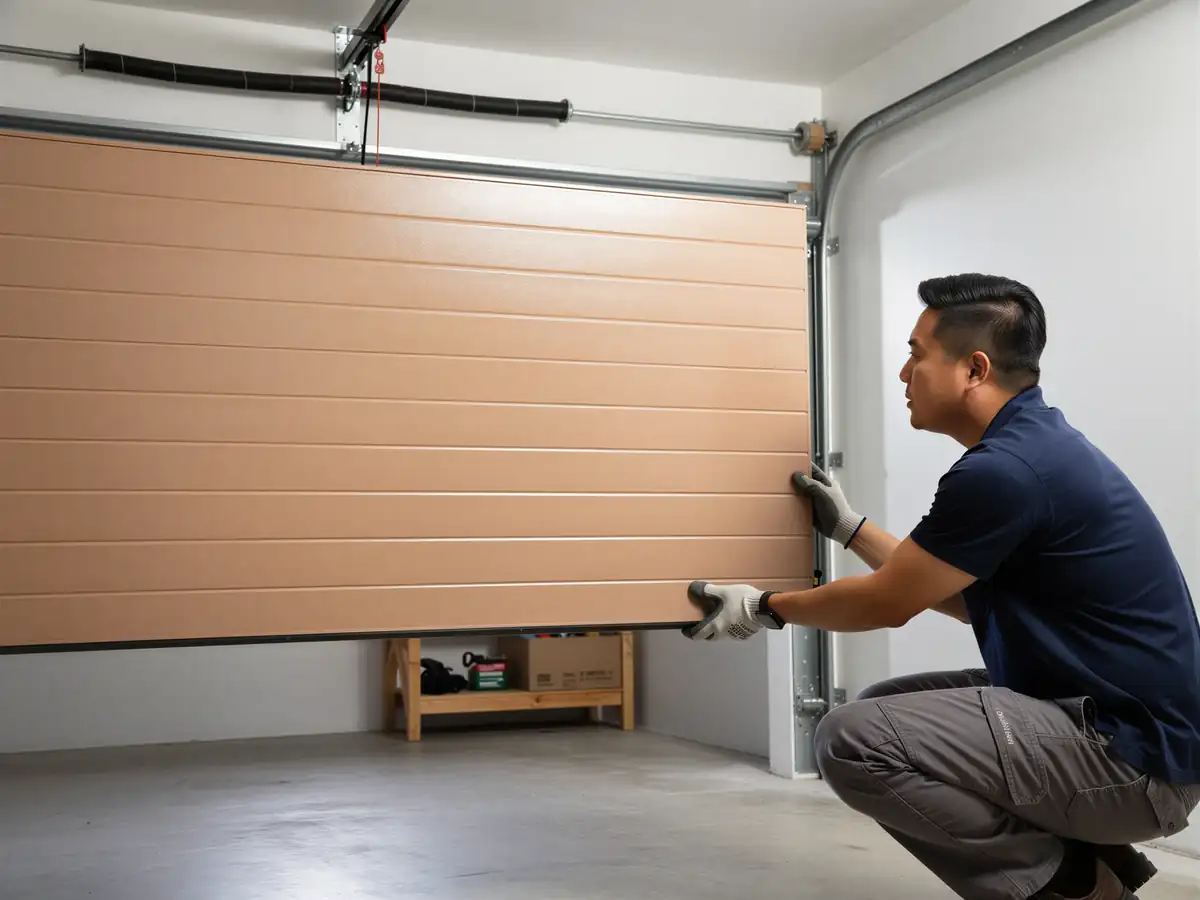
We check the spring type and tension, the track alignment, the cable condition, roller wear, and whether the opener's force settings still match the door's actual weight. Half the calls we run turn out to be a combination of small things compounding, not one dramatic failure.
What the Weather Here Does to It
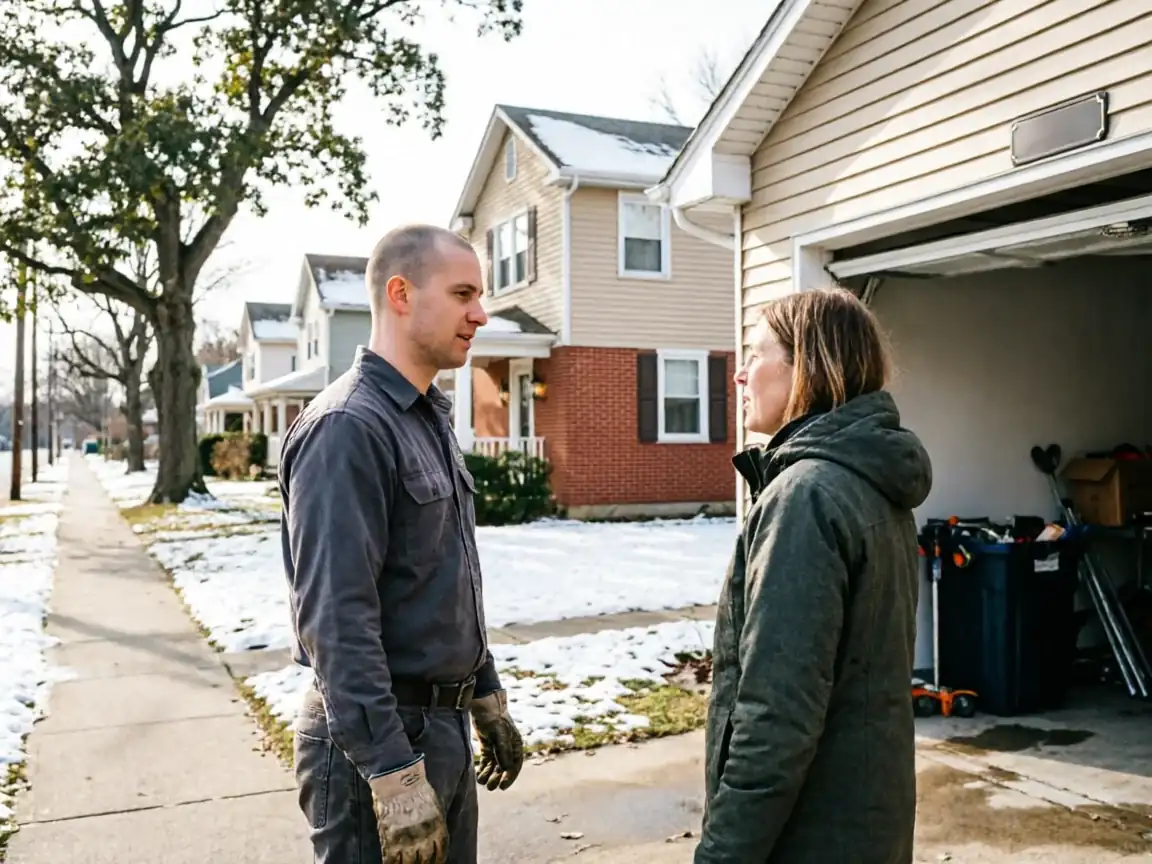
Joliet sits in a cold-moderate climate band, and that has a direct effect on steel hardware
Torsion springs contract in cold weather, which changes the force needed to lift the door - a spring that was borderline in October can feel noticeably stiffer, or snap outright, by January. Lubricant on rollers and hinges thickens the same way, which is why doors that ran quiet all summer start grinding or sticking once temperatures drop.
Weatherstripping and bottom seals take a beating too
Repeated freeze-thaw cycles make rubber seals brittle, and a cracked seal doesn't just let in cold air - it lets in moisture that can rust cable ends and the bottom roller brackets over a few seasons.
We don't carry a magic fix for this
Cold-weather stiffness on an otherwise healthy spring usually resolves with the right lubricant and isn't something that needs a part replaced. But if a spring is already near the end of its cycle life, cold weather is often what finishes it off. Part of a service call is telling you honestly which category you're in, rather than selling a repair the door doesn't need yet.
When to Get Help
Call before the door fails completely, if you can. A door that's slow to open, drifts off-center, or makes a grinding noise on one side is usually telling you a roller or cable is close to done - not that the opener is broken. Waiting on that almost always turns a $150-range repair into a bigger one once a cable snaps under load and the door comes down crooked.
Some things are clear stop-now signals: a visibly frayed or kinked cable, a door that drops suddenly instead of lowering smoothly, or a spring with a visible gap where it's separated. Don't try to release the door manually in those cases - a wound torsion spring under tension is not a DIY fix, and that's one limitation we're upfront about. We also don't troubleshoot electrical wiring issues beyond the opener circuit itself; if the problem traces back to a breaker or panel, that's an electrician's call, not ours.
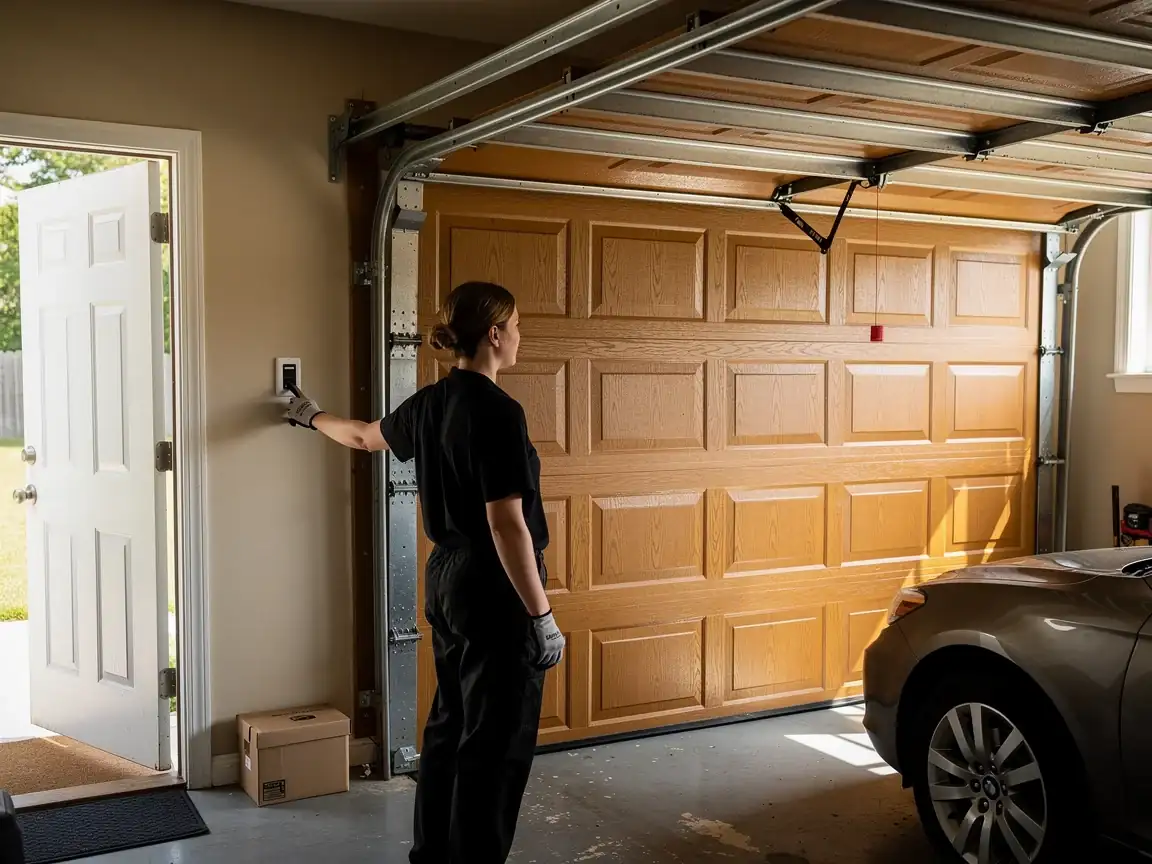
If the door simply won't respond to the remote or wall switch, check the obvious first - power to the outlet, the safety sensor alignment at the bottom of the tracks. If those check out, that's when a call makes sense.
The Seasonal Bit
Given the cold-moderate climate here, the two calls we see cluster around are early fall and the first real cold snap. The fall call is usually preventive - people getting ahead of winter by having springs, cables, and rollers checked before the temperature drop makes everything stiffer. The cold-snap call is reactive - a spring that was already fatigued finally gives out once contraction adds enough extra load.
Given that most of the area's housing dates to the 1980s and 90s, a lot of these doors are now old enough that original hardware is reaching or past its expected cycle count regardless of season. Spring life is measured in open-close cycles, not years, but age and weather exposure both push a worn spring toward failure faster.
We don't push an annual contract - some doors genuinely don't need yearly service if they're used lightly and were serviced well to begin with. But if your door is original to a house built in that 1958-2004 window and hasn't had the springs or rollers looked at, the fall-before-winter window is the one worth using.