What Causes It Around Here
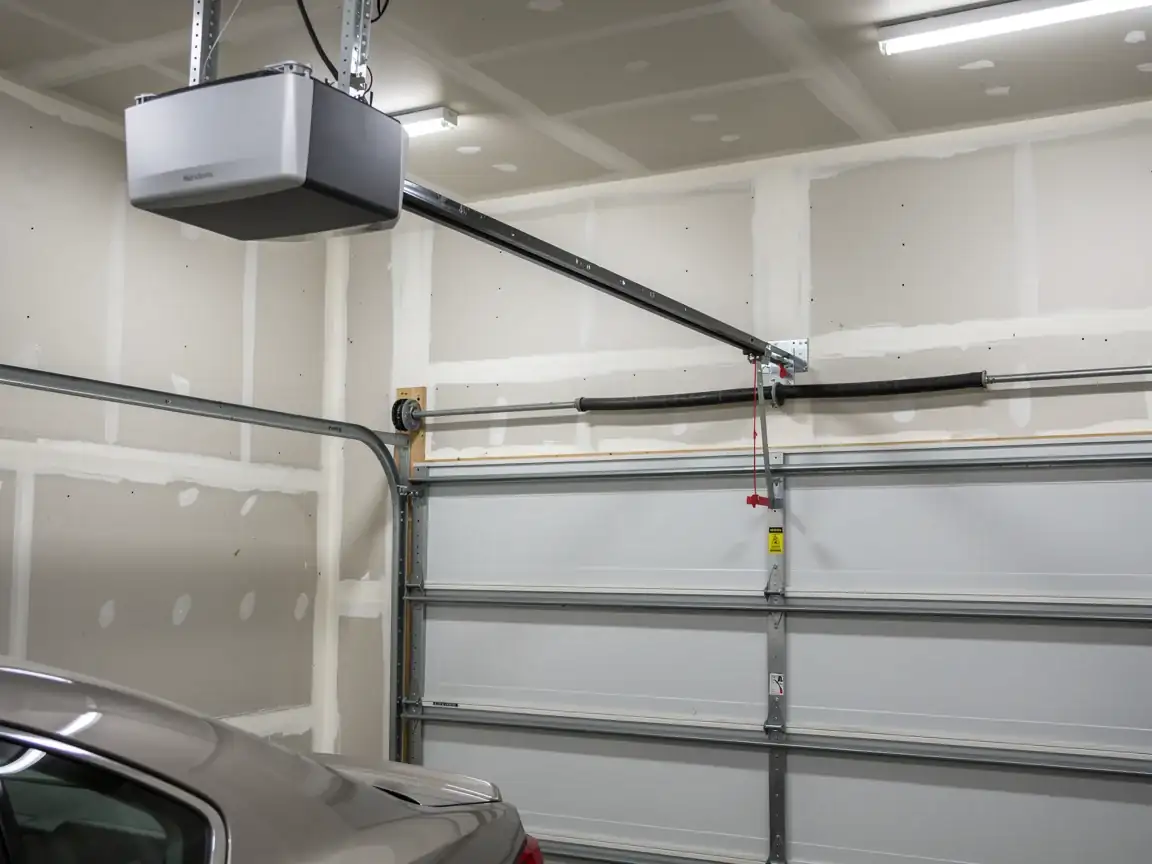
Most houses on this side of Joliet went up between 1958 and 2004, with the bulk of the stock dating to the 1980s and 90s across the 28 named areas we cover. That build era matters for openers. A huge share of those units are chain or belt drive models on steel rail, installed by the builder or swapped once in the 2000s, and they're now old enough that the circuit board, the logic board capacitors, and the drive gear are all original or close to it.
Cold is the other half of it. This area sits in a cold-moderate climate band, which means openers sit through hard freeze-thaw cycles every winter. Grease in the drive gear stiffens, the limit switch drifts out of calibration as the door's weight changes with humidity in the wood panels, and safety sensors mounted low on the track pick up frost and false-trigger. None of this is dramatic. It shows up as a door that reverses for no reason, a remote that works some days and not others, or a motor that hums and doesn't lift.
We see this pattern across the whole service area, not just one neighborhood - older openers paired with a climate that's hard on nylon gears and circuit boards.
How We Fix It
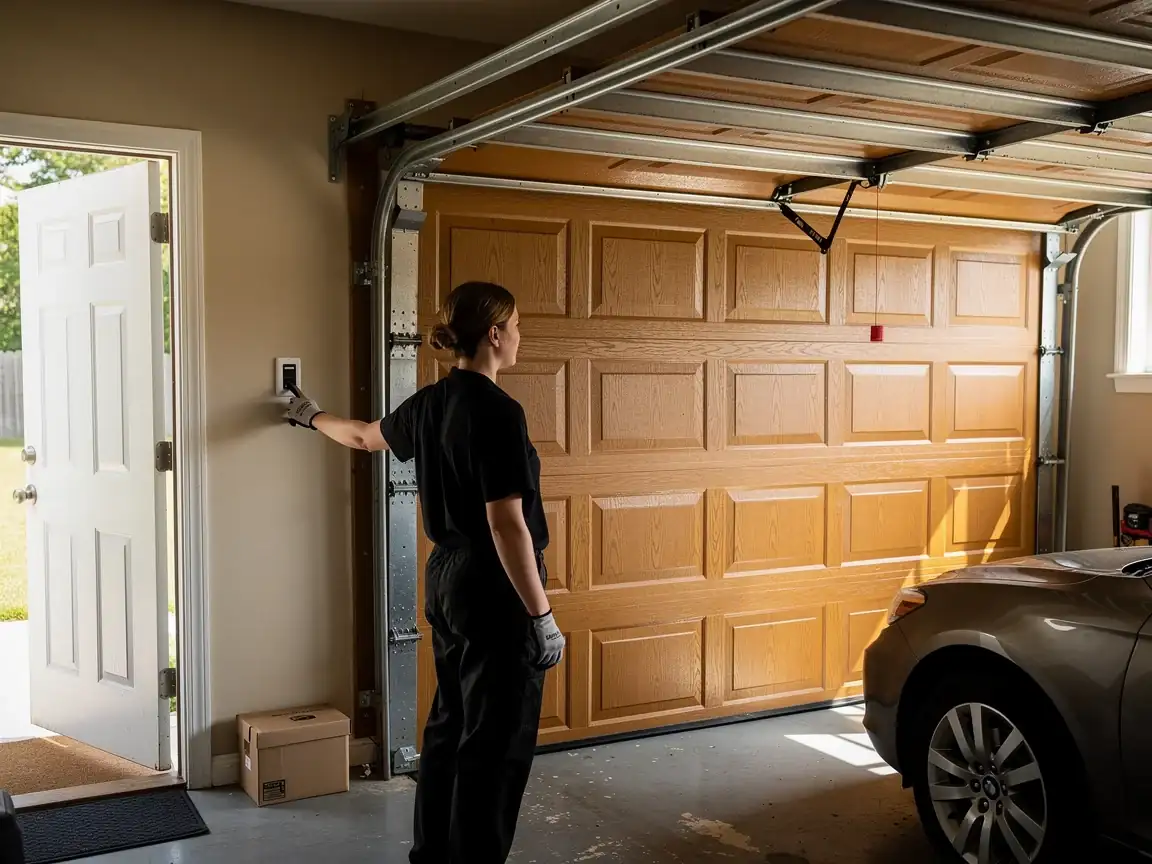
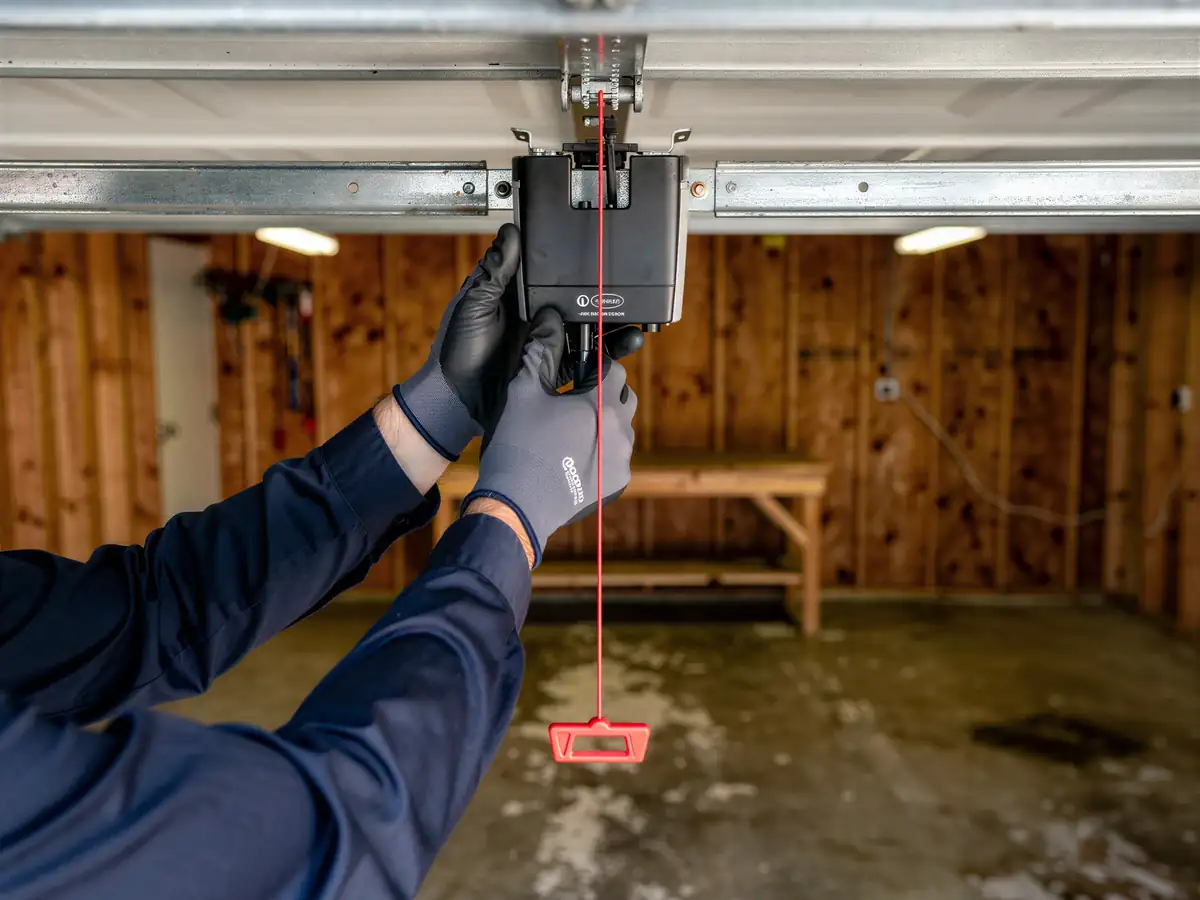
We start by running the opener through its full cycle and watching where it fails
At the wall button, the remote, or the travel itself. A dead board gets replaced, not patched; boards from the 1980s-90s installs this area is full of usually aren't worth re-soldering once a trace fails. A stripped drive gear is a straightforward part swap and we carry common sizes on the truck.
For sensor and limit-switch drift
Which we see a lot given the freeze-thaw swings here, the fix is usually recalibration and a sensor realignment rather than new parts - we won't sell you a board when the problem is a sensor knocked an eighth of an inch out of true by a winter.
Where we're upfront about limits
If the opener itself is original to a house built in the earlier part of that 1958-2004 window, parts for some of those motor models are discontinued, and replacement is the honest call over a repair that won't hold. We'll tell you straight when that's the case instead of billing you for a patch job.
How to Book
Call or use the link below. Tell us the opener brand if you can see it on the motor housing, and whether the door moves at all or the motor is silent - that one detail changes what we bring on the truck. We work across the Joliet-area footprint, including Shorewood, Crest Hill, Fairmont, Elwood, Romeoville, Lockport, Minooka, Channahon, Manhattan, Homer Glen, Lemont, Wilmington, Mokena, Frankfort, Woodridge, Boulder Hill, Orland Hills, Diamond, Morris, Braidwood, Yorkville, Montgomery, Coal City, Frankfort Square, Darien, Lisle, Palos Park, and Burr Ridge, so if you're just outside town, say so when you call.
We don't quote opener repair sight unseen over the phone beyond a rough range, because a dead board and a stripped gear cost different money and we'd rather give you a real number on site than a guess that's wrong either way.
What You Are Seeing
A few patterns we hear most from owners in houses built in that 1958-2004 run: the door reverses right after it starts closing, the motor runs but the door doesn't move, the remote works from inside the garage but not from the driveway, or the opener makes a grinding noise and stalls partway up.
Reversing on close is almost always a sensor or limit-switch issue, more common here after a hard freeze. A motor that runs without moving the door usually means a stripped gear or a broken drive belt/chain. Remote range dropping off is often a weak receiver antenna inside an old board - a cheap fix, not a sign you need a new opener. Grinding and stalling is a worn gear under load, which happens faster in houses where the opener's original to a build from the earlier end of that 46-year window.
If your opener is simply silent - no light, no hum, nothing - check the breaker and the wall switch first. That's not a service call, that's a two-minute check before you spend money on one.