The DIY Question
Crest Hill sits close enough to Joliet's broader build range, but its own housing stock is tighter: most of it went up around 1992, not spread across the 1958-2004 span you'd find pulling a permit history for the wider service area. That matters for a DIY call. An opener install from a narrow build window usually means a narrow set of drive types and mounting brackets, which makes a homeowner's own troubleshooting more predictable here than in an area with five decades of retrofits stacked on top of each other.
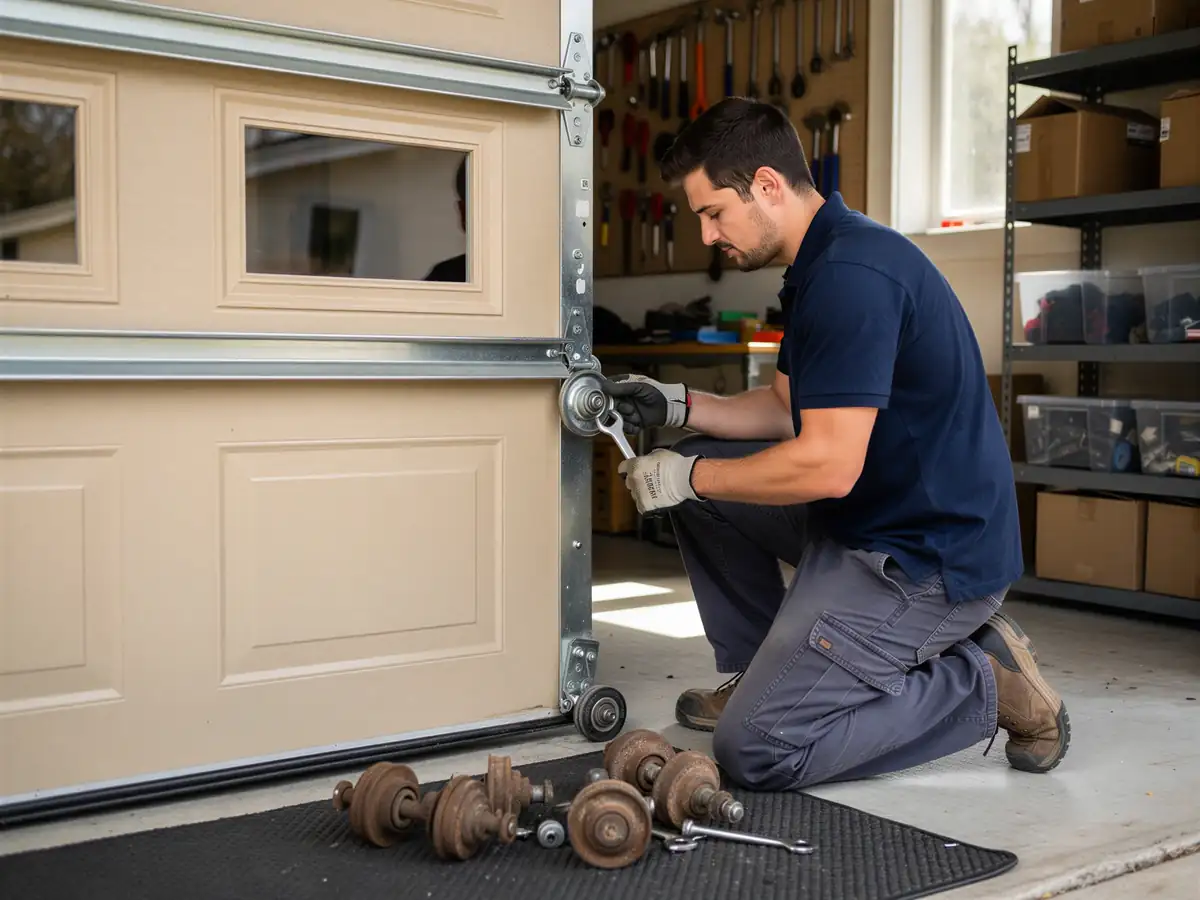
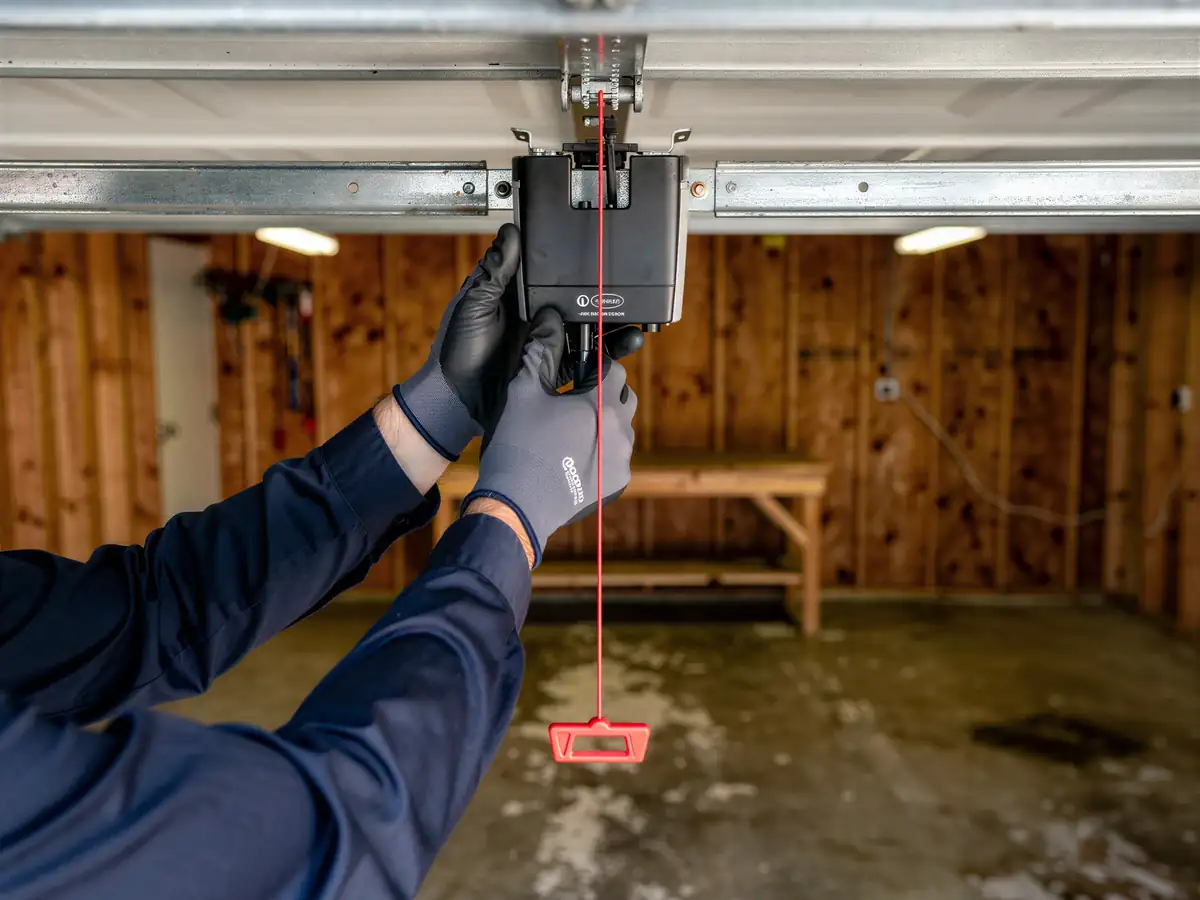
Still, there's a limit to what's worth doing yourself. Swapping a remote battery or resetting a travel limit is fine with a ladder and the manual. Pulling a logic board, rewiring a safety circuit, or diagnosing a motor that hums but won't lift is a different job - the kind where guessing wrong costs you a second part on top of the first. If your opener is original to a 1990s build and still running the stock motor, we'd rather look at it before you start removing covers.
We're not going to tell you every job needs a truck. Some don't. But if the opener is original equipment from the early '90s and acting up for the first time in thirty years, that's usually a sign the whole unit, not just one part, is reaching the end of its run.
Time on the Job
A straightforward opener repair
Logic board swap, sensor realignment, gear replacement - on a 1990s-era unit usually runs shorter than a comparable job on a mixed-era Joliet property, simply because there's less guessing about what's behind the cover. Crest Hill's stock being built mostly in one stretch means the drive assemblies, the chain or belt routing, and the mounting hardware tend to match what we expect to find.
What slows a job down isn't the diagnosis, it's sourcing
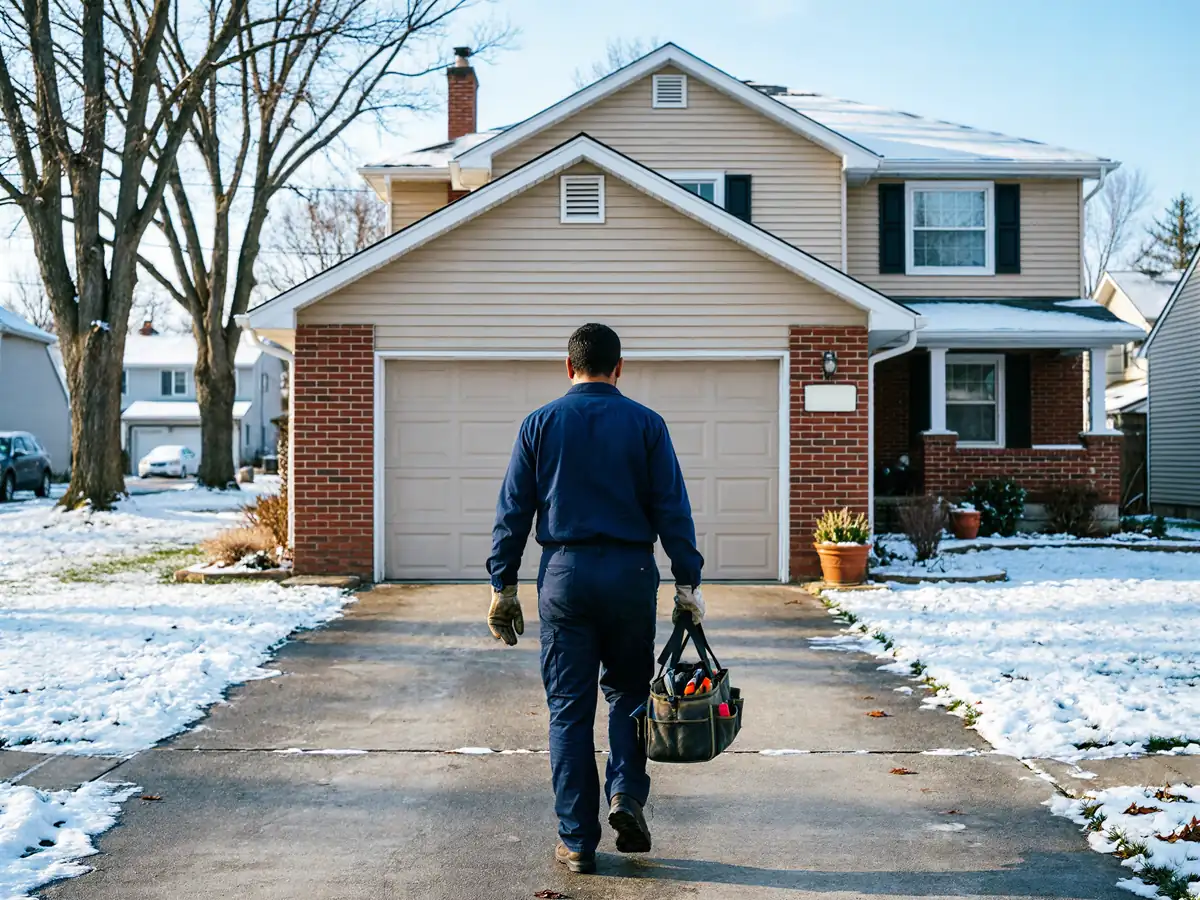
We travel from Joliet, about four miles down the road, and we don't keep a separate parts stock in Crest Hill. If the fix is something we carry on the truck - a standard logic board, a sensor pair, a belt section - we're usually done in one visit. If it's an obsolete motor housing or a part that hasn't been standard since the early '90s, that's a second trip, and we'll tell you that up front rather than let you assume otherwise.
Cold mornings add a little time too
In this climate band, metal parts contract, lubricant thickens, and an opener that's borderline in July can seize in January. We account for that when we're giving you a time estimate in the colder months.
Stocked Parts
Because Crest Hill's opener stock leans so heavily on one era, the parts we carry for this run tend to be the right parts more often than not: belt-drive gears and logic boards sized for early-to-mid '90s units, standard sensor pairs, and the chain tensioners that era used before manufacturers moved on to different hardware. That's a direct result of the build-year clustering - a service area with housing spread across fifty years forces a truck to carry fifty years of parts, and no truck does that well.
Where we come up short is anything genuinely original to a build from the far edge of that 1958-2004 range across the wider area, or a proprietary part a manufacturer discontinued outright. Those are rare in Crest Hill specifically, given how tightly the housing clusters around 1992, but they happen. When they do, that's a parts order, not a same-day fix, and we'll say so instead of pretending otherwise.
This is the honest limitation on this page: we're not a parts warehouse. We stock what we see most. The upside of Crest Hill's narrow build window is that what we stock usually matches what's on the wall of your garage.
What You Are Seeing
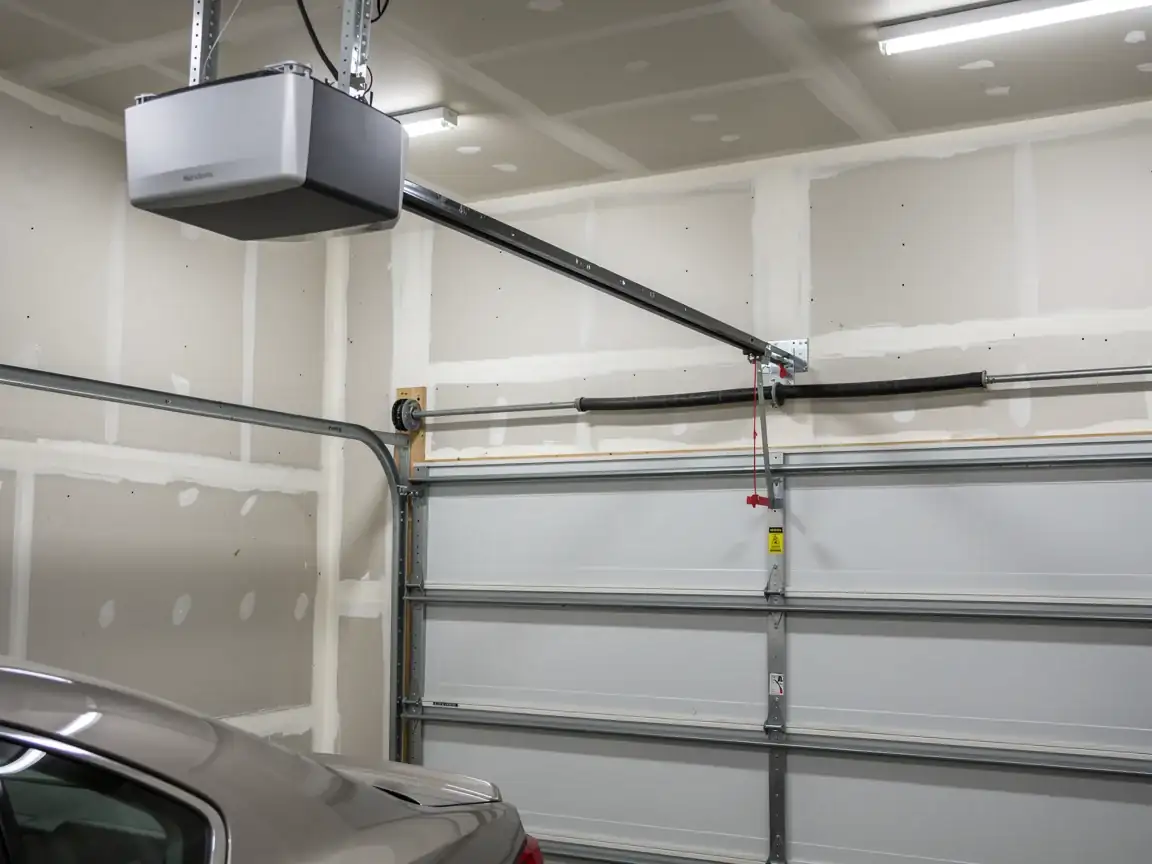
The complaints we hear out of Crest Hill track the era of the housing. A chain-drive opener installed around 1992 that's starting to groan before it moves, or that reverses partway up, is usually a tensioner or a worn gear set rather than a dead motor - common on units this age, less common on something installed in the last decade. A remote that works at ten feet but not from the car is often a dying receiver board, not a battery, which is a part we'd replace rather than patch.
In the cold-moderate stretch we're in, grease that was fine in summer stiffens by midwinter, and an opener straining against a cold chain can trip a breaker or burn out a capacitor faster than it would in a mild climate. If your opener only acts up on the coldest mornings, that's worth mentioning when you call - it narrows down the fix before we even get there.
What we don't see much of here: openers failing from age alone with no other symptom. Usually something specific gives out first - a sensor, a gear, a board - and that's the part worth naming when you describe the problem.