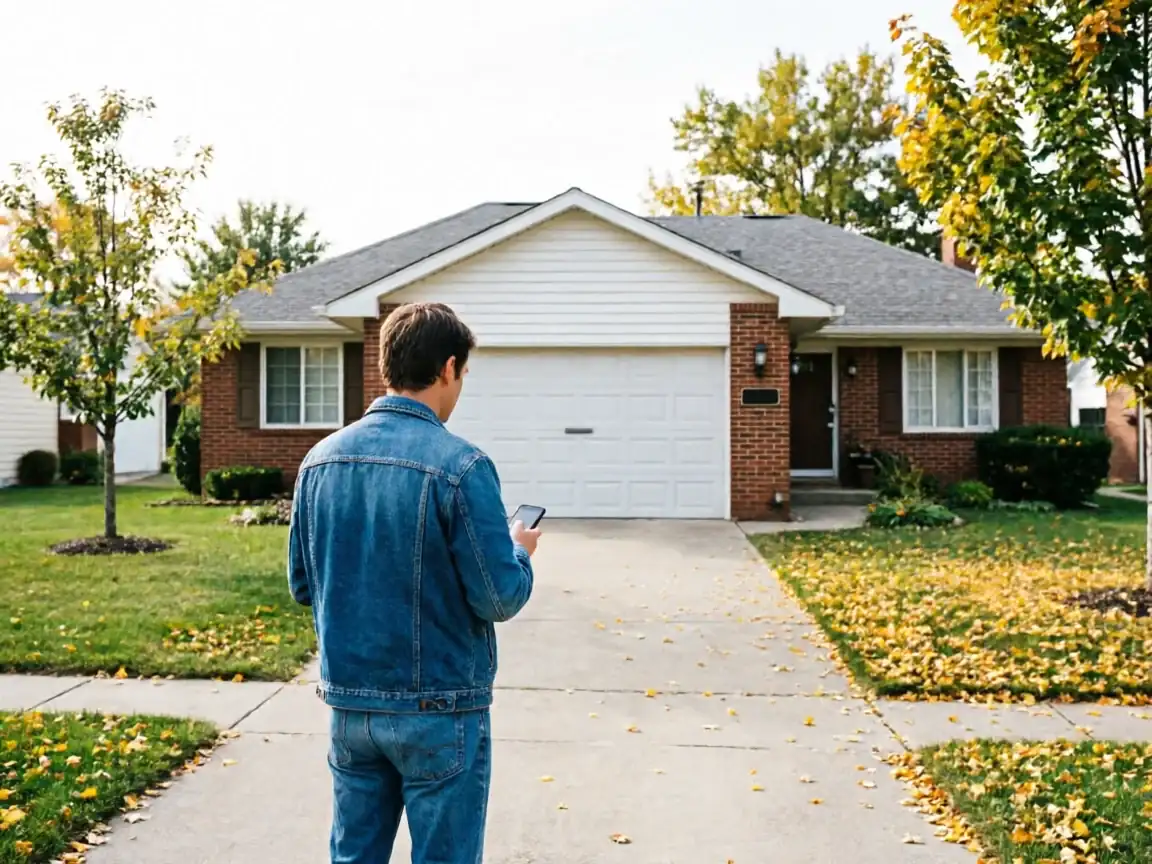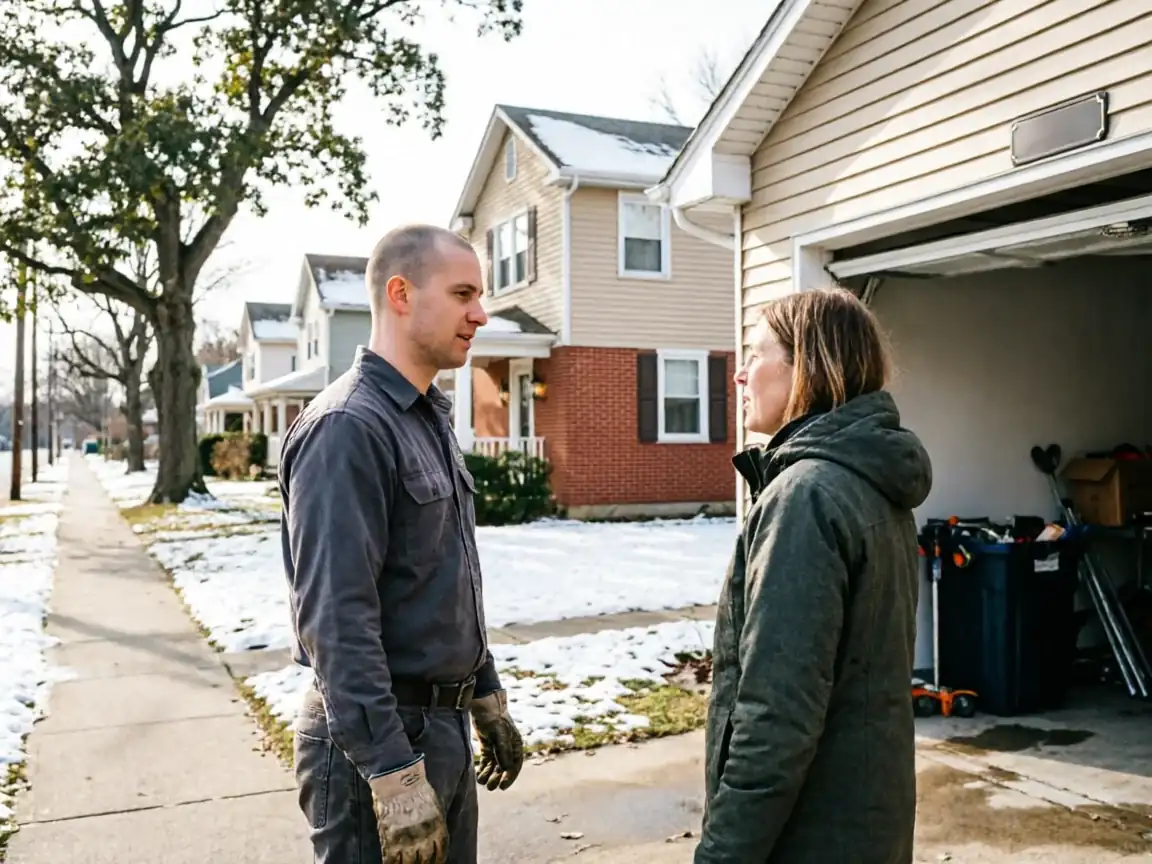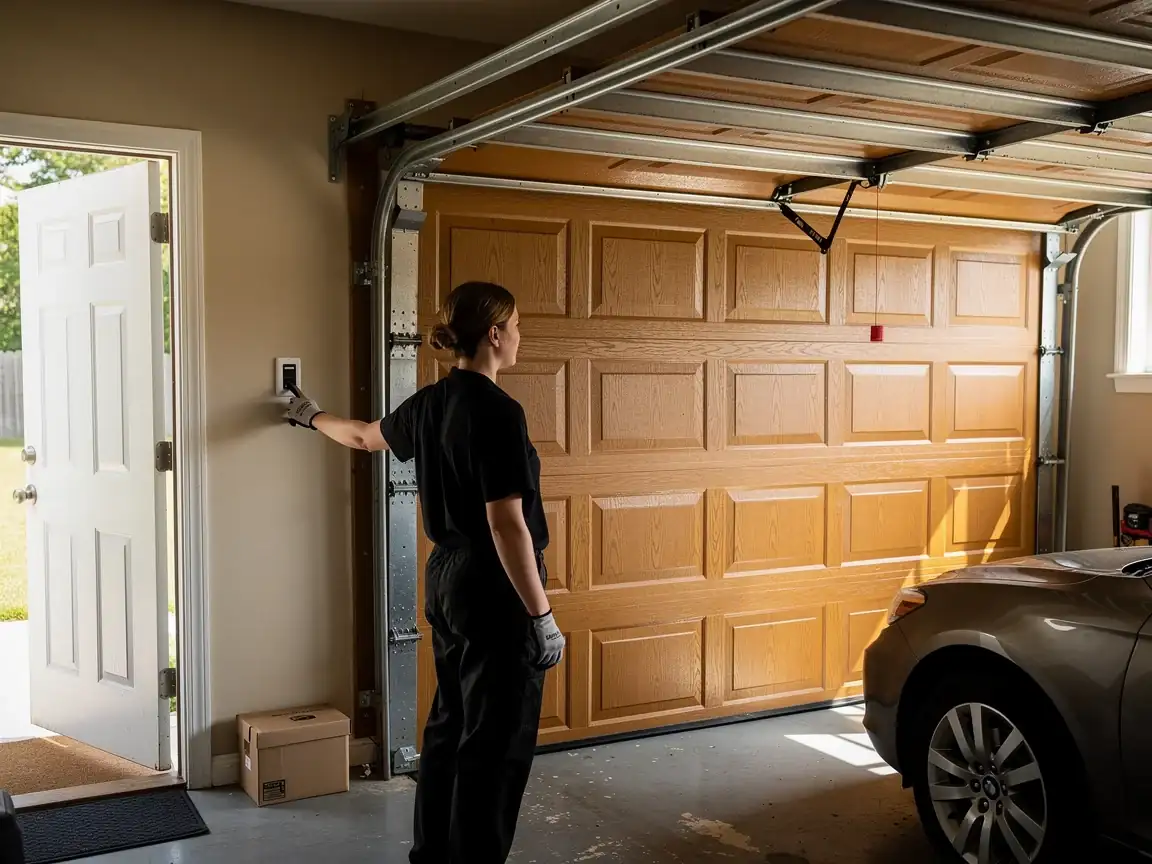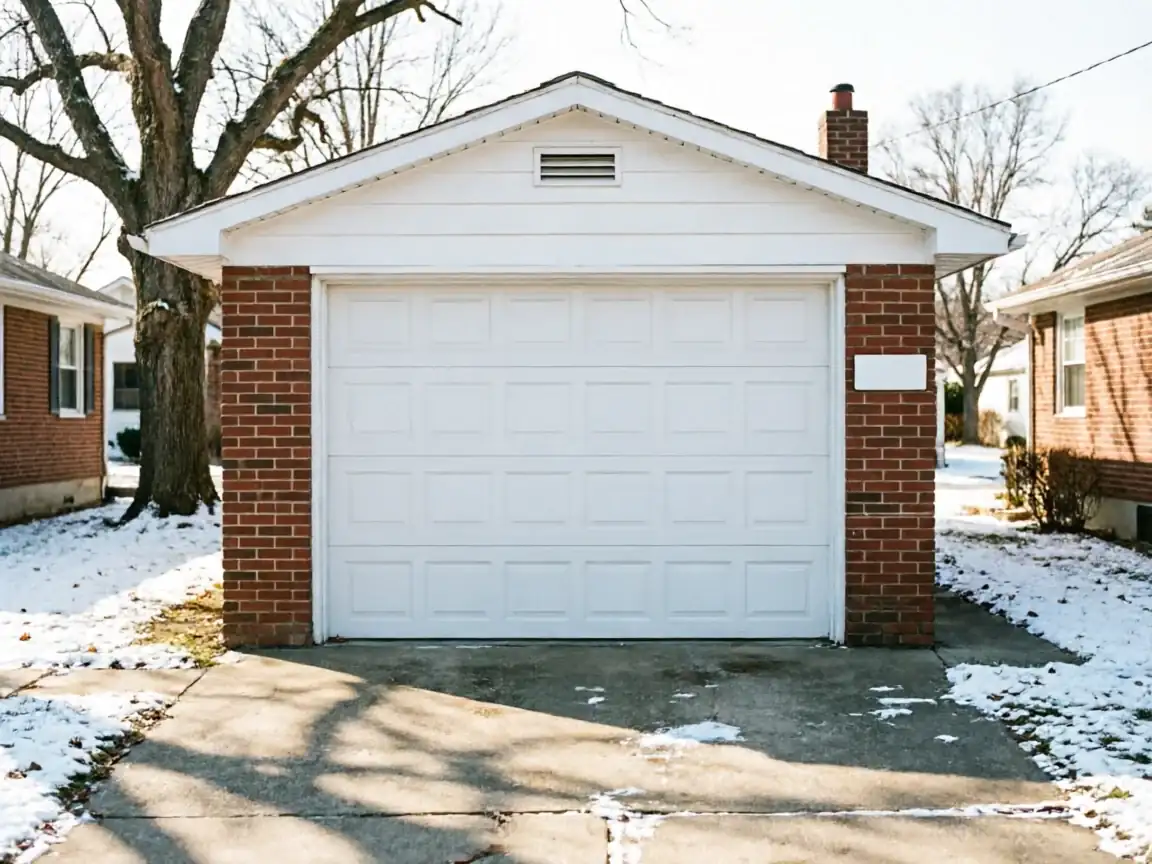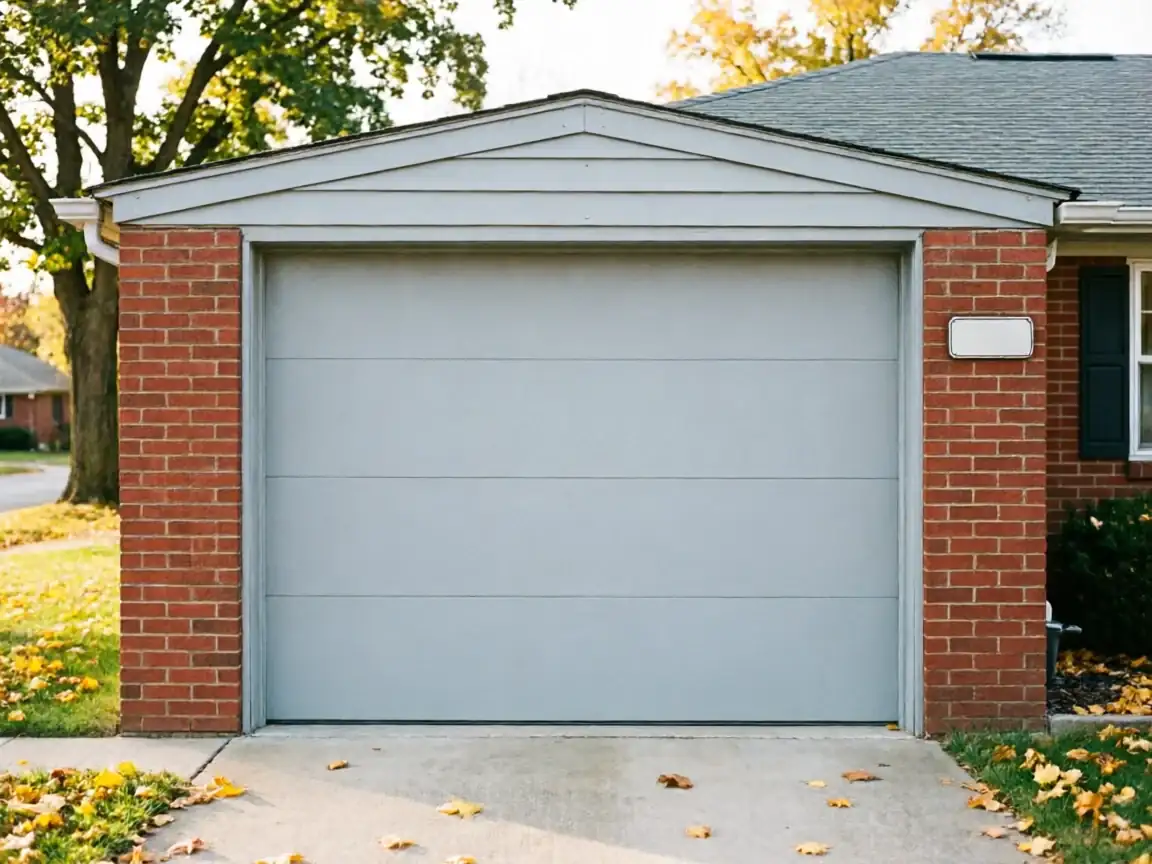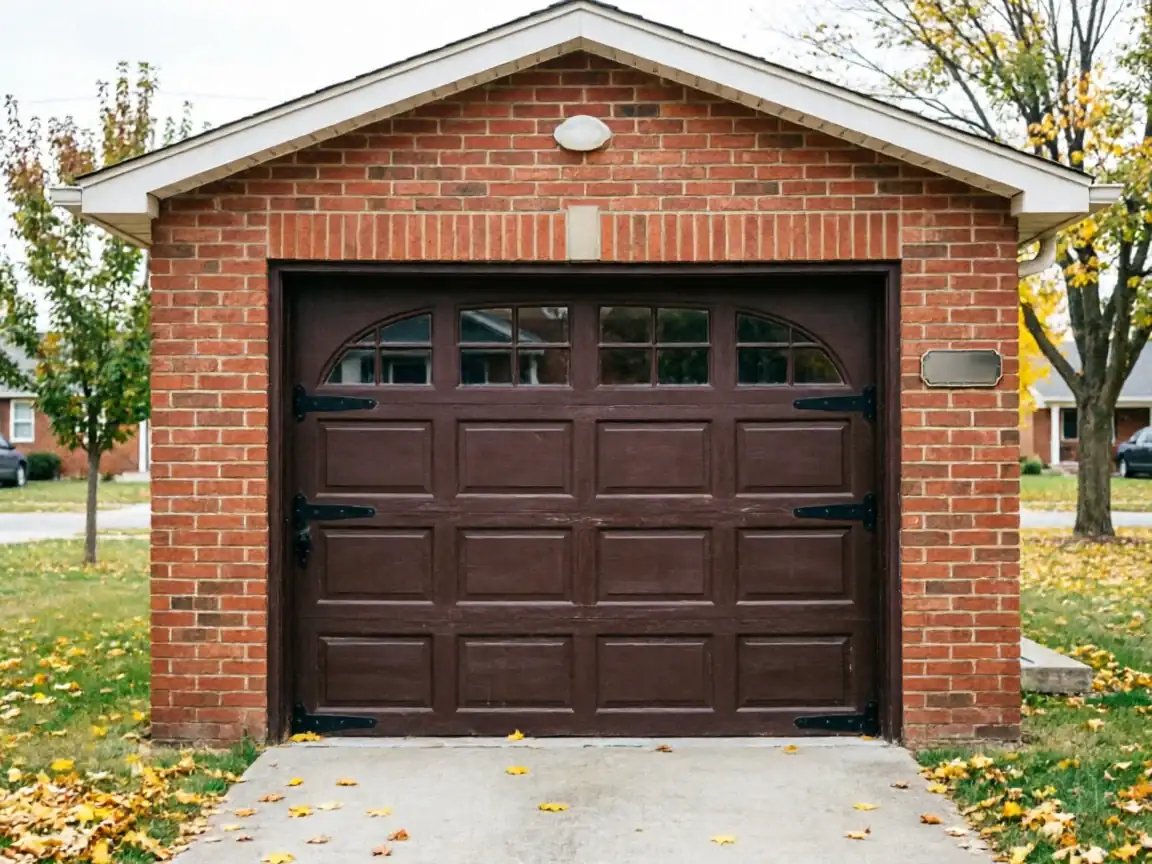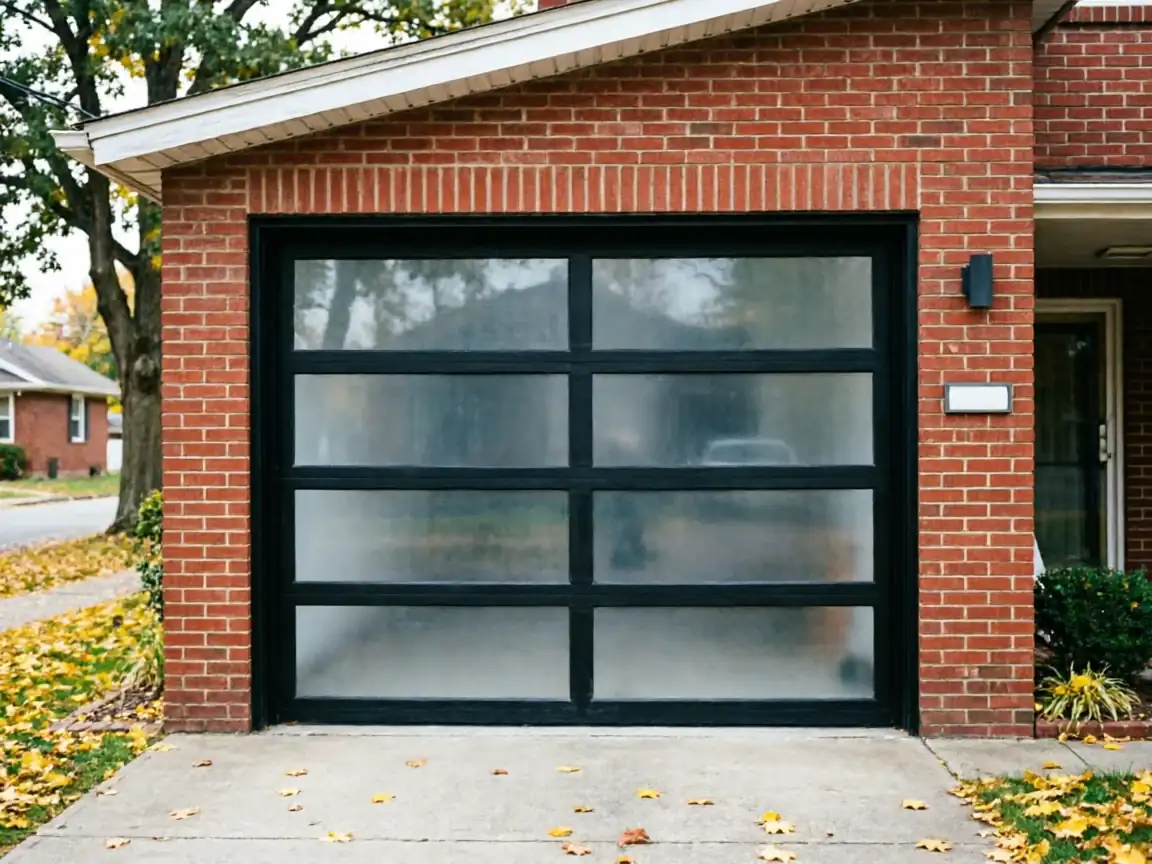
The DIY Question
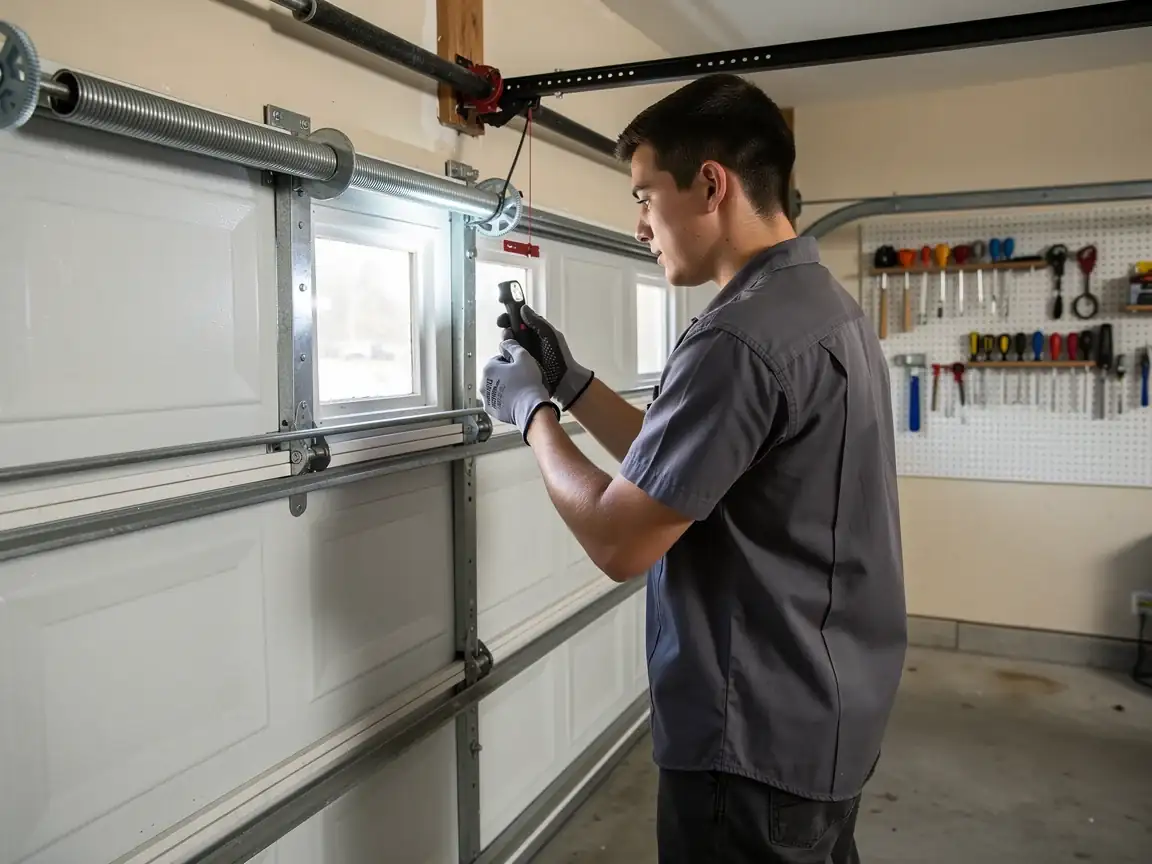
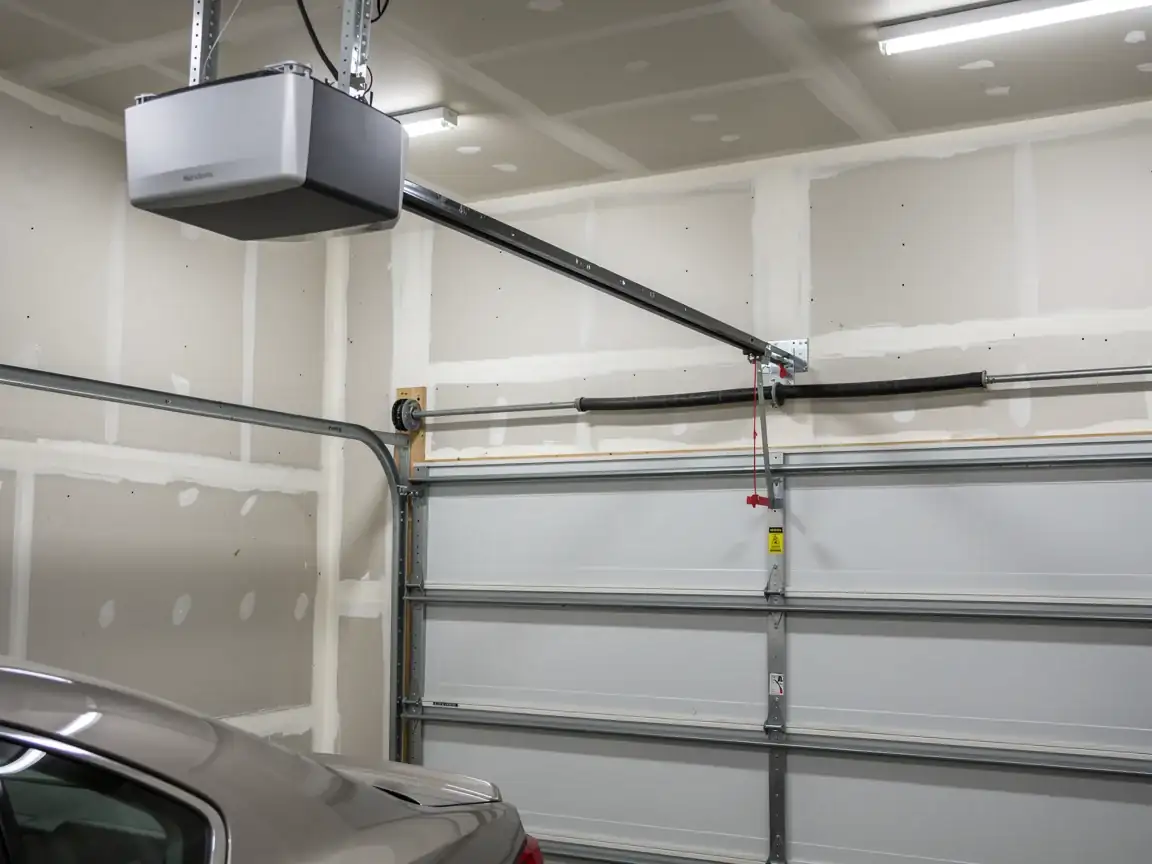
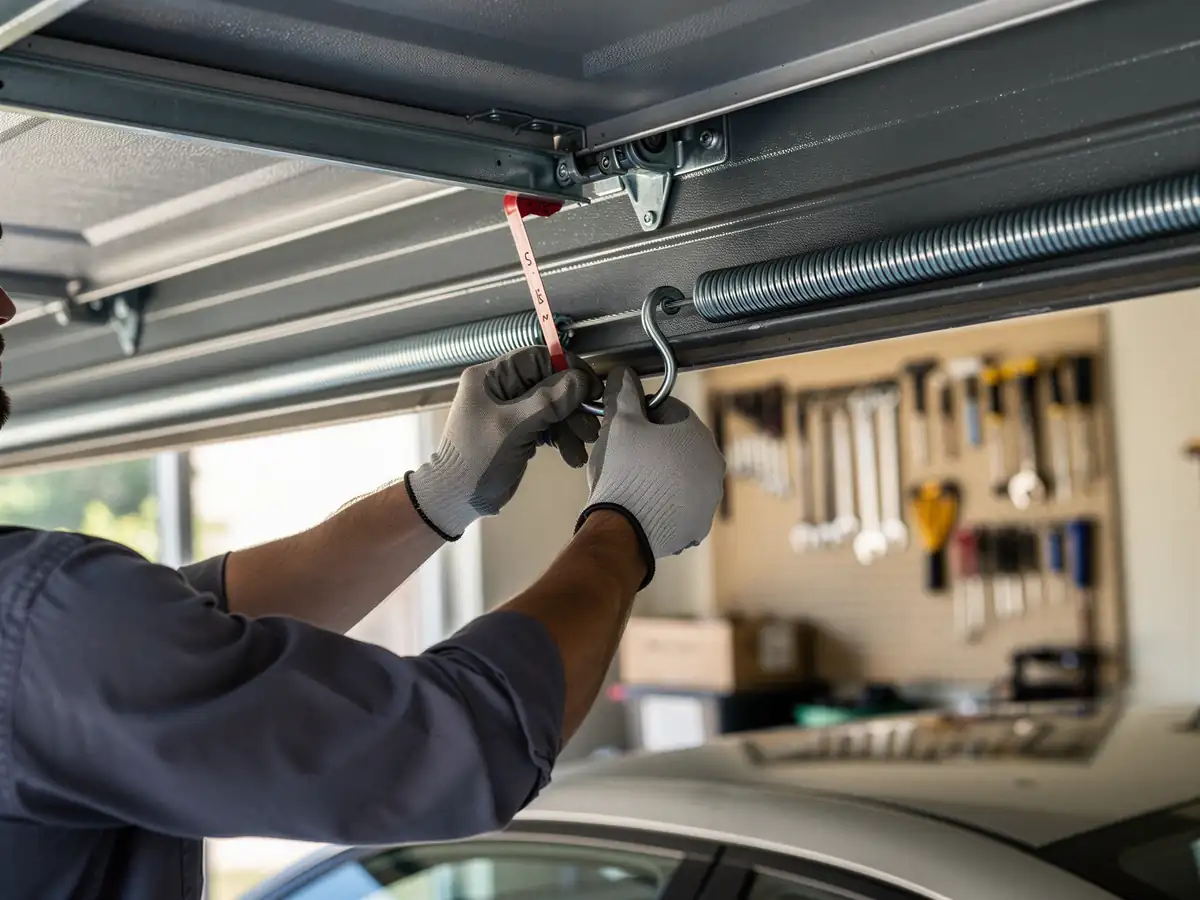
The fault we see most in Fairmont isn't a dead opener or a bent track. It's a torsion or extension spring that finally lets go after years of flexing, and on a house this old, that spring is usually original or close to it. Fairmont's housing stock starts at 1958, which puts a real chunk of the neighborhood ahead of the rest of our service area - most of the other 28 towns we cover didn't build out until the 1980s and 90s. Older springs mean older wind counts and older cable setups, and that's not something to wing on a Saturday morning with a borrowed ladder.
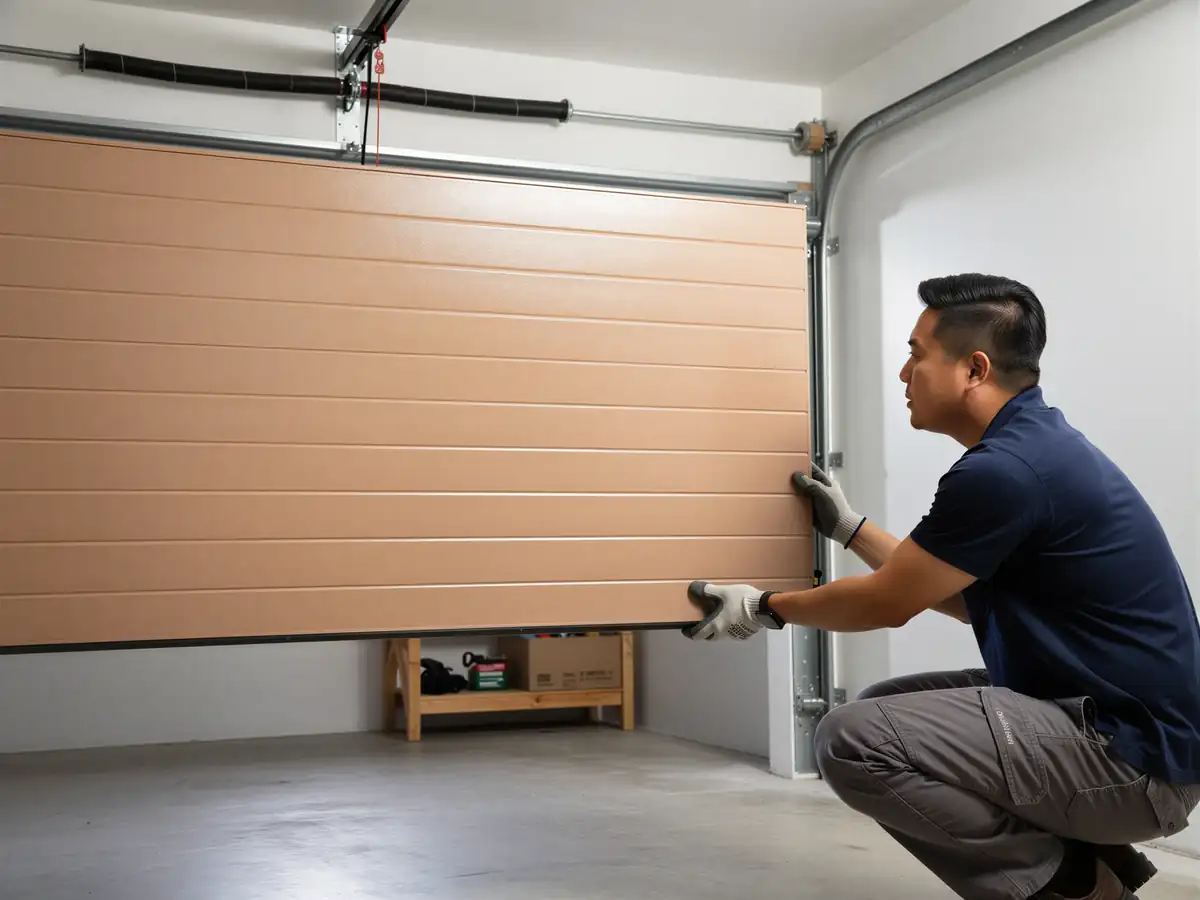
We get the instinct to try it yourself. A spring looks simple: it's wound metal holding tension, right up until it isn't. But a broken torsion spring on a door this size carries enough stored force to snap a cable, crack a panel, or worse, and a 1958-era door often runs different hardware than anything you'll find diagrammed online. If the door won't move, or it moves and then drops, that's not a project for today. That's a call.
What You Are Seeing
Most Fairmont calls fall into a short list
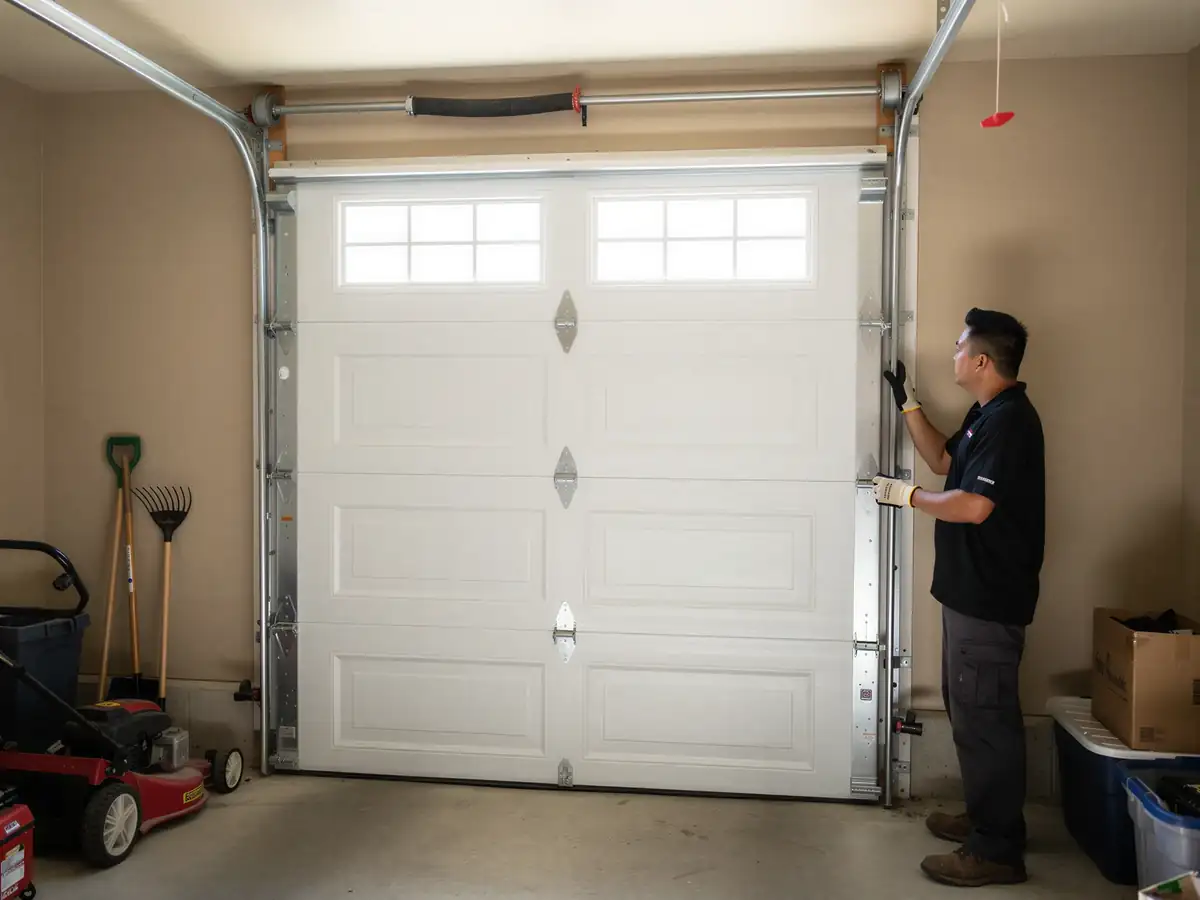
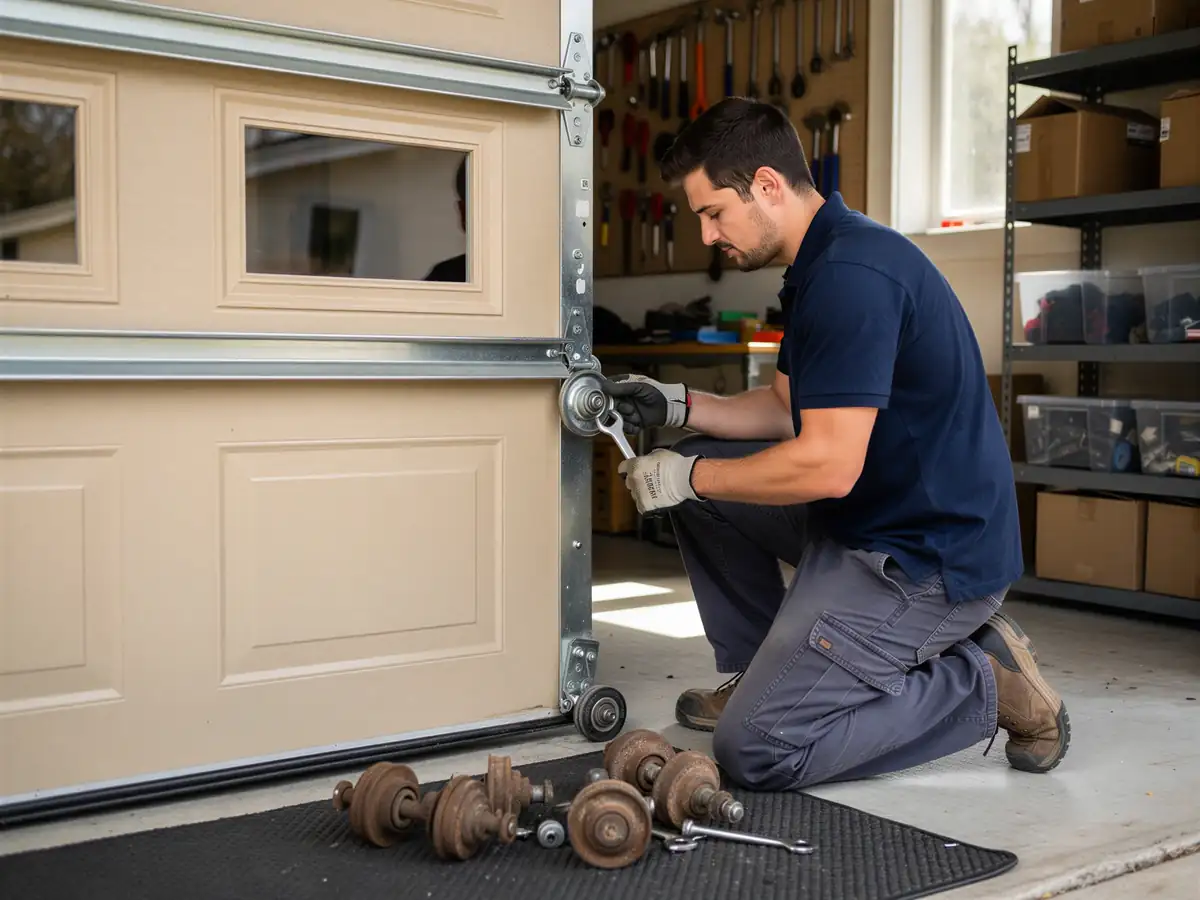
A spring that's snapped clean, a cable that's jumped the drum, an opener that hums but won't lift, or a door that's racked sideways in the track. On houses built around 1958, we also see hardware that's just worn out from decades of cold-weather cycling rather than anything that failed suddenly - rollers gone oval, hinges stretched, track bent from years of minor hits.
Fairmont sits in a cold-moderate climate band, and that matters more than people think
Metal fatigues faster through repeated freeze-thaw swings, and a spring or cable that's been flexing since the late 1950s doesn't have much give left. If your door is sagging on one side, or the opener strains and reverses before it closes, that's usually a spring losing tension, not an opener problem - a common mix-up that leads people to replace the wrong part.
What You Pay
We don't have a posted price list for Fairmont specifically, and we're not going to invent one. What we can tell you is that Fairmont's median household income, at $59,244, runs well under the $109,064 median across our full service area. That gap shows up in the calls we get: more requests for a straight repair, fewer for a full door swap, and more questions about whether a part is worth fixing versus replacing outright.
With only 806 households in Fairmont, it's one of the smaller pockets we cover, and that size cuts against assuming a job here looks like a job in a bigger, newer subdivision. A spring job on an older door can sometimes cost less than expected because the hardware is simpler, but if the opener itself is original to a 1958 build, parts can be harder to source and that adds time, not just cost. We'll tell you straight if replacement beats repair before we start anything.
Time on the Job
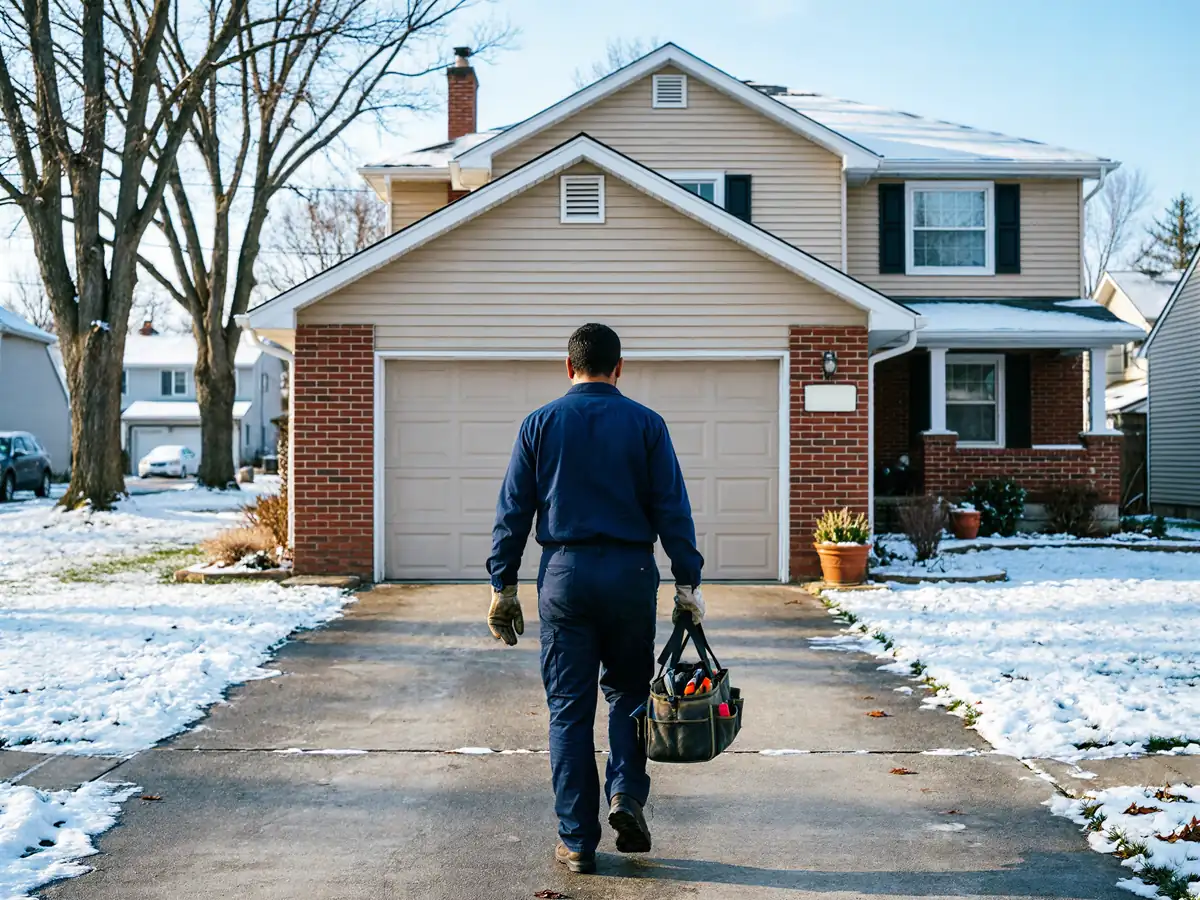
We run out of Joliet, about six miles from Fairmont, so the drive itself isn't the bottleneck - diagnosing an older system right is. A spring swap on a standard door is usually the fastest call we make. An opener replacement, or anything where the track has to be re-hung because the door's been dragging unevenly for a while, takes longer, especially on houses from the 1958-to-early-90s run where the framing and header heights aren't always standard.
We won't promise a response time we can't back up, and we're not going to pretend every job wraps in the same window. What we can say is that once we're looking at the door, we'll give you a straight estimate of how long the fix takes before we touch anything, not after.